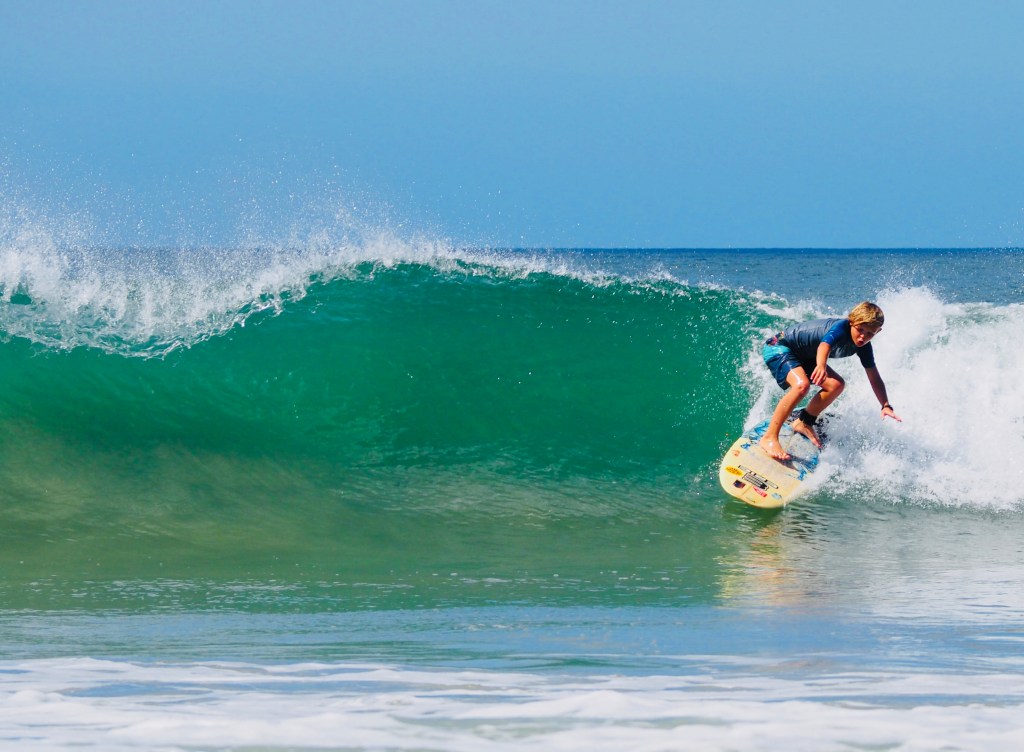
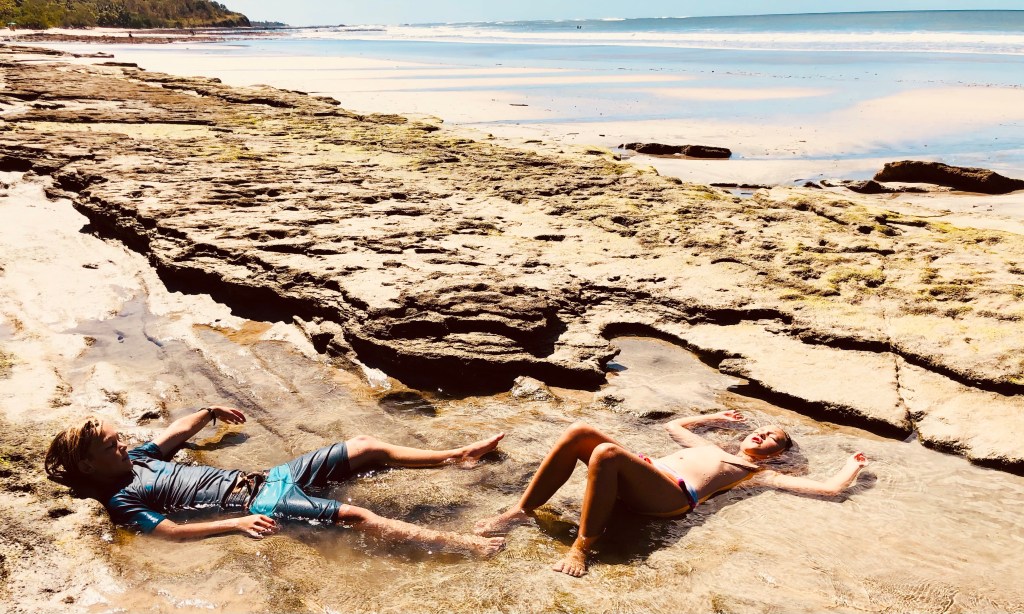
It is a perfectly timed crime. Arthur and I are out surfing, the girls have just arrived on the beach, half hour behind us, bringing the school bags. Matilda is now doing spins on her bodyboard in the white water while Menna guards camp.
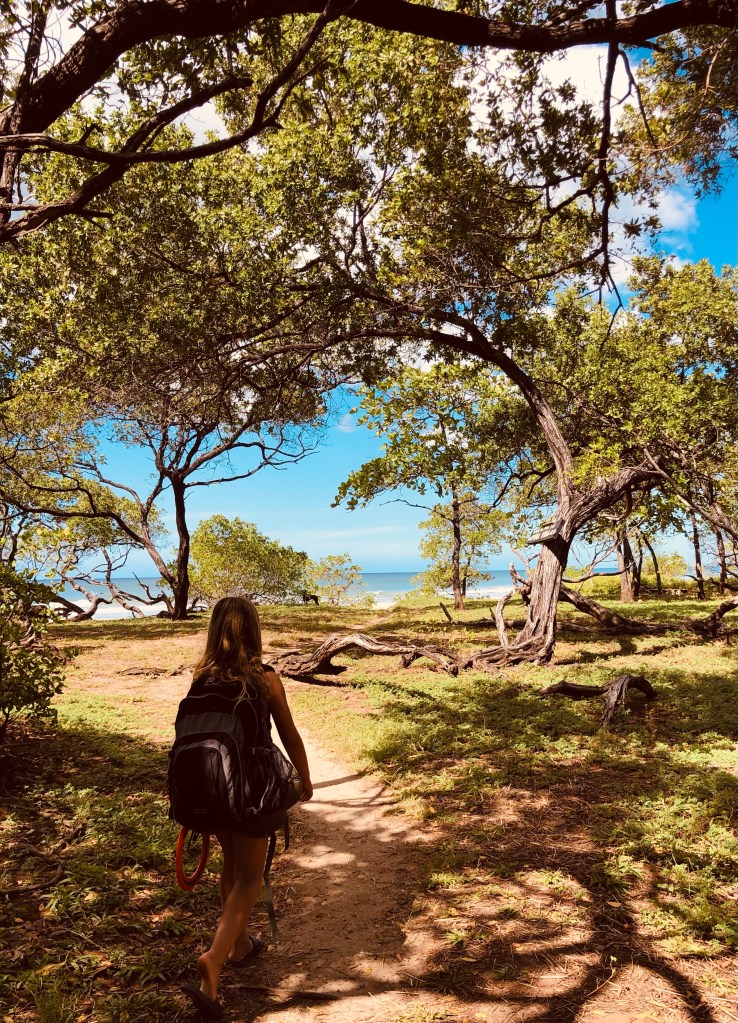
The light is perfect and the waves are good. Menna steps away – just a few feet down towards the water to take photos. This is enough. While her back is turned, they slip silently out of the mangroves, snatch both of our bags, and melt back through the wall of leaves and twisted branches.
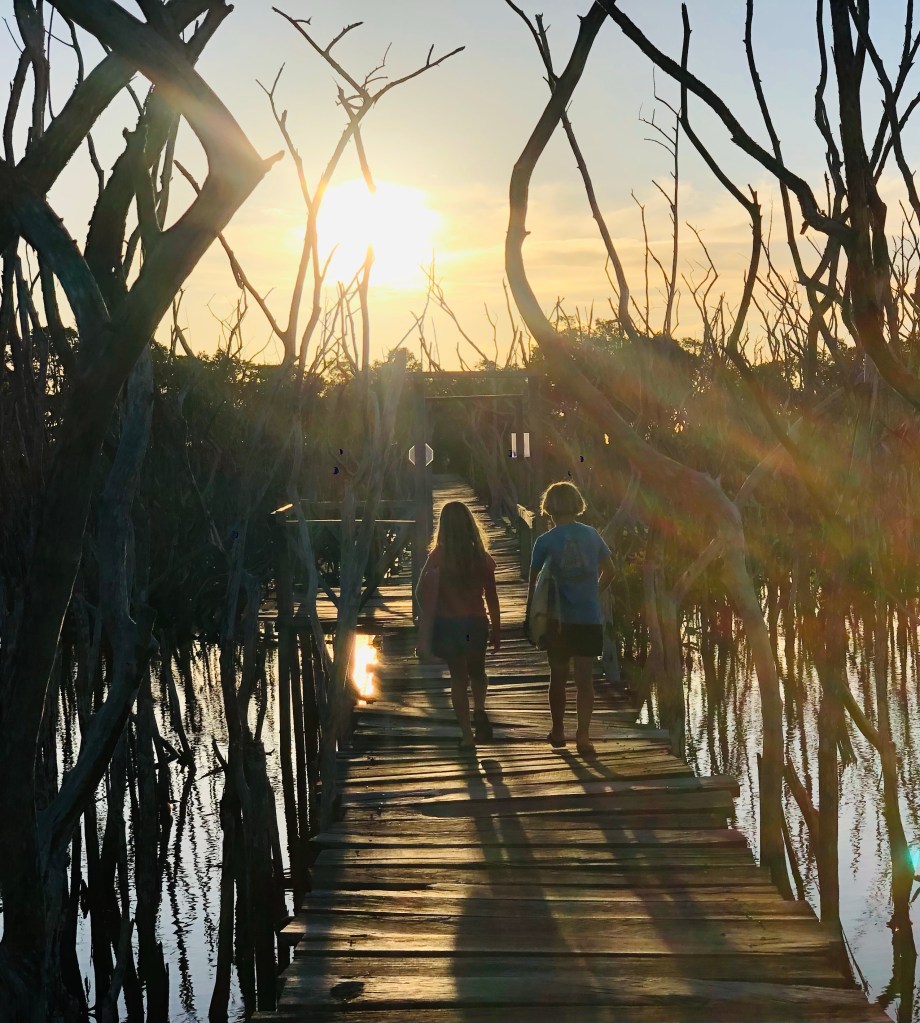
We chase them of course, right out of the water, all bare-foot and salty. Or rather we chase shadows and the idea of who they might be. Menna and Arthur run over the rickety walkway back home to find our car and then tour all the coast roads, peering suspiciously at anyone they pass, checking in litter bins for discarded possessions. Matilda and I push into the mangroves and come across a tracery of overgrown trails that lead back into the darkness. We find the first bag ripped open and dumped just behind the tree line, our swimming costumes, goggles and towels not worth their effort. Of the rest of our stuff there is no trace.
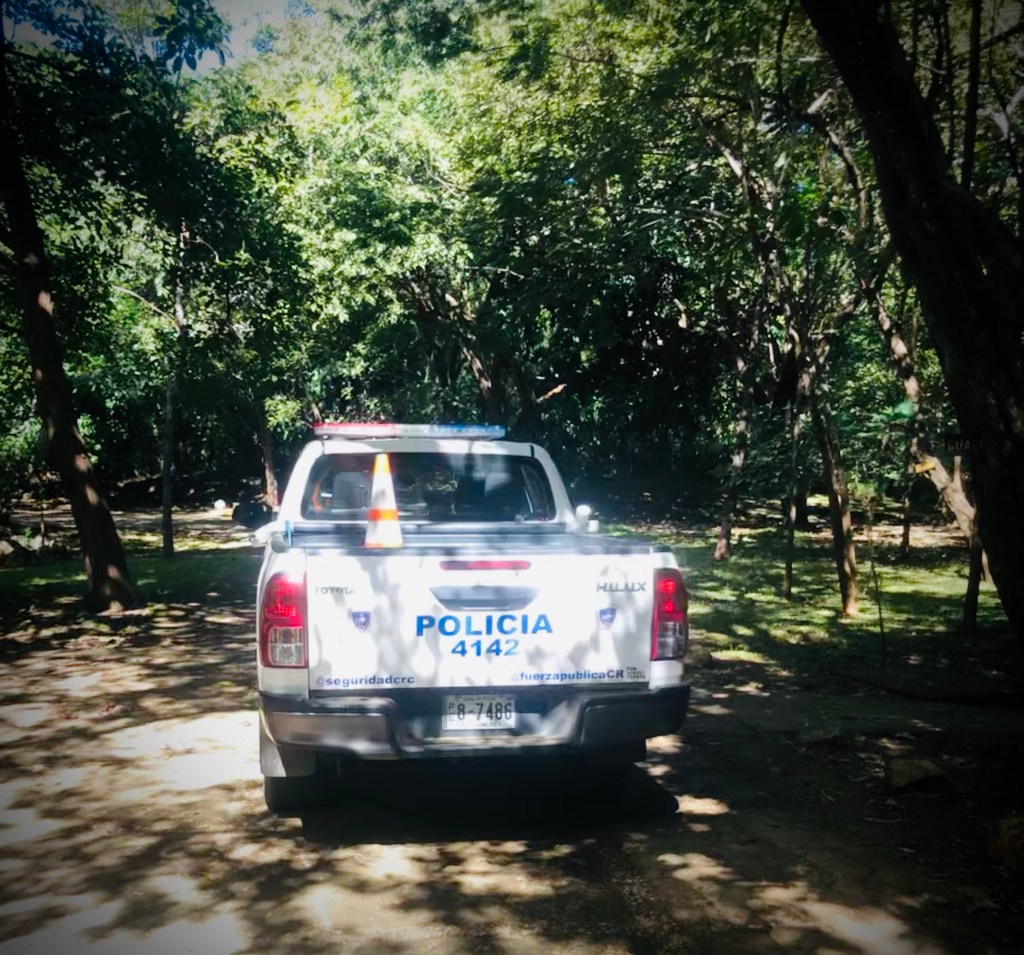
We talk to a pair of lazy police officers, who are reluctant to leave their car, and we ask at Lola’s Beach Bar. This kind of theft is fairly common, we hear, there have been a few this year. Nicaraguans probably, or Colombians. Or someone from somewhere else anyway, indicates our waiter, smoothly shifting all blame to those symbolic ‘others’.
“They will have been watching you” he adds ominously over his shoulder as he walks off to serve a new table. A local gringo emerges from the undergrowth, barefoot and carrying a machete, and is initially a suspect but then he speaks long and bitterly about the time he himself was robbed, and his theories about the thieves.
“They dig holes in the floor man and they stash the shit in there.” He says, waving vaguely at the mangroves, “So you can’t catch them with your stuff. And then they’ll walk out all casual. Someone’ll come back later after dark to collect it all. Assholes!”
We hold a family council in Lola’s. The police aren’t going to help, the locals aren’t interested, we are on our own. The school bag contained a lot of stuff: two iPads, a laptop, a GoPro, Menna’s diary, the kids school books, pencil cases, suncream. None of it is covered by insurance.
We will head into the mangrove swamp, we decide. We will follow the paths and look for tracks, try to see signs of fresh digging. Perhaps they have discarded some of our less valuable stuff – the books and diaries will just be excess weight to them. Perhaps they are still in there and we still surprise them with a crafty little ambush. The hunter will become the hunted!
We buckle up with our remaining possessions and walk along the beach. We find an entry point and plunge into the mangroves. It is dense in there and there is lots of scratchy undergrowth, thorns pull at our shins and leave toxic scratches that burn long afterwards. It is nearing noon and the day is hot, but we have no water – they have stolen all but one of our bottles. Things move in the undergrowth and we wonder how many of Costa Rica’s twenty three species of venomous snake are native to the mangrove. I am only wearing flip flops. At the beginning we carefully note each broken twig, and stop to examine indentations in the mud.
“Fresh footprints” Arthur mutters knowingly “probably half an hour old”, relishing his role as child sleuth. After while our conversation gets more sparse as we get hotter and more parched, then it dries up completely. We grimly fight our way onwards.
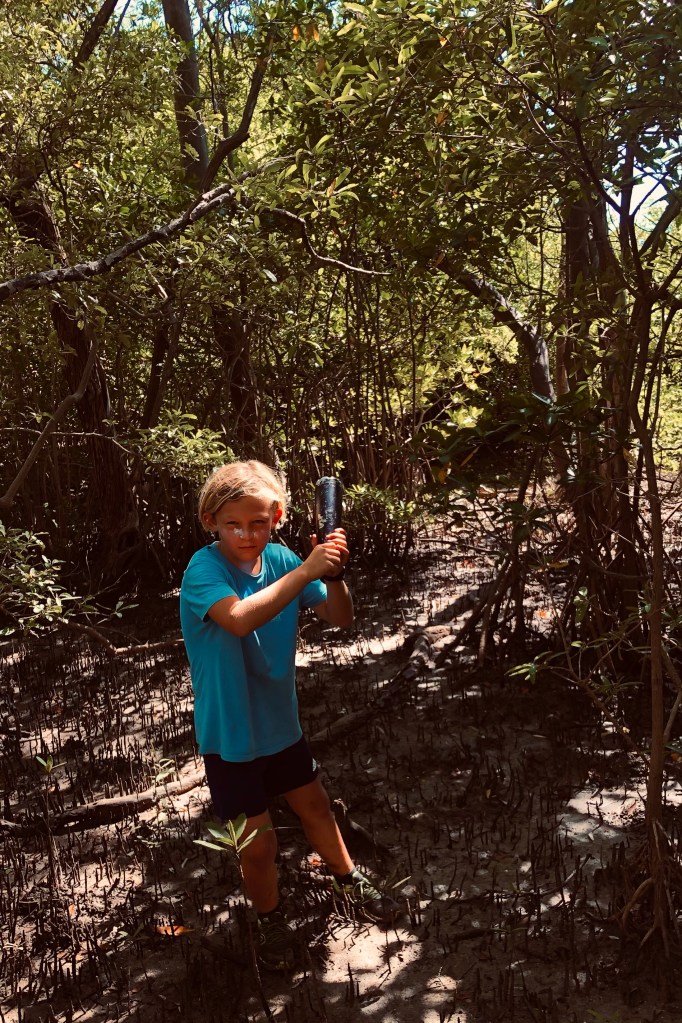
Sometimes we step ankle deep into swamp mud and pull back hastily, for who knows what is squirming away down there beneath that thin surface crust? The tracks twist and fork and I find them disorienting – the mangroves go back half a kilometre inland and run for several kilometres along the beach. Arthur and I get separated from the girls and then we quickly get lost. The impracticality of this quest is starting to weigh upon me. What if we do suddenly come across a gang of hardened Colombian thieves in their swamp hideout? What will we do then? Wave Arthur’s penknife and the one remaining water bottle at them, then perform a citizens arrest? Mosquitos bite our ankles and spiders get in our hair, magpies shout mockingly at us from the canopy.
We decide to call it a day and head blindly towards the sound of the ocean. The path has disappeared and so we must fight our way out through brambles and the clutch of dead wood fingers. We finally emerge hot and sweaty out of a thicket, right behind an elderly couple sunbathing on the beach.
We walk back along the sand to join the girls. Arthur and I have a deep discussion about materialism, wealth inequality and the ethics of punishment. But as Arthur sets out his case for knifing the thieves to death in the mangroves I am only half listening. I am distracted by a noise in the background, carried faintly on the wind. It sounds like a far-off chuckle, drifting out from the woods.
They are in there somewhere. In their underground den perhaps, beneath the hollow tree. They are reading Menna’s diary and listening to my playlists on Spotify. The kid’s drawings are pinned up neatly on their wall. They are writing this blog post on my iPad.
And we are not from Colombia cabrón! We are Venezuelan!
 Mutant Skies