The End of the World

There’s a dead macaw in the sand. Arthur finds him on our first afternoon and calls me over excitedly. He was damming a stream and suddenly he spotted the bird there, propped up on a tangle of roots with wings half-open, reclining. He has clearly been dead for a while and the vultures and coatis have been busy. Much of the upper body has been eaten away but his head is still there, attached by a length of vertebrae. His beak is closed, his eyes are open. We hook a long stick into the base of the skull and pick him up with it; he is surprisingly heavy. We take him ‘flying’ over to where the girls are sitting. Menna loves macaws.
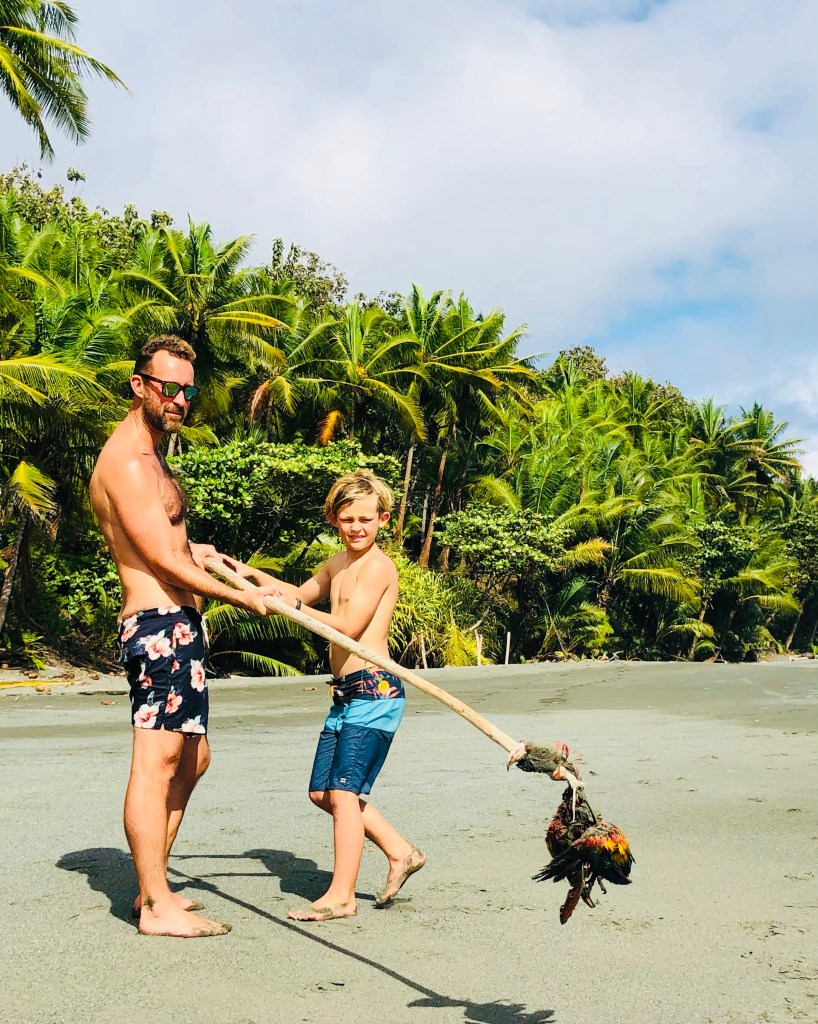
After all the screaming is done, we start to feel bad about the desecration of such a magnificent creature, so we take him back, retracing the trail of vivid red and blue feathers to his final resting place. Earlier that morning I had been walking along the beach in the mist, searching for a wayward son. I was seized then by a coughing fit that came out of nowhere and surprised to find my mouth full of blood. I spat it out, and it made bright red frothy trails on the white sand. Now looking at the confusion of scarlet feathers I am reminded of that secret moment and then I wonder what it would be like to find yourself propped up, dying, on this beach. We place our Macaw upright against a tree, looking out over the ocean. The next morning he is gone, reclaimed by the jungle.

This is a wild land that we find ourselves in. There is nothing for several miles in either direction of us, just an endless sand strip that fades away into cloud and water, a dark line of jungle behind, large birds of prey circling above. Waves smash down on the beach with a relentless roar. It is haunting and obviously beautiful, not like a postcard scene, but in a lonely and savage kind of way.

Together with our friends Josh and Meg, and their daughter Marlowe, we’re staying in an eco camp out by the Leona ranger station on the edge of the Corcovado National Park, a place that National Geographic calls “one of the one of the most biologically intense places in the world”. All that separates us from this biological intensity is thin canvas, for we sleep in safari tents under the strangler figs. We must carefully shake out any folded towels before use, we are told, as scorpions or snakes often crawl inside. We seven are the first visitors to the camp since March and it seems that in the interim the jungle has moved to reclaim it: twisted roots and hanging lianas have swallowed the rearward row of tents; the spa cabin is now nothing but collapsed bamboo struts and palm shoots, and has been colonised by Capuchin monkeys; the hammocks are covered in moss and lichen. We have a cheery hotel manager and a cook staying somewhere on site. A food delivery comes daily by cart. The bar is empty.
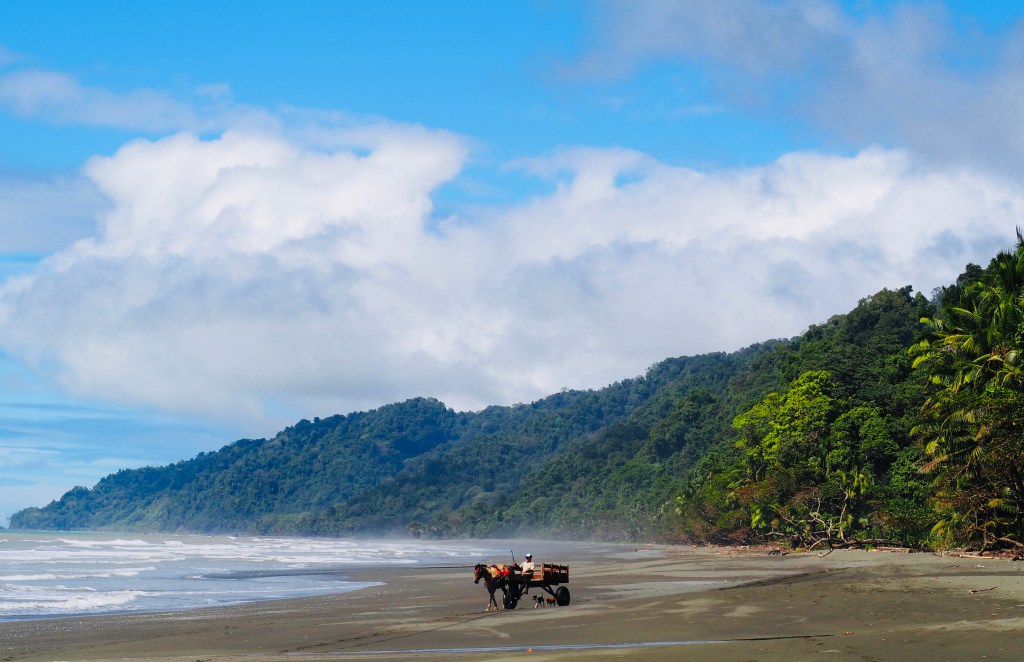
To get here we had to drive to the southern outpost of Puerto Jiminez, an erstwhile  gold-mining and logging centre, now a dusty jump-off point for eco-travellers wanting to provision before heading into the wilds.  We handed over a large amount of cash there to a chatty big man with a tour-operator’s wolfish smile. He directed us onwards – three hours bouncing over potholed dirt tracks, driving fast against a tight deadline – to make a rendezvous with the pony cart before high tide. We forded several rivers, saw brown water pouring through our engine grills and agreed to forget the car rental disclaimers that very specifically forbade us from doing this. We crossed wooden bridges one car at a time. We stopped to photograph monkeys, coatis, toucans, caracaras picking ticks from oxen. We reached the end of the dirt road and abandoned our vehicles besides a disused airstrip in Carate, and in the driving tropical rain we set out on foot for a further five kilometres along the beach to find our camp. We were late and we missed our rendezvous with the cart driver, so we left our luggage piled up in a palm frond shack, not knowing if we would ever see it again. 

Now we are here at the end of the world and as the sun goes down, everything bleeds into crimson: red-gold stains of sunset, a swirl of scarlet feathers, the veins of my eyelids lowered against the glare, secret blood streaks in the sand. There is single macaw that flies low across the beach, squawking, and I wonder if it is the surviving member of the pair. These birds are said to partner for life. She is calling out to her mate perhaps, wondering where he has gone.
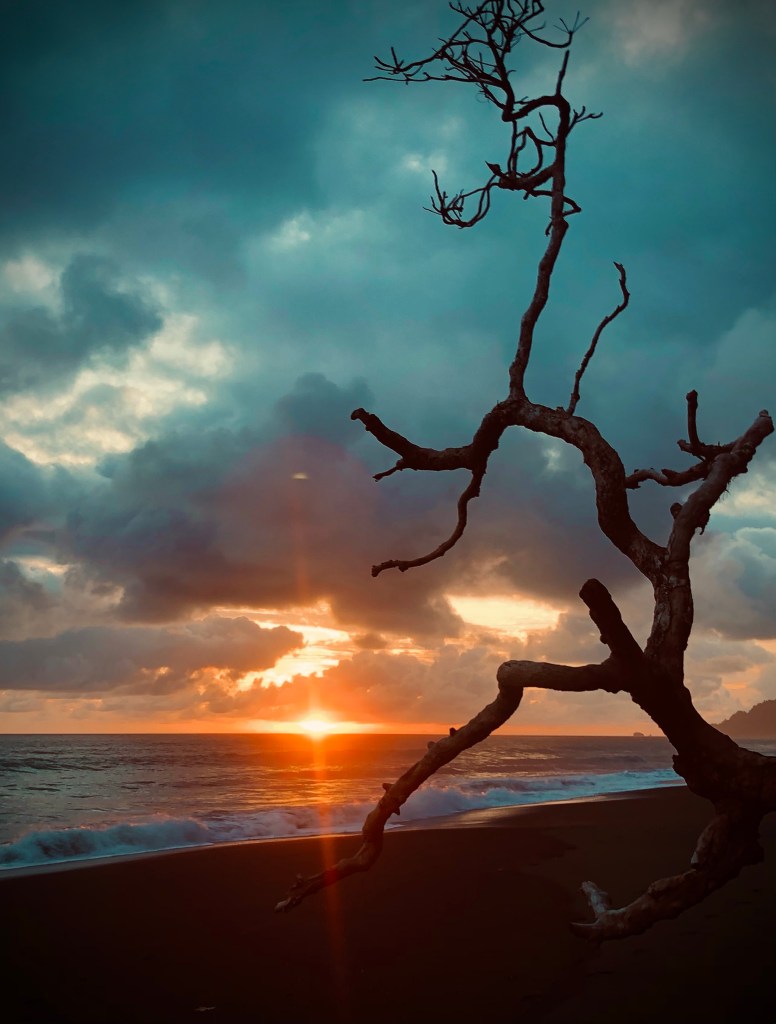
When the eagles are silent, the parrots begin to jabber

Winston Churchill
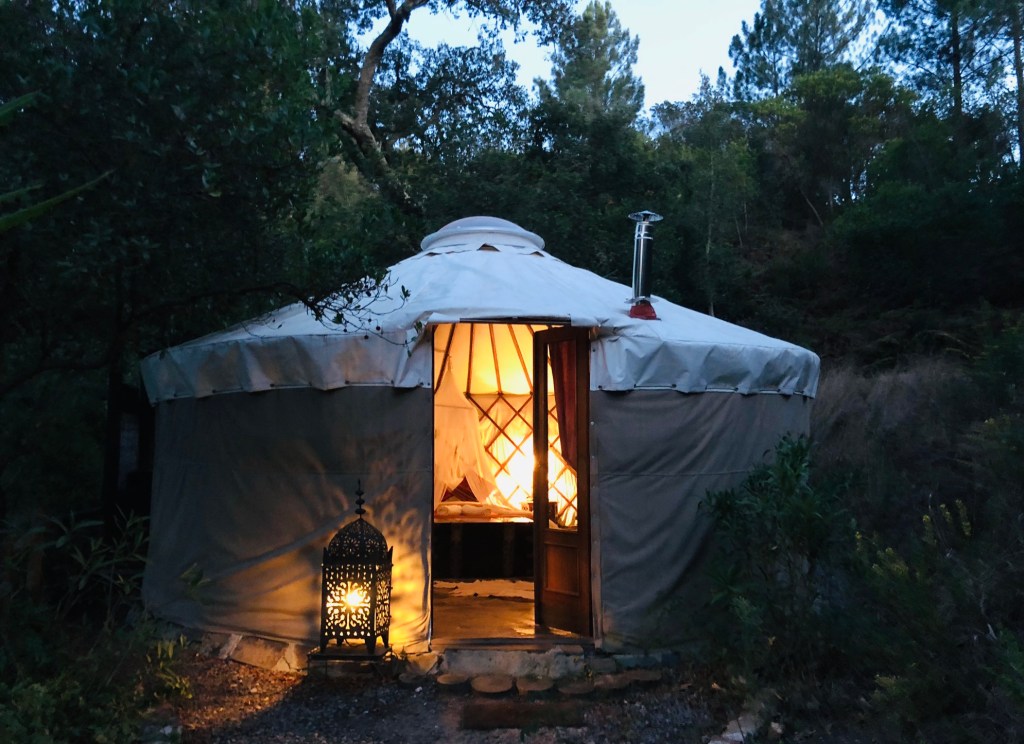
Yurting Real Bad

We are staying in a yurt. It is decorated like a Mongolian warlord’s tent with animal skins on the floor, carved wooden chests and iron candlesticks. A claw-foot bath sits outside under the stars. All the beds are draped with gauzy mosquito nets that look like a fairytale to Matilda but look ominous to me.

The kids are spinning around and Menna is jubilant. She has a thing about yurts and has been trying to engineer this for months, overcoming a wall of passive resistance from others in our party (me). Now she has been vindicated.

Our yurt sits nestled up above the tree-line overlooking a small valley. Outside we can see wigwams and cabins, gazebos, other yurts, outhouses with sawdust loos. Artful lighting illuminates key features in the dusk. Flaming torches reflect across the lake, willow trees are uplit with soft yellow spotlights, candlelight marks out the paths. There are peacocks shrieking, moving around like satin shadows in the twilight. It is a beautiful scene, though strangely devoid of people for such a grand site. It feels like a festival where they forgot to book the bands but no-one turned up anyway. Except us.

“Isn’t this wild?” I say, and no-one knows that I am secretly referring to the sort of wild that drinks from your ankles and buzzes.

And this is true. October has brought rain and insects. The kids have circular mosquito nets that provide good protection, but the one that hangs over our double bed is comprised of four overlapping veils that inevitably come open as we toss in the night, so it lets mosquitos in then traps them inside! I kill twelve on our first morning, fat and ripe with our blood. Throughout the week we hear them whine past our ears, so we slap our faces in the darkness, hoping to catch one. One morning I wake up with insect legs and blood smeared down my cheek, proving that the strategy isn’t always ineffective.

We have arrived at the campsite the day after a staff wedding, our receptionist tells us as we check in, and consequently everyone is a little discombobulated. She is an Amazonian woman, tall and strong with high cheekbones and extensive tattoos and she doesn’t look at all discombobulated. Later we find out that she was actually the bride.

Through various conversations and clues over our stay we sketch the outlines of the event: a humanistic ceremony; the camp staff released from their duties to go wild; a small but committed contingent of international guests braving quarantines to attend; crazy decorations; extravagant outfits; several days of partying. Our imaginations shade in the missing texture: shamanistic vows, peacock feathers, bonfires and bongos late into the night, nude dancers emerging from the lake, copious psychedelics, Goa trance, tears and mascara stains. We used to go to parties like that, I think wistfully.

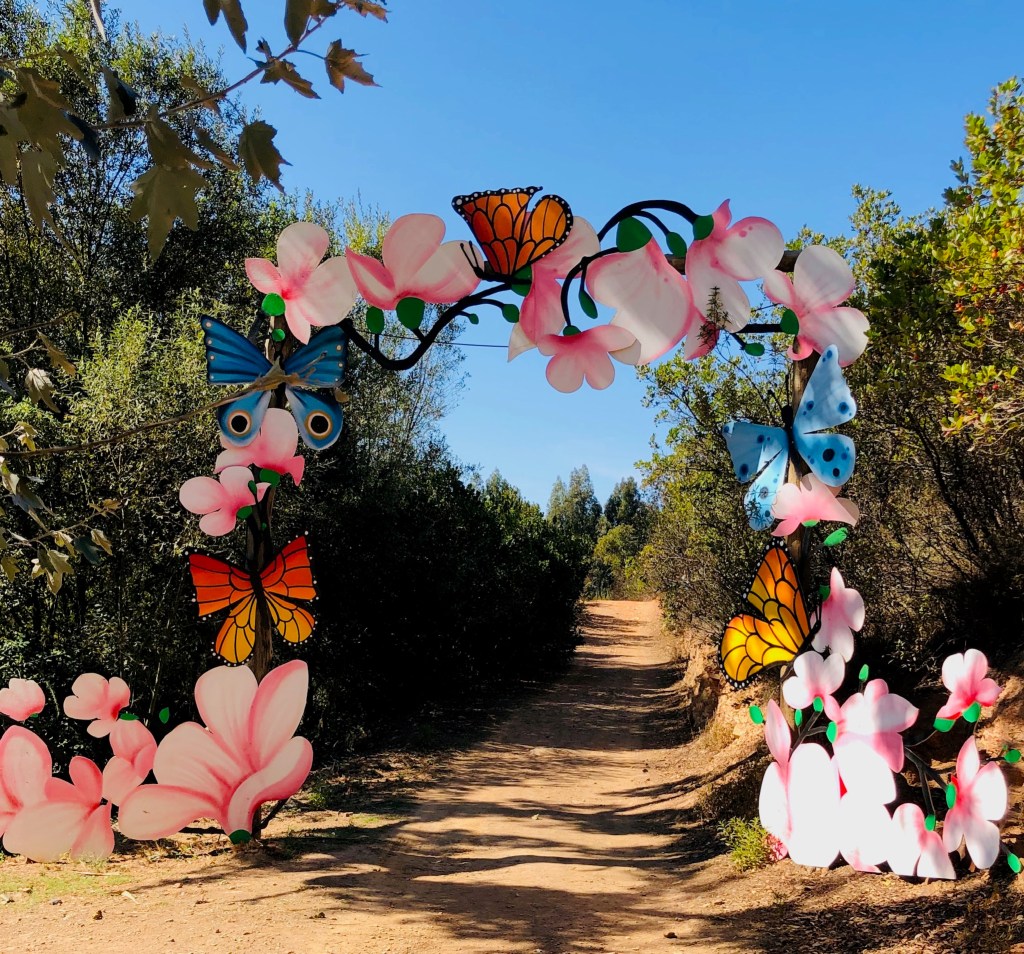
As we walk around over the next few days we find mementos of the great wedding scattered throughout the site like the relics of a lost civilisation. A plywood archway covered in peacock feathers lies overturned in the dust; a bottle of tequila sits among the cinders in the fire pit; hundreds of footprints swirl around the amphitheatre; in a far-off outhouse in the woods I find an enigmatic lipstick heart scrawled on the mirror while strange powders are smeared around the sink. A feather boa lies coiled around a eucalyptus branch.

There are no other guests for most of the week and so we eat with the staff each night, or rather ‘volunteers’, for as well as looking after the guests, they do eco work around the site for food and board. The wedding came right at the end of a busy season and everyone is tired and emotional. It feels rather fin de siécle. There are small flare ups at the table in Italian or German. Gardeners down tools and drape themselves over the sofas to smoke spliffs and mutter to each other. A blind dog hustles for scraps under the table. We lie next to a pair of volunteers down at the lakeside beach. They are having a long and indignant conversation in German and as I doze I hear fleisch emphasised heavily, salat and veganer.
“Someone put meat in the vegan salad. Total nightmare!” I whisper to Menna knowingly. There is a mutiny on Thursday when the chef refuses to fire up the pizza oven and I think it will go to blows, but alas no. It is typical for the Nicholls to arrive just as the organ fades to silence and the drapes are thrown over the carousel I think. This year has been a bit like that.

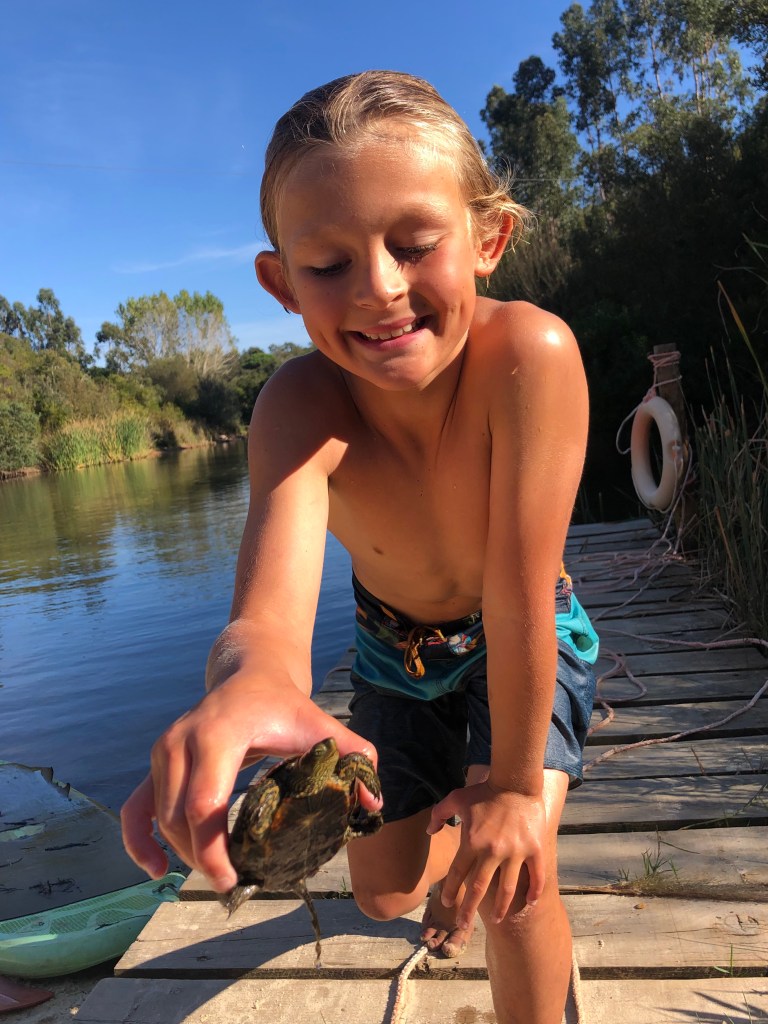
While I am watching the staff for drama, the kids are spotting nature. The peacocks move in an intricate hierarchy on the ground. Up in the air there are buzzards and flocks of blue-winged jays, even a hoopoe looping through the trees. Menna claims to see a turtle in the lake, which I secretly doubt, but then Arthur goes and actually catches it, and brings it back triumphantly for everyone to see. We find a dead snake on a forest run. I walk headfirst one evening into a thick web and come eyeball to eyeball with the hugest spider I’ve ever seen, and I properly scream like a six year-old child. It’s wild.

Away from it all

Our stay up in the São Mamede plateau was the closest yet to how we had imagined this year to be. Off the beaten track. Out in the wilderness. A simple life, miles away from the rush of the city – both physically and figuratively. It was an antidote to those moments of regret and mournful rhetoric about our altered plans (but we should be beside tropical waterfalls right now!) The self-pitying mindset is insidious and Portugal is an epic place.

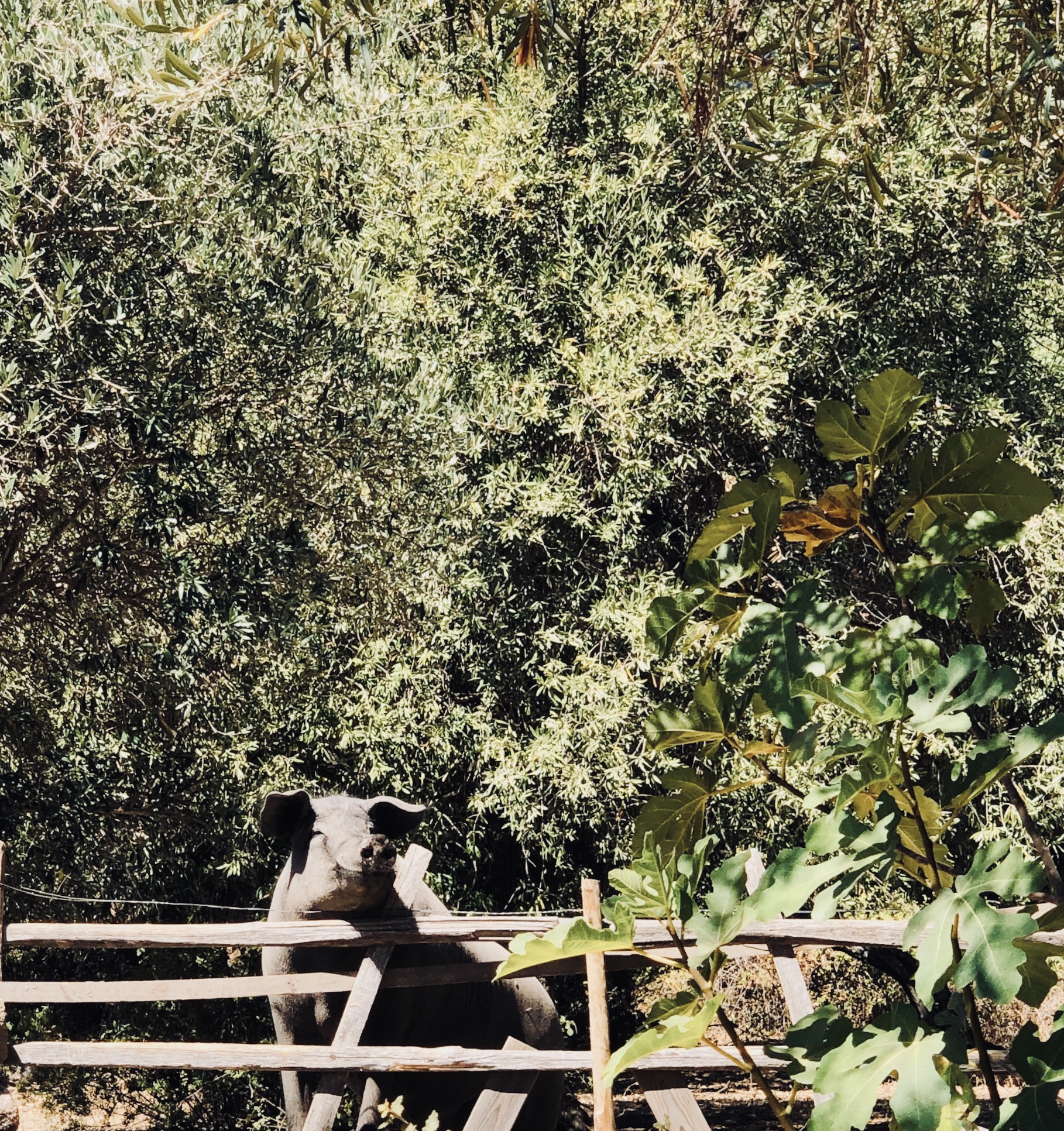
The Terra Sangha project still felt in the early stages but was underpinned by a conscious attempt at slow living, traditional farming, sustainability, a rejection of digital life. It was a rugged and beautiful place, and it clearly took some work to maintain. There were olive groves, walnuts, figs and lemon trees to tend, terraces to clear, rutted paths to pave, irrigation channels to divert, log buildings that needed building. In one dusty terrace Ben had cleared a sparse vegetable patch where tomatoes, courgettes and pumpkins grew along with a few hardy flowers but full self-sufficiency still felt some way away. There were dogs, chickens and donkeys roaming around, and a fat pig called Madam Chestnut who captivated our children with her greedy charm. I couldn’t work out at first how she fitted in with the vegetarian eco vibe, but she was a long-term resident, not a food source, a survivor of the pig farm that once stood here. She reared up on her gate and grinned at us whenever we walked past and soon had the kids eating out the palm of her hand – only it was the other way around. Clever pig!

Aside from the domestic animals the place was teeming with hidden wildlife. There were the rooting marks of wild boars under the trees and we heard that pine marten and otters tracks could be found in the soft mud down by the river (though we didn’t see any). Porcupine quills and snake skins lay tangled in the scrub. We saw no traces of the Iberian Lynx but it was out there somewhere. We imagined a nighttime procession of creatures slipping and slithering down from dry hillsides to find their way to the river. Behind Ben’s farmhouse was a watching spot, a flat stone shelf by the water where he had an old mattress underneath dream-catchers, candles and other esoteric paraphenelia. He told me he had seen kingfishers there, hoopoes, egrets, a rare stork, golden orioles.

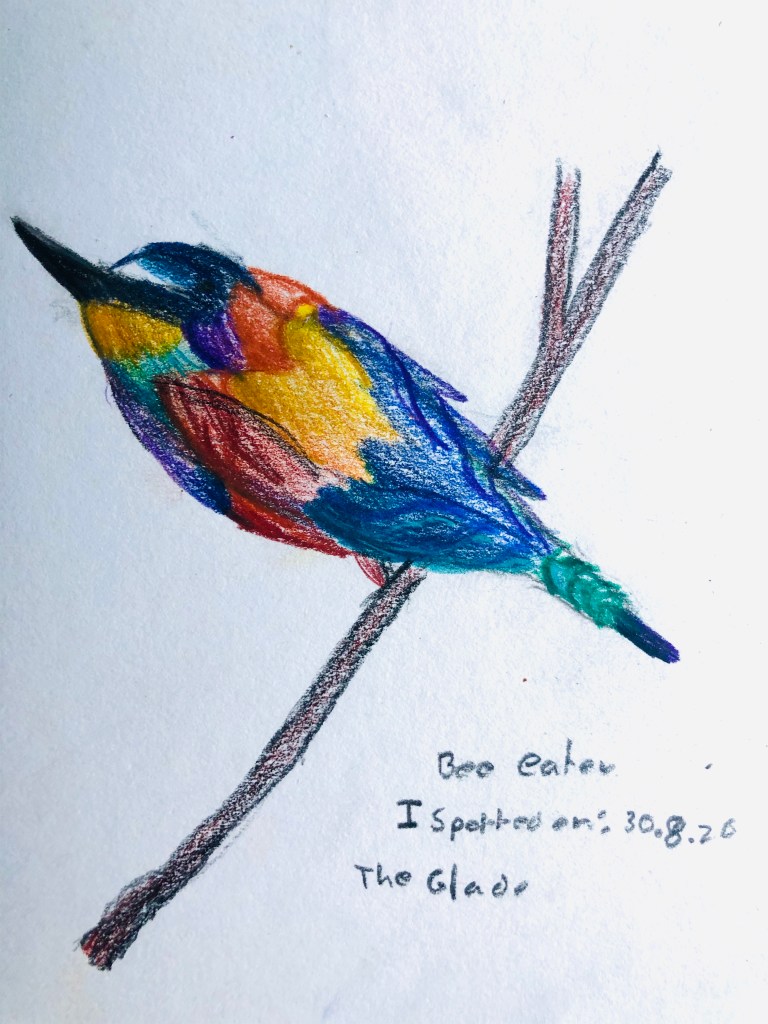
One day we drove out on a reconnaissance mission. Matilda called in an early sighting: red-green-orange swirls, gliding around and eventually solidifying into a flock of bee-eaters (or perhaps a cannonade of bee eaters). They perched for a while on a telephone wire overhead and we hung out there on the roadside beneath them, eating figs from a nearby tree and watching them through binoculars. Half a kilometre later we had to pull the car over again, as three Bonelli’s eagles (or golden eagles even?) emerged from behind a hillock right next to us, and wound their way up on the thermals, followed by maybe twenty huge griffon vultures, indistinguishable from eagles themselves but for their long necks. For a few minutes the sky was full of these huge tawny birds circling above our heads, and we were frozen there in awe, maybe a bit scared of talons and hooked beaks, like prey transfixed. We watched in silence as they drifted lazily upwards, until as tiny specks they were blown far away over the plains.

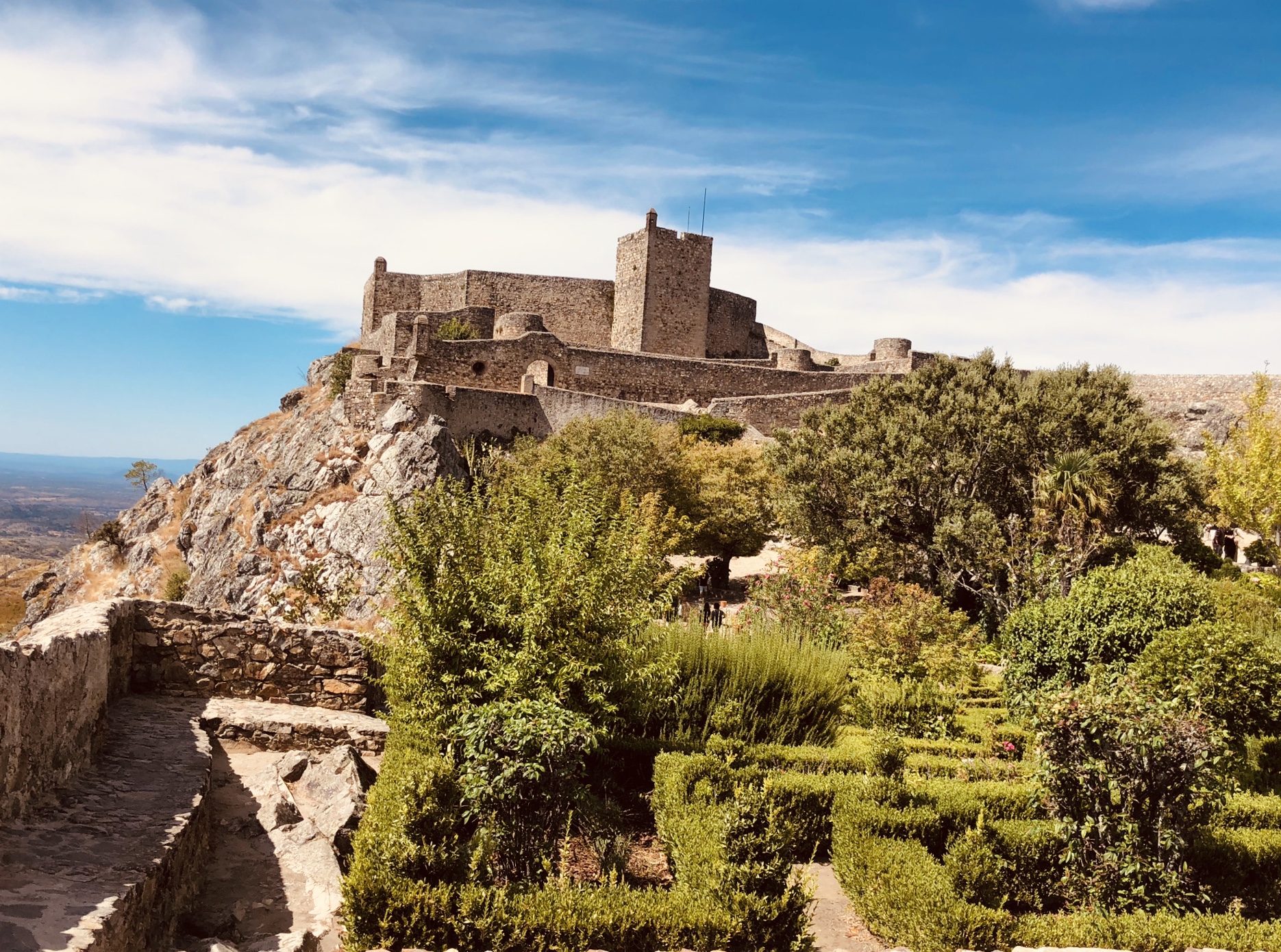
We drove on that day to Marvão, a mediaeval town perched high on the mountain top. It was a maze of glaring white houses, steep cobbled streets, a ring of churches and an old Moorish fort at the peak. There are layers on layers of historical masonry in this part of the world and this was another epicentre. Marvao was a breakaway rebel enclave in the ninth century, revolting against the moorish Emirate of Córdoba. It became a strategic stronghold through the Christian Reconquista, the war of the Spanish Succession and several exotic sounding wars I’ve never heard of (The Fantastic War! The War of the Oranges! The Peninsular Wars!). Away on a far off peak we can see another white mountaintop town, Castillo de Vide, flashing it’s battlements competitively at us. Perhaps there is a string of these fortifications all the way down the border, grimly holding back invaders.

High on the battlements of Marvao we found ourselves with views that stretched for hundreds of kilometres in every direction, and there again, against the hard blue sky, we picked out eagles patrolling the plateau below. We had been talking about how these stone ramparts were over a millennium old, but now it felt like this symbol of military power was undermined somehow by those overlords of the skies, circling, watching, enforcing their more ancient dominion over the land below.

Our week at Terra Sangha was over in no time. It was a proper adventure. Rough living. A fend-for-yourself kind of environment that suited us just fine. Crockery and cutlery were in short supply, there was no means of refrigeration, the water was suspect. The clean bedsheets waiting for us had disappeared from the washing line. The solar panels were out of action and we had no power. Although the website alluded to sunrise yoga classes, vegetarian dinners served by candlelight with homegrown ingredients, none of this seemed to be available and we found that we weren’t bothered. Instead of organised activities there were endless woods to explore, mountains to climb, a river that you could trek up for miles and stone ruins to poke around in. There was a a stone citadel where you could play guitar and watch the stars. The simplicity was part of the charm. Terra Sangha was a primeval place that and to have too many comforts would have diminished the edge.

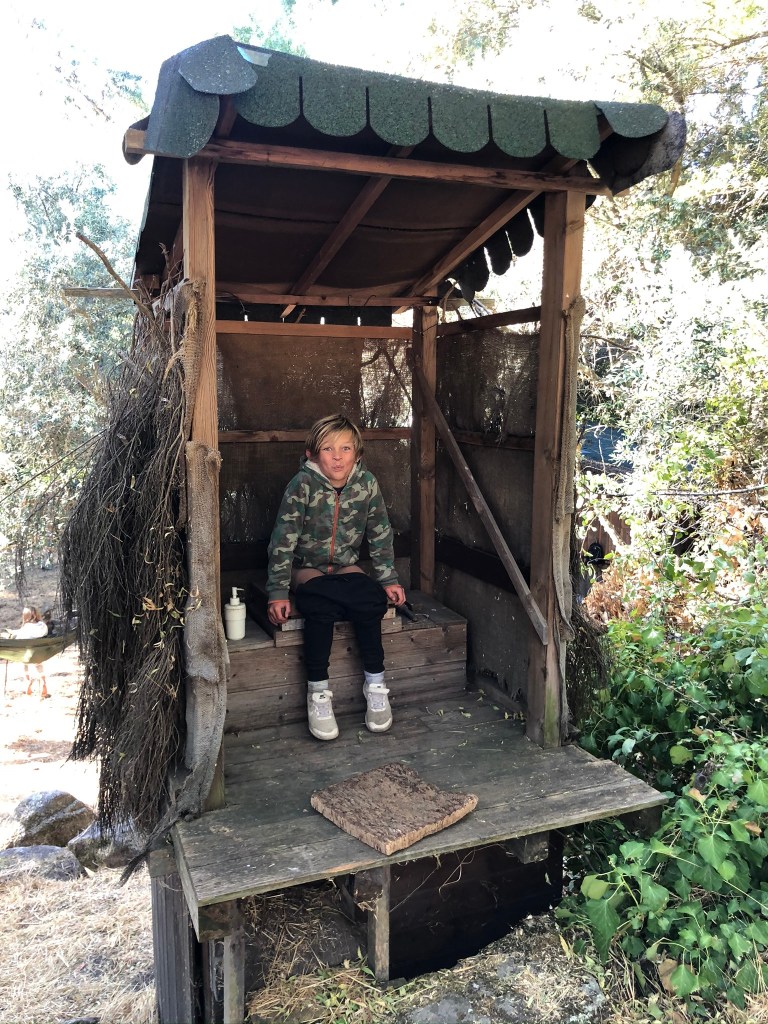
There’s nothing like answering a call of nature as nature keeps on calling all around you.

Stone and Water

We spend several days exploring Terra Sangha and the mountains around. We climb up ancient terraces that are carved into the hillsides and buttressed with lichen-covered stonework. Further walls criss-cross the land like a maze and the ghostly outlines of old, old buildings can be seen in certain clearings. From the hills above we can clearly trace the foundations of the Roman and then Moorish settlements that must have dominated this landscape for miles around. This was once the heart of a thriving civilisation, but nothing beside remains, only a stone farm with a few outbuildings, some olive groves and a couple of wooden hunting lodges that now house occasional travellers like us. Poking around under the ground we find pottery and iron fragments that we think might once have been arrow heads.

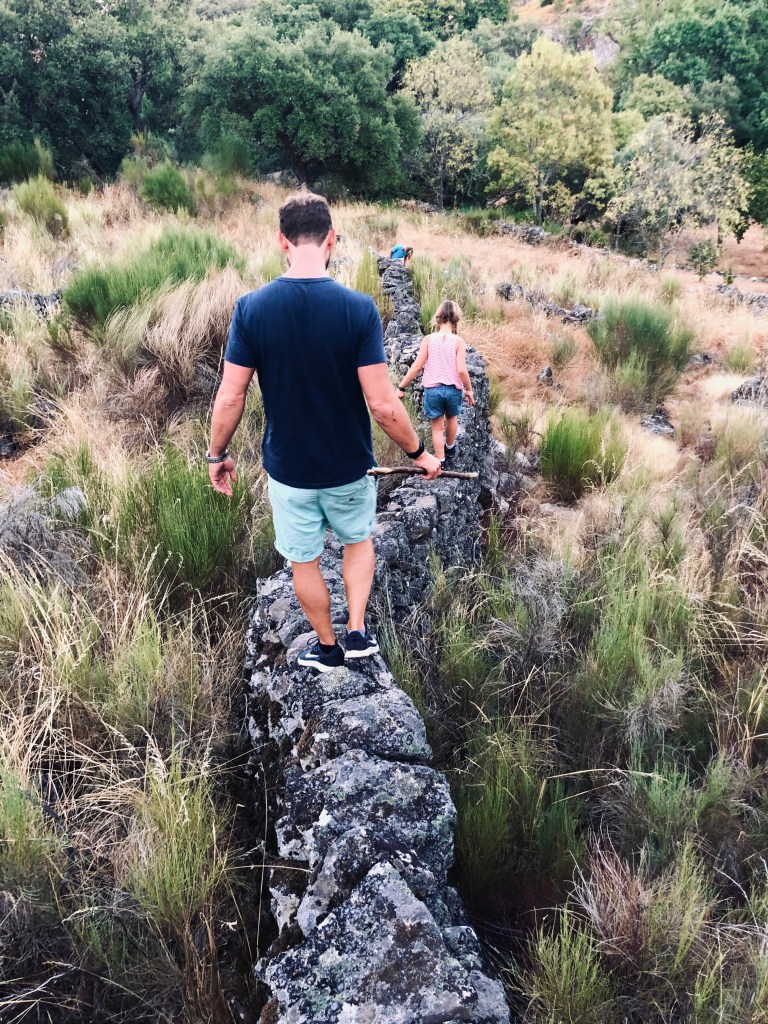
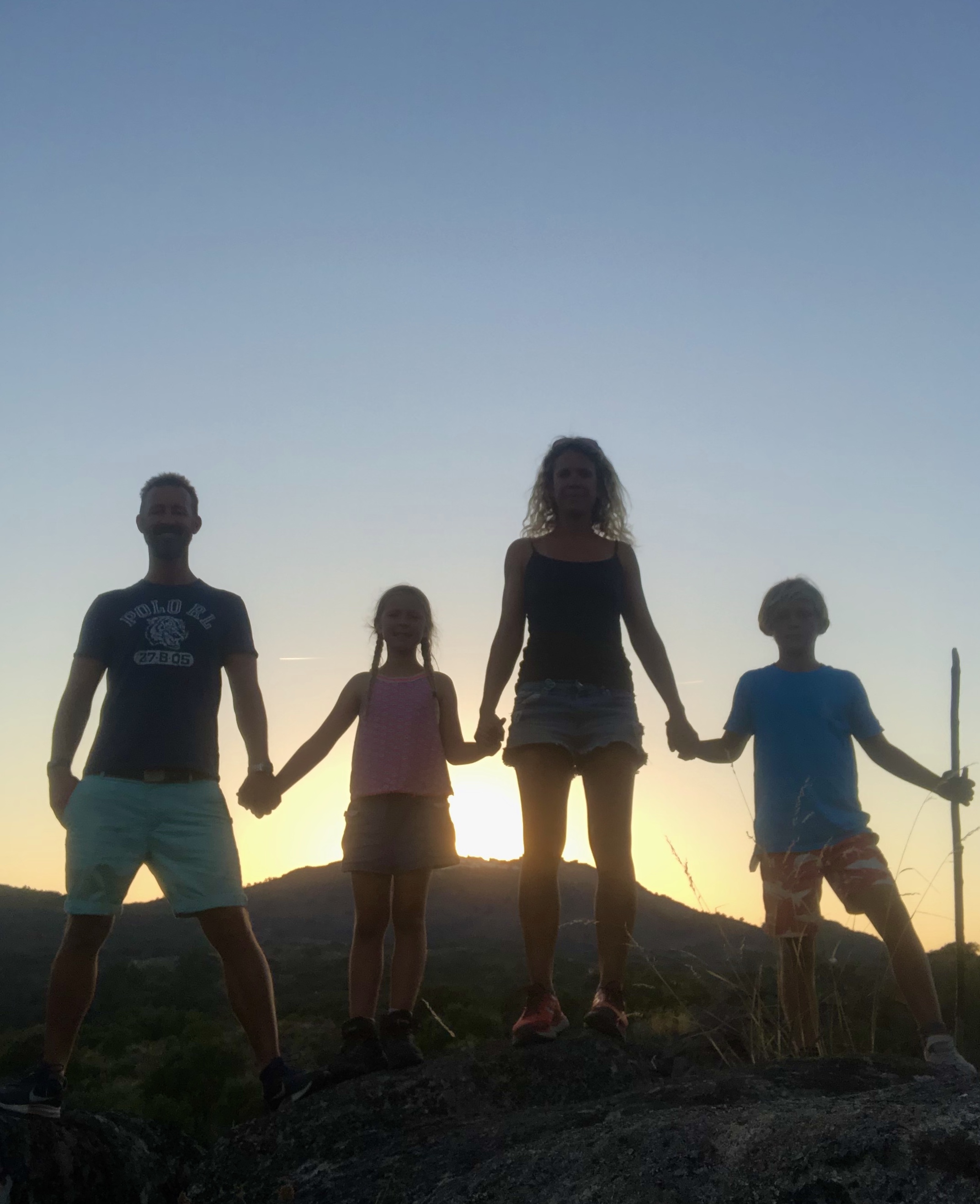
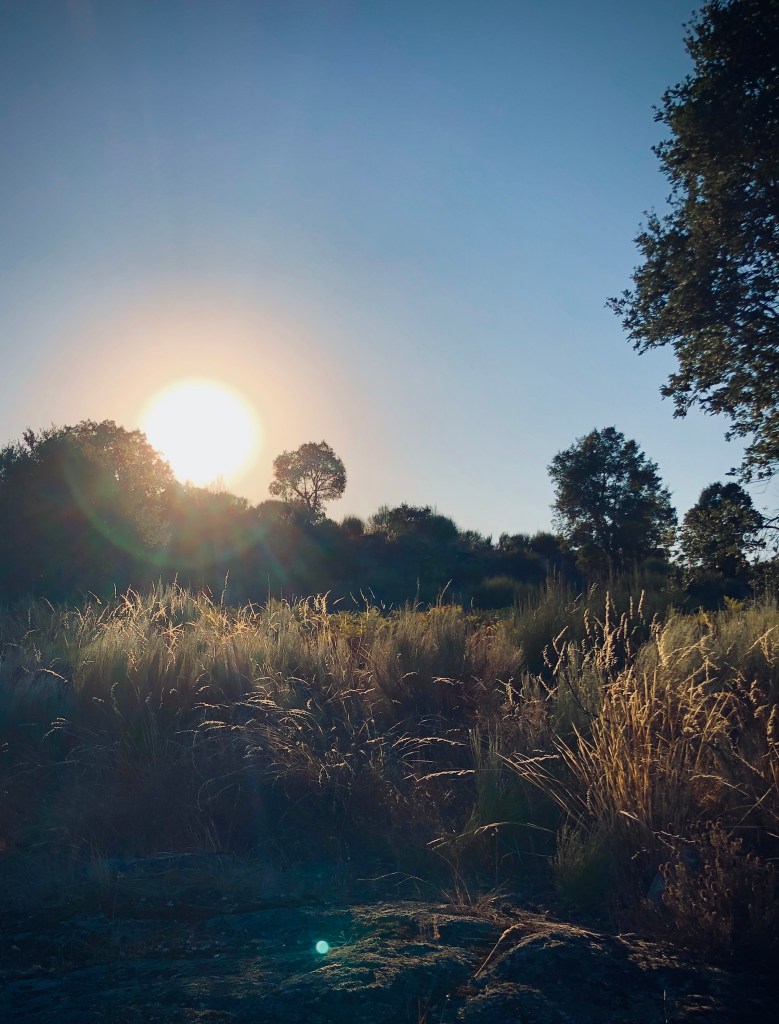
When one evening we climb the mountain behind us to watch the sunset, rather than risking snakes in the the bracken, we balance our way upwards on top of one of these creaking ancient walls. It is a simple thing of dry balanced stones with no cement, and clearly hasn’t been touched in centuries, but is so carefully fitted that four of us in succession pass up safely with barely a stone moving.

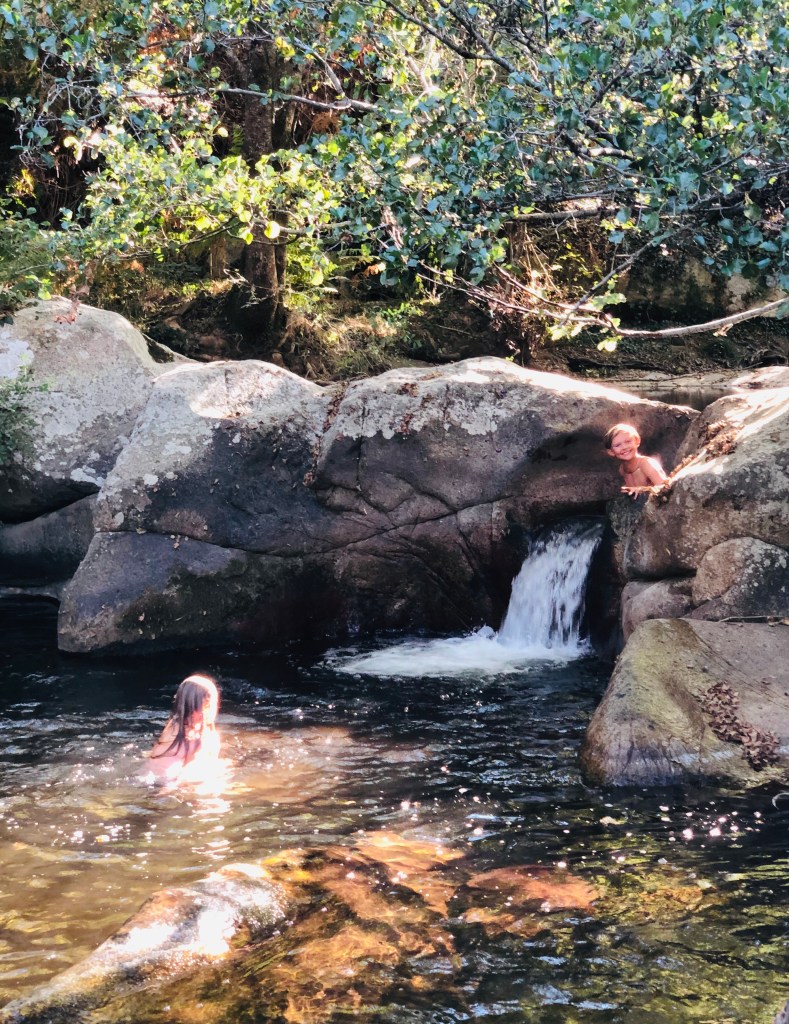
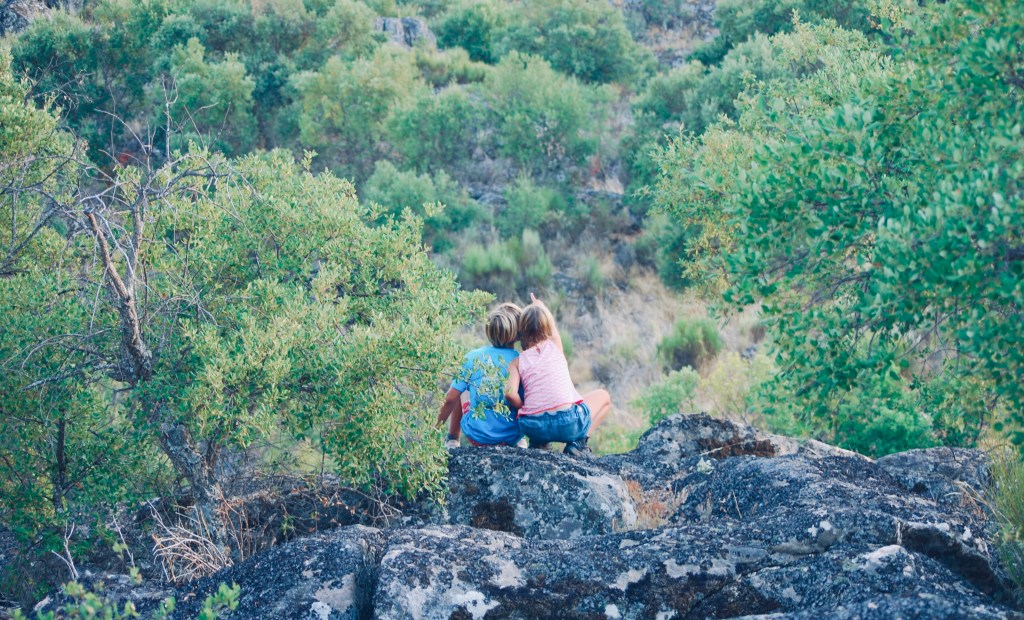
In this dry land we become obsessive about water, and from our cabin, the chatter of the river is a siren call. We find shade down at the river, we swim there to cool off, we use it to chill our milk and beers, we make complicated dams and stone towers. Arthur is in his element here and irrepressible as a water rat. He splashes, hangs from trees, throws stones, catches lizards and chases dragonflies, carves a bow, whittles arrows, makes elaborate snares in the bushes, diverts water into a series of fish catching pools. Matilda meanwhile sits on a sunny rock and sings to herself.

Our cabin has an outside tap with water that is pumped directly from the river.
“Don’t worry. The water is filtered,” Said Ben when we arrived “and the pressure is pretty good right now because I’ve just changed the filter.” He turned the faucet with a flourish. It hesitated, shuddered, coughed out a spray and then subsided to a dribble.
“So we can drink it then?”
He thought a while. “No-o. I wouldn’t advise you to drink it. It can be drunk. But I don’t think your insides are ready for it.” Looking at our worried little faces. “Don’t worry though. We’ve got a spring on the site. You can fill up bottles from there. It’s very pure.”
“Oh right. A mineral spring. Like your own Evian?”
“Um yeah. Like Evian.”

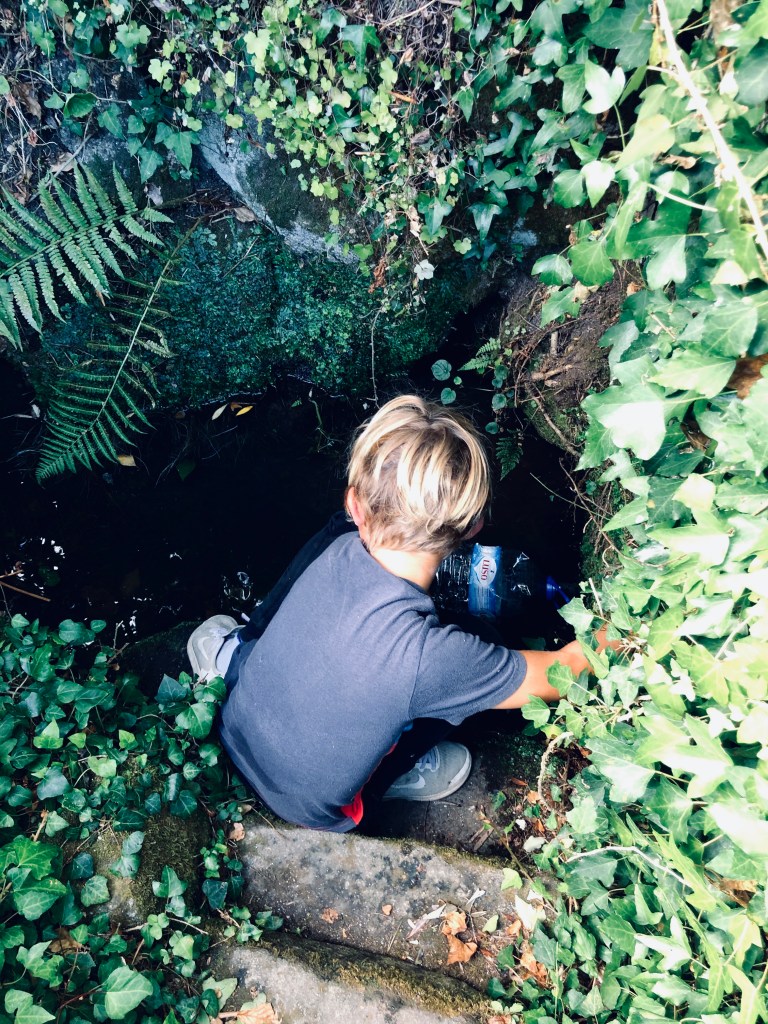
We don’t want to use our car unless we have to, it seems against the subsistence ethos of this place, and who can argue with a natural mountain spring? Arthur is dispatched cross country to fill our water bottles every day. He doesn’t complain, but when I go with him to fill up at the spring one evening in the half light, I find it teeming with worrying wildlife and full of over-rich organic smells. You must descend down some steps to a dank pool that is full of frogs and mosquito larvae, thick spider webs and who knows what else. The ancient donkeys of Terra Sangha come to water here and the air is pungent with the smell of their piss. The precious spring water trickles out of a mossy pipe inches above this dark pool. Your water bottle must be slotted onto the pipe with some dexterity to avoid contamination with the stagnant water beneath, and then you must push downwards and submerge it in the slime to find an angle so the bottle will fill. You squat there for several long minutes, hunched in the darkness, waiting for the water to trickle in while sly reeds pretend to be spiders on your neck, frogs splash around and small biting creatures drone in your ears.

A few days into our stay I have a wild and feverish night, roaming and tossing in the darkness, creatures running over me in strange smothering dreams. For some hours I battle my demons until at 5am I give up and leave the cabin to wait for dawn. I wrap myself in the Indian rug that I call my bearskin and take myself down to the river. Crossing the stepping stones to the far side I wedge myself between two tree roots that trail over the water and settle in for sunrise, hoping to see kingfishers. I have a strange hallucinatory time there in the half light, immersed in the sound of the river. I find myself slipping beneath the surface to slither through pebbles and submerge myself in the silt. Reborn slippery and grey in the ancient coiled roots under the river bed I take on many forms. The kingfishers don’t come.

When Menna finds me some hours later I feel very cold and have a sickness deep in my stomach.

I face down the illness. I am determined that I will not lose a day with my family in this special place. It is just some food poisoning from the chicken kebabs I barbecued last night (they did taste mushy in the darkness) or perhaps a small stomach upset from swimming in the river, a germ from dirty hands. It will pass.

We go out walking in the late morning climbing up to the eastern peaks that face down onto the property. We have been told about a high viewpoint from which you can admire the topography of the São Mamede plateau. I lag behind on the ascent and sweat a lot. We make it up to a high point and see an undulating landscape of yellows, browns and deep greens. The trees bring life to this dusty world: sage colours of olives, walnuts and twisted corks up on the higher mountain faces, the deeper greens of oaks, limes, poplar, birch and hazel amassed around the hidden river below.

We try to make a homeward circuit and get totally lost up there in the hills in the midday heat. Our landmarks for safe return are strange rocks and twisted trees, a sunken path, a certain hilltop ringed with white stones. These milestones shift and change from different perspectives; similar features trick us and take us clambering up false paths. We end up following circular goat tracks that end in impenetrable thickets, always convinced we can hear the river close by and will somehow overcome the banks of thorn and brushwood to find it; that one true path home. We have no water and the whole thing is slightly nightmarish though I am determined not to indulge in further dream cycles of death and rebirth. One mustn’t panic in front of the kids.

We are on the mountain for a couple of hours until we find a path that leads to the river and finally we see the Roman bridge that means safety and I nearly cry.  We make it home, bruised and scratched. It is 3pm and kids are hungry for lunch while I collapse into the hammock and pass out for hours. The kids take secret pictures of me asleep. It is a horrible sight.   

Two days later Menna looks at our water bottle as it is illuminated in a shaft of light. There, in the ‘Evian’ spring water we have been drinking all week, are tiny nematodes, long as a finger nail, furiously alive and hungry. They coil and twist like malevolent worms. I feel mixed emotions: a resurgent nausea, vindication at a bona fide parasite to blame, slightly bitter that I was the only one to fall sick. Am I now the weak member of the herd?

We don’t drink any more water from the spring and when we leave at the end of the week, Menna doses us all with her most potent antiparasitic medicine.

Off Grid

The Serra de São Mamede is a spur of the Toledo mountain range, sitting high above the Alentejo, dividing countries and climates. On the eastern side you have Portugal and the Atlantic terrains, and on the west is Spain and the Mediterranean. We are staying deep in the protected national park that nestles on the Portuguese side of the mountains, and it takes us five hours driving cross-country to get there.

There is a symbolic aspect to the journey as we gradually leave civilisation behind us and wind our way up mountain roads into the wilderness. Towns become villages, vegetation thins out, roads get pocked and increasingly rutted until finally the asphalt ends and we bump the last few miles down a red dirt track, squeezing between rocks. Then we have arrived – that is to say there comes a point where we can’t drive any further and we abandon our car in a scorched sandy clearing and proceed on foot as the sun begins to set.

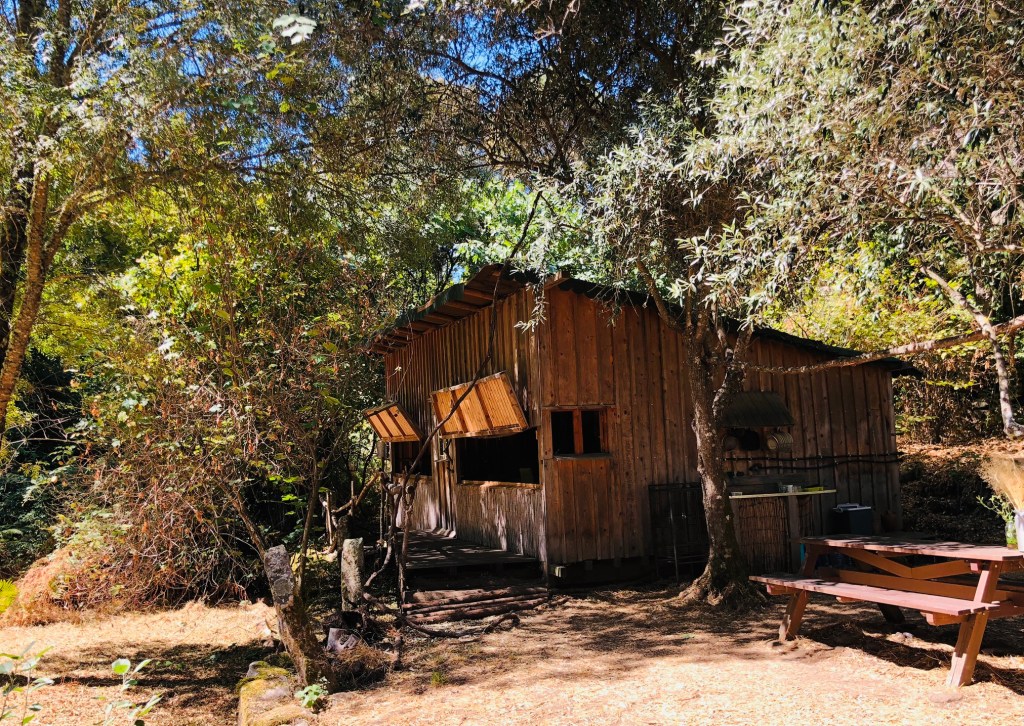
The domain of Terra Sangha stretches out over the hillside like a dusty crumpled blanket, seamed with dry stone walls and scored by a river’s crease. There is an simple farmhouse in the middle of it all and that is where Ben resides, cooking on wood and lit by candles. He has no power at the moment, the solar panels have been out of action ‘for a few weeks now’, but Ben does not let such worldly matters affect him. It won’t affect us either, he tells us as he takes us to our cabin, we didn’t have solar panels to start with.

After some months of relatively civilised living on the Iberian littoral, we are now going totally off-grid. That means living with no electricity, drinking water, flushing toilet, oven, shower, tv, window-glass, wifi, phone signal or refrigeration. “There’s a cool box somewhere if you need it. I can bring you ice.” Says Ben vaguely and disappears off into the dusk, leaving us alone in our glade.

Our car, full of the heat-sensitive provisions that we have purchased for this week, is about a kilometre away and darkness is falling fast. The evening is dry and windless, the temperature still sits obstinately in the low thirties. We have some work to do.
“Does anyone know where the head torch is?” Asks Menna pointlessly.

We toil backwards and forwards to the car, laden with many (un-eco) bags full of (non-vegan) provisions, (unsuitable) clothes and (unchargeable) electrical items.  We leave surfboards and bikes dumped on scrubland by the car. We climb walls, stumble over hidden obstacles, get scratched by tree branches and curse a lot. The night falls quickly once the sun has dipped behind the mountains and the darkness is complete and unequivocal.

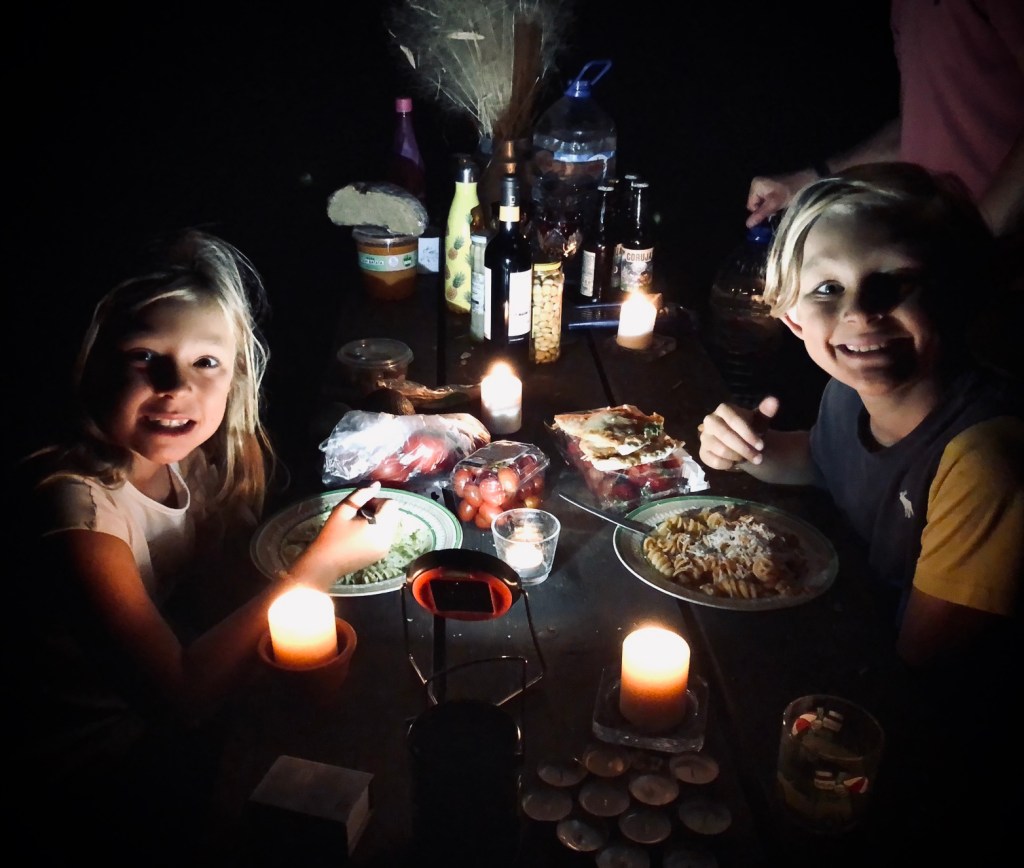
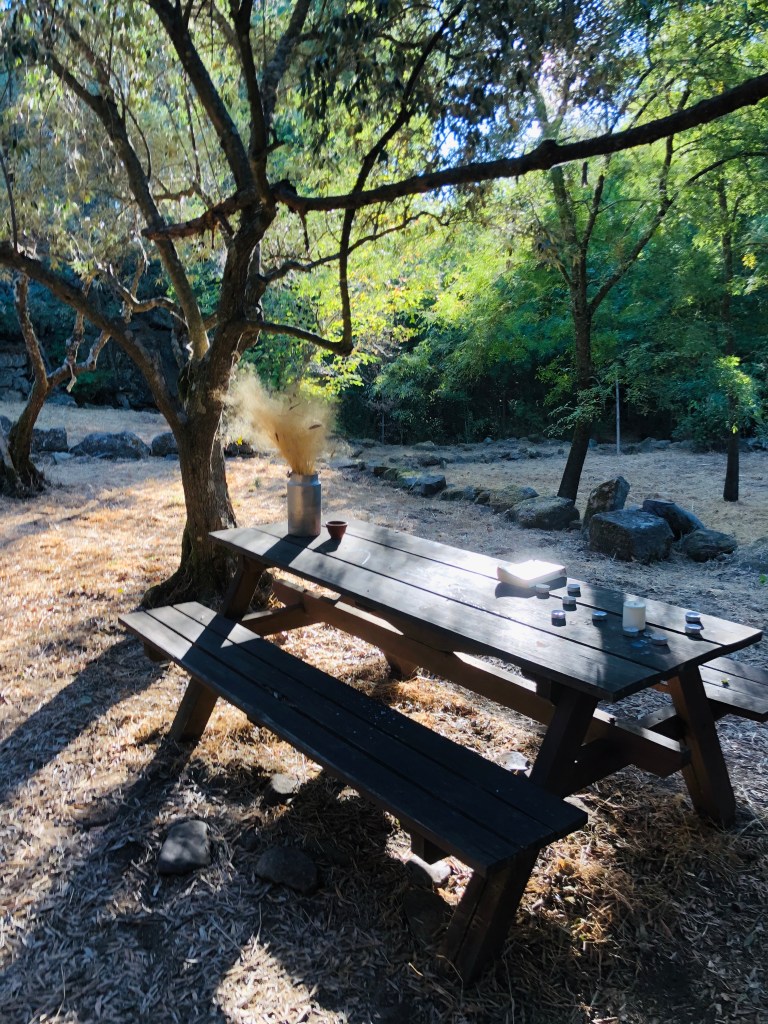
Dinner is a basic pasta, cooked by torchlight outside on a rusty two-ring gas stove. Around us the night comes alive with wild calls and rustling that may be leaves in the breeze but may equally be prowling paws. The Iberian lynx still lives in these remote mountains I tell the kids, maybe bears too, certainly wild boar. They have both gone very quiet and don’t venture outside the safe sphere of light that the solar lamp throws over our trestle table. Matilda screams occasionally as flying creatures suddenly zoom past her head. This is a sanctuary for bats as well we remember, and our cabin has no window panes. They will come in and sleep in the rafters.

By ten o clock we are all tucked up in our single room, wide eyed in the darkness, listening to the forest breathing around us.

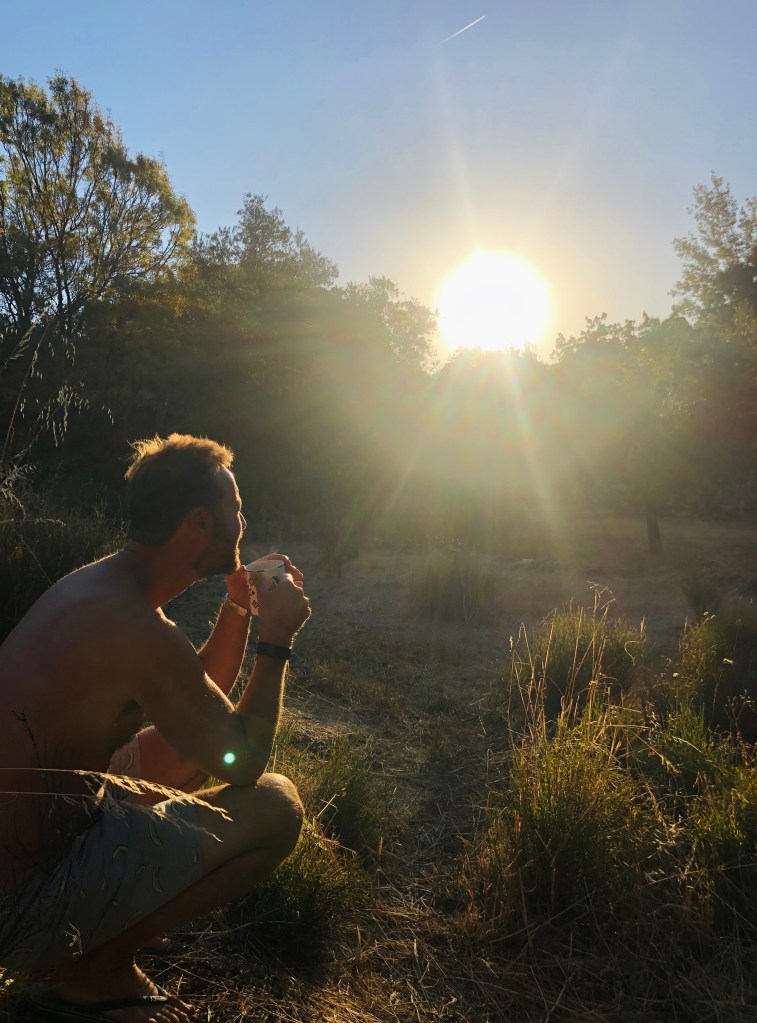
The best thing about arriving somewhere after dark is that you get to arrive all over again in the morning. Our cabin sits up on a flat terrace and when the dawn sun emerges over the shoulder of the mountain opposite, it throws beams between the tree tops and through our windows. The light illuminates the dust motes floating in our dark wooden room and falls across our faces of our sleeping children in their driftwood beds, making them look unwashed and strangely angelic. I stumble to the window and stick out a squinting sun-scrunched face to take in our new world. A glade of yellow grasses, a wall of poplar, cork and lime trees, the mercury flash of running water glittering in the shadows, mountains ahead and behind, forest all around us. Birds flitter through the foliage.

We can live without wifi for a while I think.

Galicia

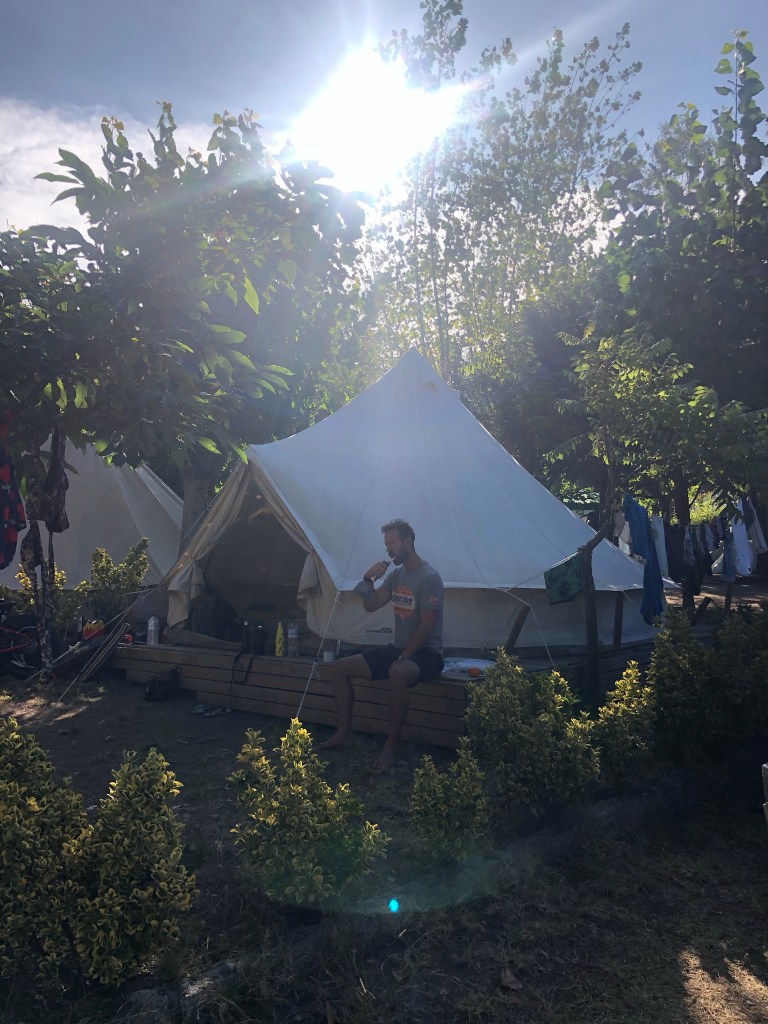
We spent a week camping in Galicia, right up in top left Spain, but round the corner now, staring westwards out into the Atlantic. Our campsite was pretty in a dusty, sun-dappled sort of way. We had a tent under the pine trees with four beds, a lamp and a fridge. It seemed to be a short stay campsite, all around us tents popped up and disappeared daily and a bubbling soundtrack of excited Spanish coursed around us like a stream around a rock. At the weekend highly dressed girls would emerge out of tiny tents to go and party, but they would be gone by 10am the next morning. We lived in the middle of all this movement and chatter in our own peaceful little world.

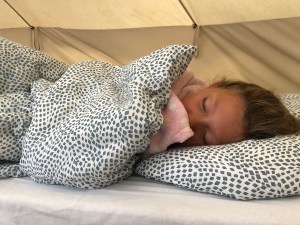
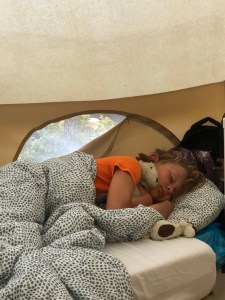
Apart from one night on the ferry, this was the first time that all four of us had all slept next to each other. There was a whole new range of nighttime whistles, snuffles and whispers to get used to: Matilda sitting up and giggling mid-dream, Arthur rolling out of bed for a pee in the early hours, breathing rhythms that rose and fell through the sleep cycles. The kids claimed that I snored terribly and did many lurid impressions, but I never sleep on my back so I found this unlikely.

The campsite was run by a father-son combination. There was also a mistreated old lady who did the cleaning, who might well have been mother. The son had big dark eyes like a water rat, and the same wild flickering gaze when he rattled through the camp commandments on our check-in. You notice eyes so much more now everyone is wearing masks. He scurried around the campsite, in a tight Homer Simpson t-shirt and short yellow trunks, conducting a fruitless war against the ants. Arthur found him hilarious.

“Dad, I just busted him crouching down behind our car. He looked at me and said ‘Ants you are too many. Die now’ and then he did this kind of dance and sprayed poison all over the floor. He’s so weird!”

The father ran the camp café. He didn’t like us and showed it by charging us a different price every morning for the same four croissants, two coffees and a loaf of bread. He only dropped his scowl once when Menna took him a red wine to uncork for us, and on seeing the label his eyes widened and he talked urgently and at length about its unique properties and then shuffled off to his living quarters to show her that he had this exact bottle himself. It was a very average wine that we had grabbed at the supermarket in town, but we sipped it carefully, trying to understand the hidden qualities that inspired such passion in the granite-faced old miser.

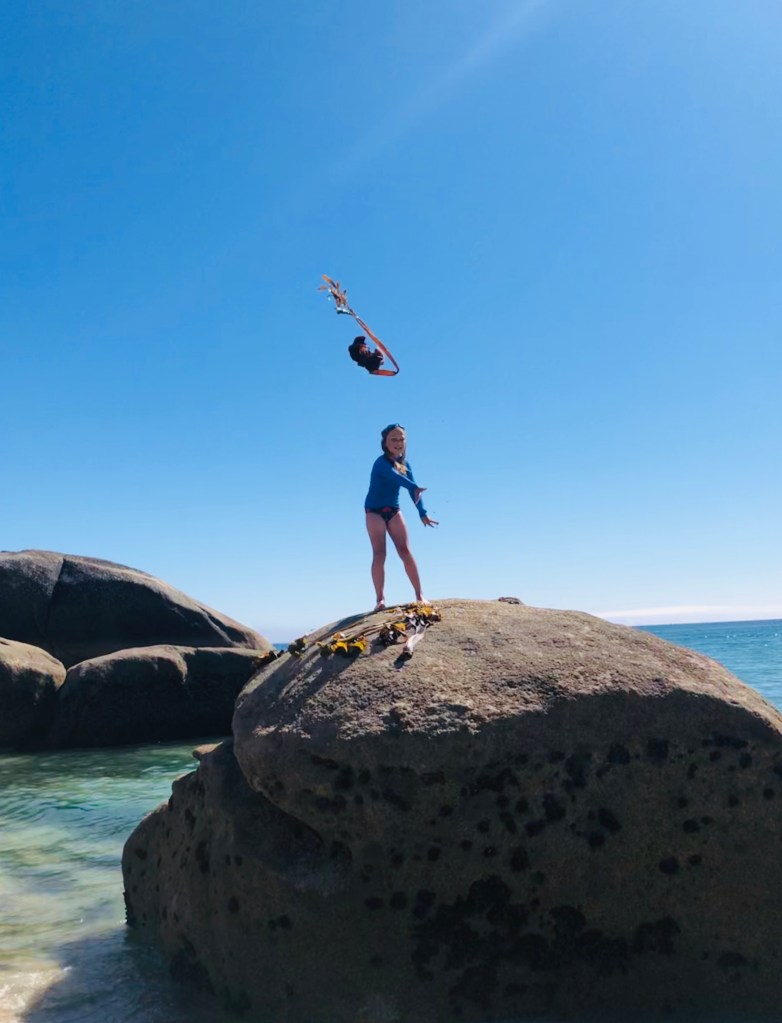
Our campsite gave straight out onto the beach. There was a large turtle shaped rock which the kids dived from and also used as a good vantage point from which to hurl seaweed grenades at their parents and other passers-by. Better still though was the next bay south, Playa Lanzada, a long beautiful beach which curved obliquely to the prevailing wind and swell. At the near end it was sheltered and calm as a millpond, but at the far end we discovered a break with beautifully spaced lines of waves that the offshore wind made steep and glassy. We surfed a couple of sessions there every day. I paddled so much that I tore the rotator cuff muscle in my left shoulder.

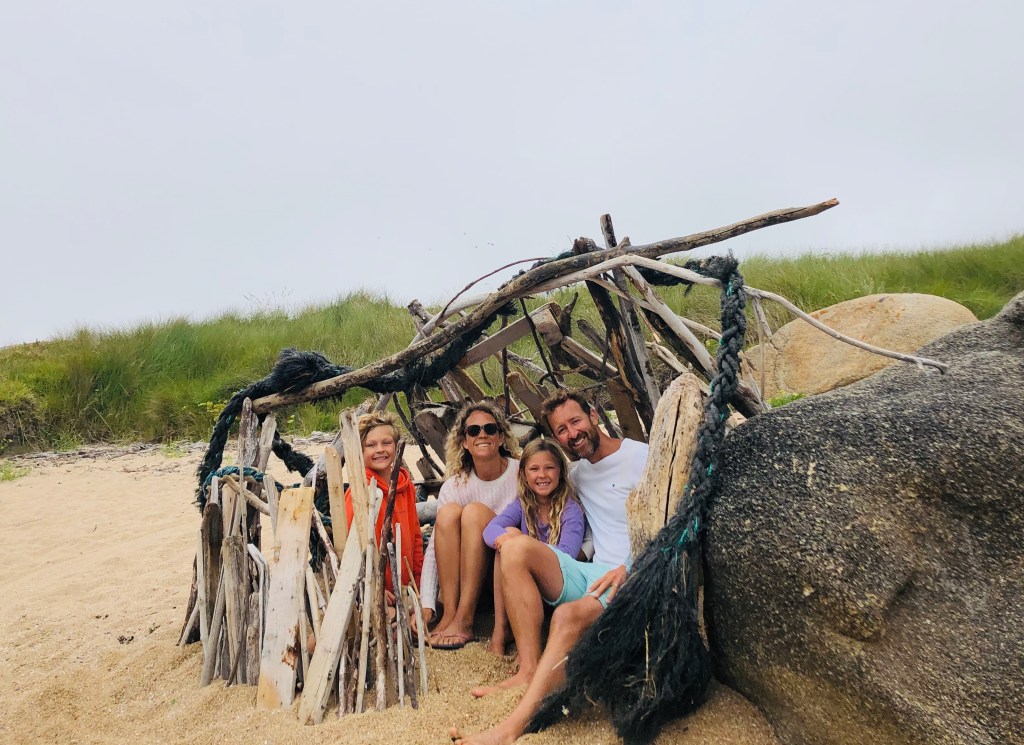
North of the campsite, after the end of the urban drift, there was a worn old boardwalk that wound its way out of town. We took this one day and wandered some miles through a series of deserted bays, through a landscape of evocative rock formations where sly faces and stray creatures loomed up in our peripheral vision. We came upon an old military site where artillery emplacements still pointed blindly out to the Atlantic. We ended up having our picnic down in a cove, right under the shadow of one of these rusted cannons. As we ate a sea mist rolled in around us and we were cold for the first time since arriving in Spain. We built a driftwood shelter and there we huddled together to warm ourselves awhile before wandering on our way.

Farewell to Croyde

Our time in Croyde eventually wound down, as all good things must. It wasn’t the African safari adventure that we had originally planned, but we had no regrets. The pieces all fell into place. ‘Shall we get this inscribed on the family tomb?” I asked Menna on Father’s Day. “Here Lie The Nicholls. They Landed On Their Feet. RIP.” She was disinclined, but I myself can’t think of any better epitaph for someone to mutter as they toss my ashes into the wind. “He jumped a lot, and mainly he landed on his feet. Sometimes he didn’t it’s true, but he kept on jumping regardless.”

I don’t think we could have asked for a better place than Croyde in which to hide ourselves away, scheme and lay low until the frothy coronavirus panic ebbed away a little. It was a halfway house to decompress and mentally adjust. We needed to leave our London lives behind and turn towards whatever adventures might still lie ahead. I had gone to Devon harbouring a hidden feeling of resentment, thinking it was a poor substitute for the subtropical climates we had planned for, but, as I found, sometimes you can fixate on exotic faraway shores and forget that there are places of extreme beauty right on your doorstep. The South West of Britain, in those times when the sun is firing; the sand is like demerara sugar and the wind blows spray back off the wave tops, well, I think it can rival just about any tropical coastline in the world.

Anyhow, what I’m saying is that something just worked for us there. It clicked. The town was quiet, the beaches empty, the clifftop headlands were ours to share with seabirds and gorse babies. There were hot pasties and ice creams in the village shop. Nature was all around. A bunch of young surfers with a portable wood-fired oven made surprisingly epic pizzas in the Post Office carpark. We had a charming beach cottage to hide away in when it rained. The waves were gentle and mellow some days and then big and hollow on others. We did a rainy beach clean one morning in a hidden cove and alongside ropes and sandals and bags full of plastic, we found treasures: cowrie shells and crab claws, a black pebble with a perfect hole.

I thought occasionally about how coronavirus was wreaking havoc across the world and I would feel guilty to be so far out of it all, like we’d chosen not to participate in a grand global event. But we’d paid our dues. Menna had served on the front line. We’d isolated and distanced, we’d cut ourselves off from the world and then we slipped off quietly into the night without a sigh. We had had a world trip wrecked. And then it would be low tide with a southerly swell and such thoughts scattered into the wind.

On our last night in Croyde, Arthur and I camped out in the dunes. Menna and Matilda came to help us set up camp and stayed for barbecued sausages and Sweet Child O Mine at full volume by the driftwood campfire. Then the wind picked up, the first rain drops landed and the girls went off to look for rabbits, and it was just the two of us huddled up against the weather. We played cards and stoked up the fire. I drank some whiskey. We saw the sun set and ran down the steepest dunes in the dusk. I told Arthur my best ghost stories until he begged me to stop and refused to leave the safety of the firelight. We curled up in his tiny two man tent. I couldn’t stretch out and had sandy tufts under my back, so I didn’t really sleep too much. It was early July but it was so cold outside I swore I could see my breath fogging in the moonlight.

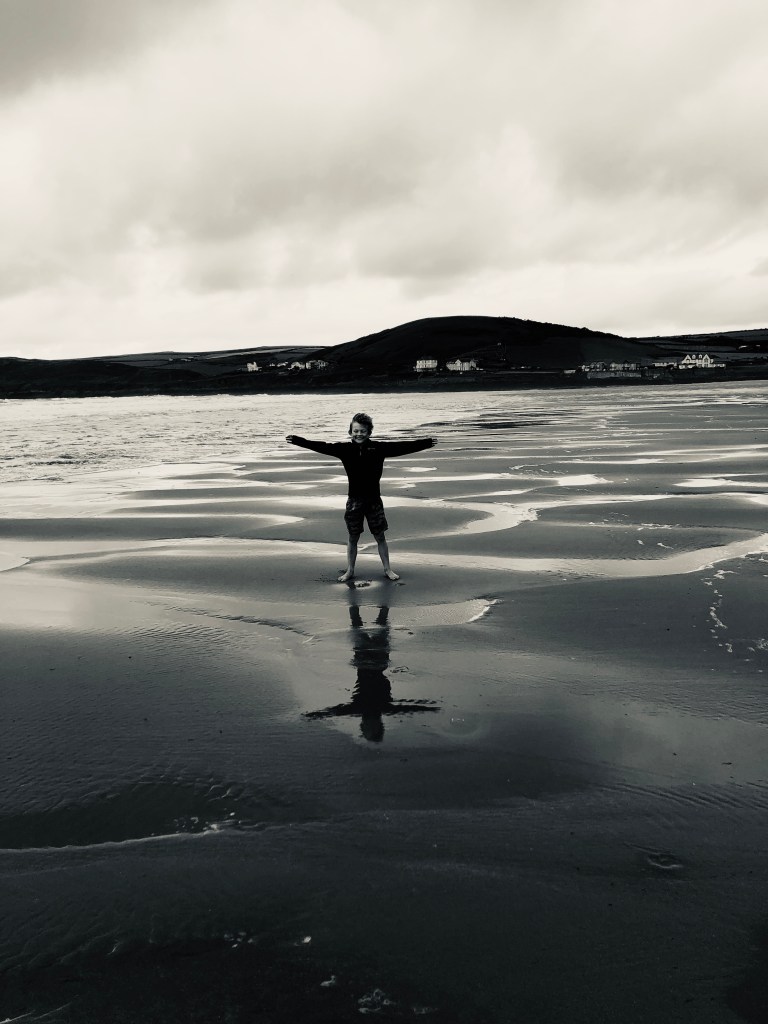
We rose sometime before 6am and paddled out into the sea, looking for shells in the misty flat light before the sun came over the headland. Arthur scampered around and chattered, and there was a moment when he turned and looked up at me with his eyes all shining, and then around him like a halo, the first morning sunlight blazed off the river delta that runs through the beach. I’ve never felt so close to my boy.

Then we broke down our camp, kicked out the embers, went home and packed the car. We drove out of Croyde and onwards to the next leg of our adventure.