The hotel breakfast is egg-intense (they always are) but we are saved by a fruit backup, dry rolls and some decent coffee. The kids are corralled and restrained for schooling which takes place in some strange stairwell turrets by the pool. I have a Zoom interview for a job that I am not very keen on. I embellish my achievements for a couple of hours then run outside and jump in the pool. When the glow of self-promotion fades, I am left with a vague resentment. A portal to a forgotten world briefly opened up in our bedroom – a bloody wormhole! I didn’t like what I saw.
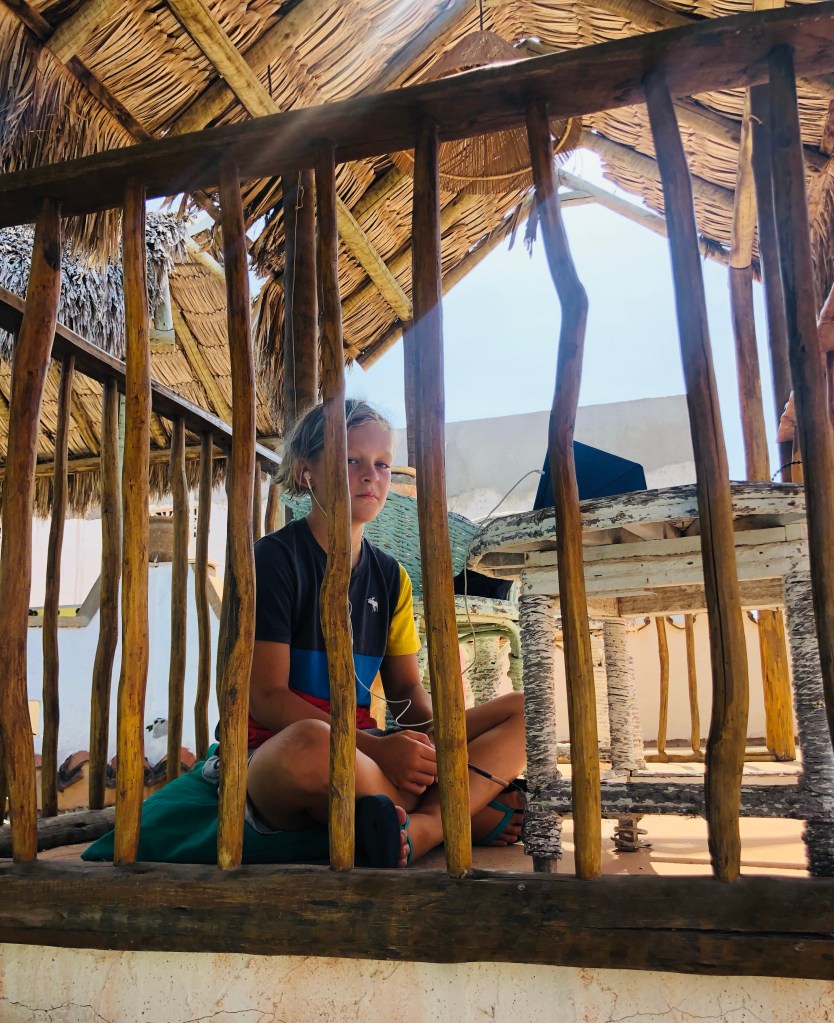
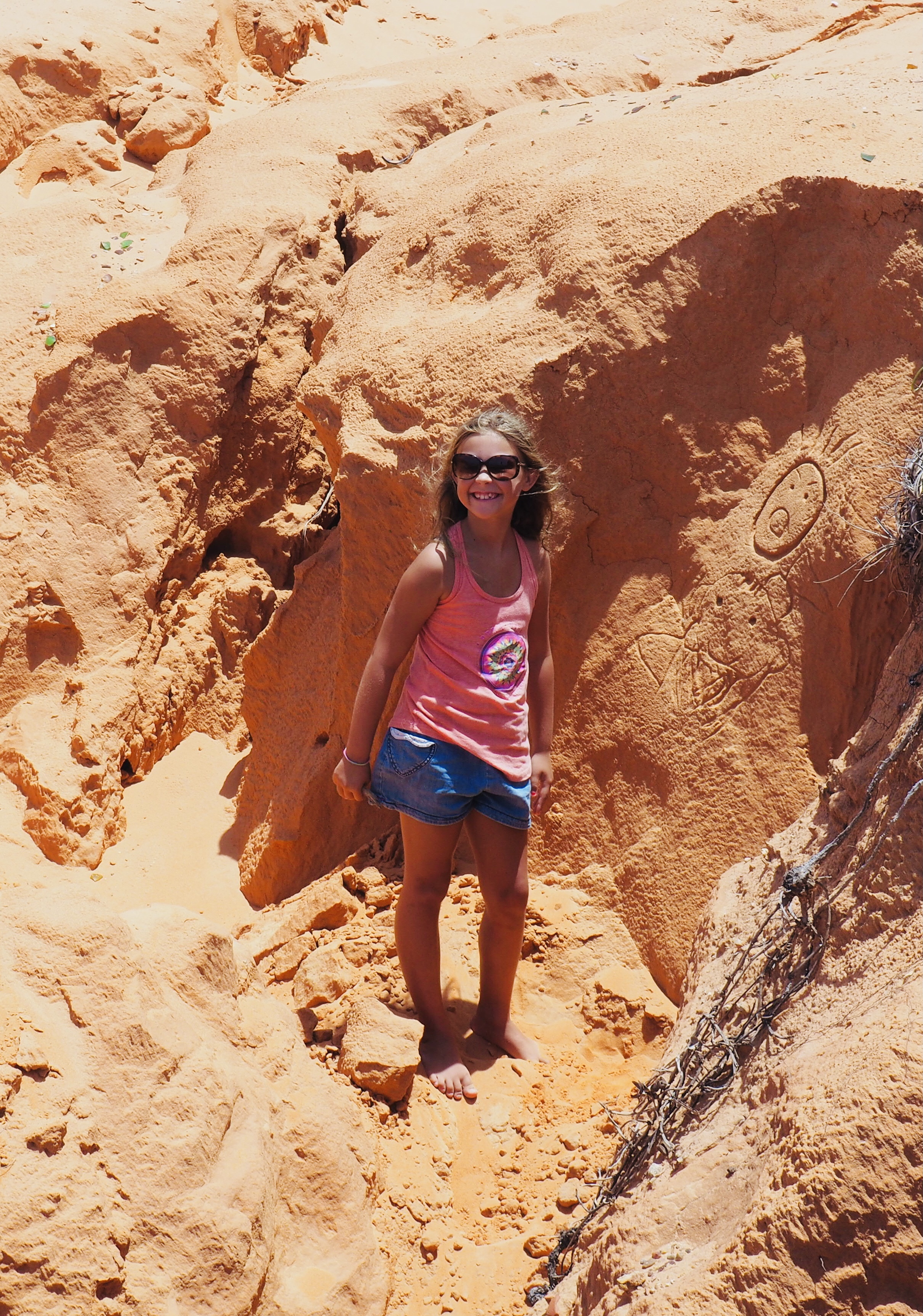
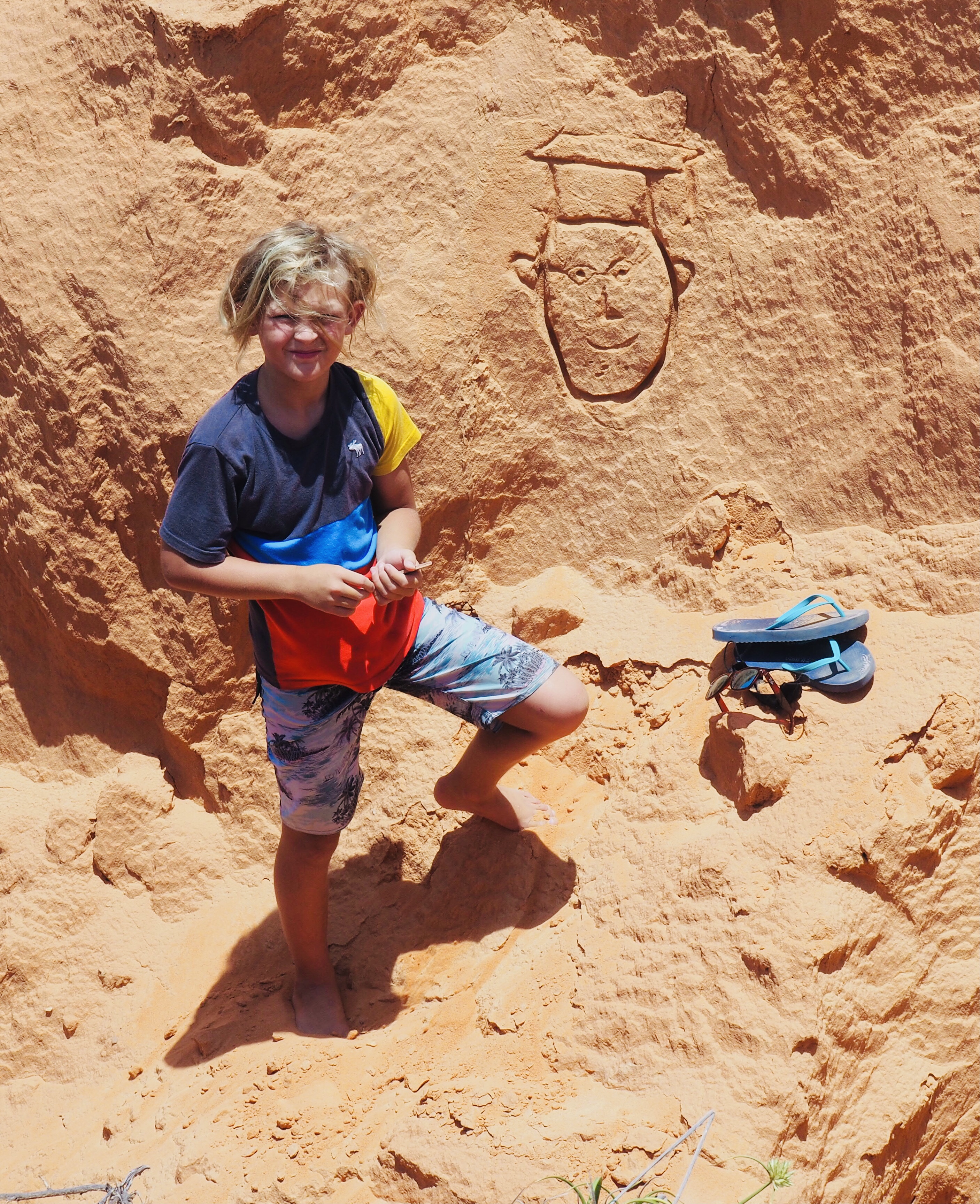
We go for a walk around Canoa Quebrada. It is a hard-baked town, shimmering with trapped heat. There is a busy tree-lined central street and not much else. It has a melancholy feeling – not of faded grandeur, but of motion stilled: an empty bandstand full of litter, cavernous municipal buildings with dark windows, beachside hotels all boarded-up, masonry gently crumbling in the sun’s glare. We see a moon and star motif repeated on stonework and mosaic pavings throughout the town – strangely Moorish. We perch up on the cliffs and watch a lone Kitesurfer far out at sea, a yoga class, dogwalkers on the beach. The kids carve red face sculptures into the crumbling rock face (‘Mount Sandmore” they call it). We eat leftover pizza for lunch, then we drive on.
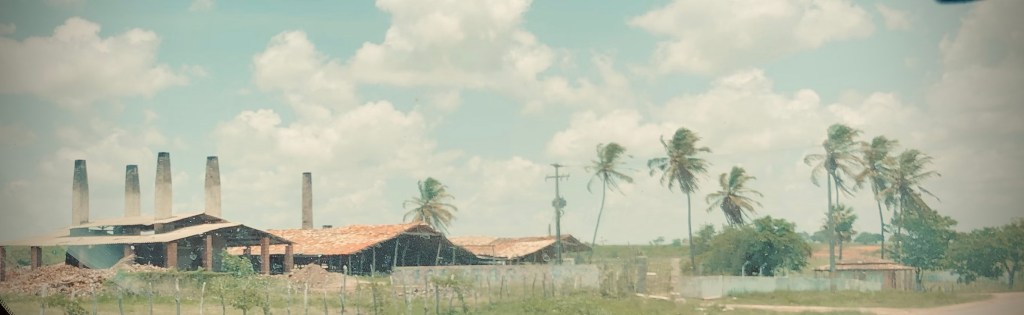
Another six hours in the car gets us 350km further north. We pass through small hostile towns and skirt by the city of Fortaleza where we know that Covid is bad and the lockdown is severe. We keep the windows up, the air-con set to max, and listen to His Dark Materials on audiobook. We turn off the central highway and head back towards the coast, the vegetation changes outside, shrubs and dust are replaced with palms and grassy marshlands, cattle egrets hide in the reeds. We get the car fully airborne over a hidden speed hump as we enter Icari.
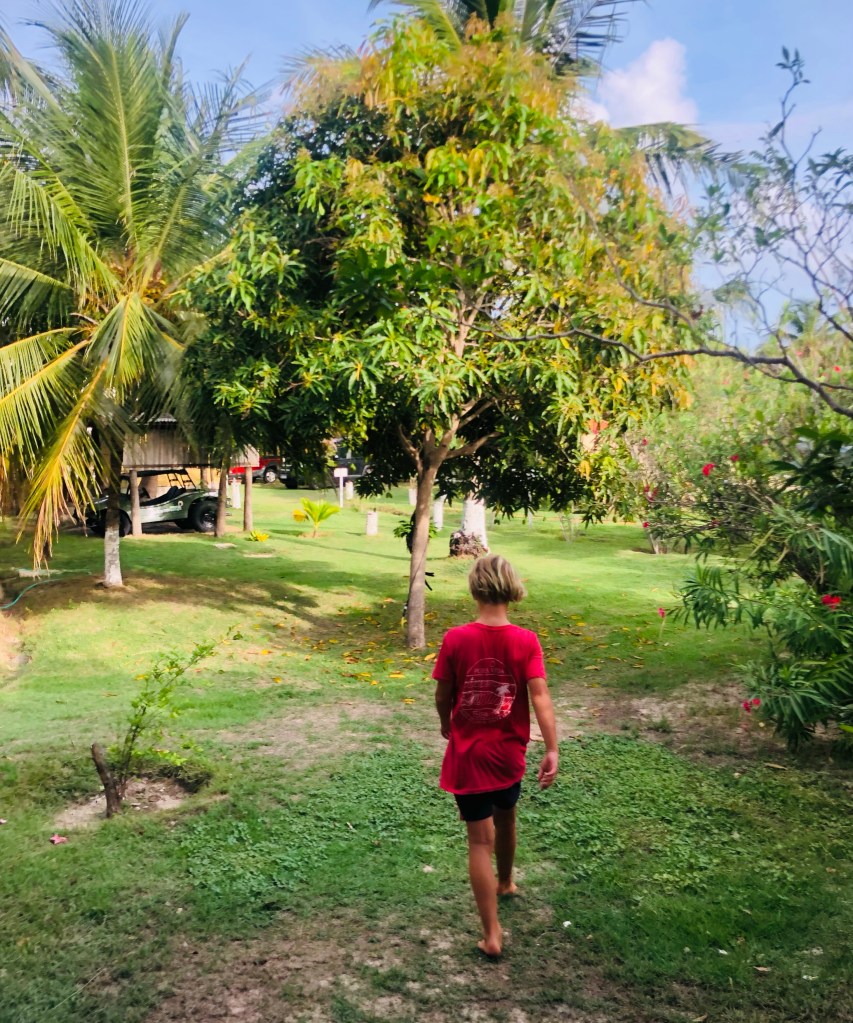
We have booked a basic cabin for the night. There are a couple of table fans but no air-conditioning. The garden is lush and green with flowering almond trees, there is also a small lagoon with an ominous cloud of mosquitos flickering like static fuzz above the water.
We dump our bags and then head out to town for an evening beach walk and dinner. Except all the restaurants and cafes and kiosks and bars are shut. Again. We are learning that Covid restrictions are decided at municipality level in Brazil and it’s impossible to know what they are until you arrive somewhere. What we do know is that they are getting more severe as we head North. This does not bode well for our road trip.
We knock at doors, we ask advice, we wheedle and beg at the only proper hotel in town (we can see guests laughing and clinking glasses on the beachside veranda, lounging under fairy lights and flowered trellises) but we are too late, or too shabby or there is some covid regulation that means we are not welcome.
We turn away into the darkness.
“Daddy, what will we do if we can’t find any dinner?” Asks Matilda in a tremulous despairing little voice, as if we were desperate migrants on the edge of collapse.
Eventually we find a lady who illegally feeds us shrimp tacos and beer down a quiet alley. We sit around an upturned barrel and congratulate each other, agree that it is the best food we have ever had, point out how romantic the setting.
We head back to our hostel and as I tuck the kids up Menna bursts into the room, wide-eyed and gigging but sort of moaning, and she is twisting her hands together in that way she has when she’s done something bad.
She has somehow locked our only set of car keys in the boot.

 Mutant Skies