The Nicaraguan Problem

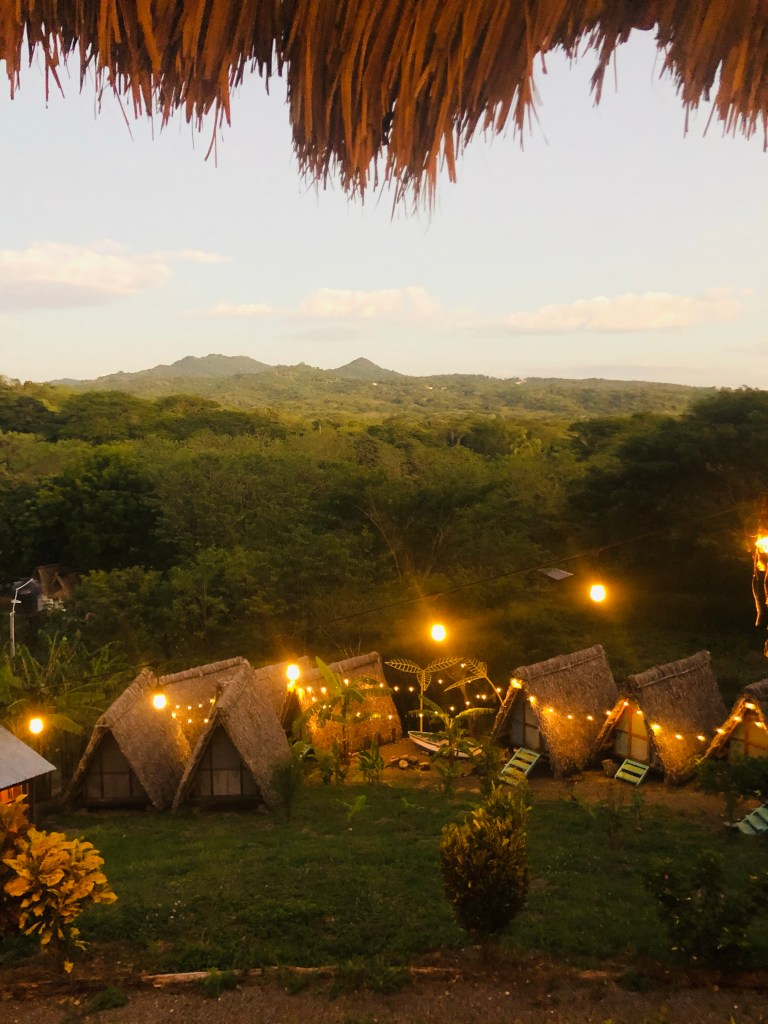
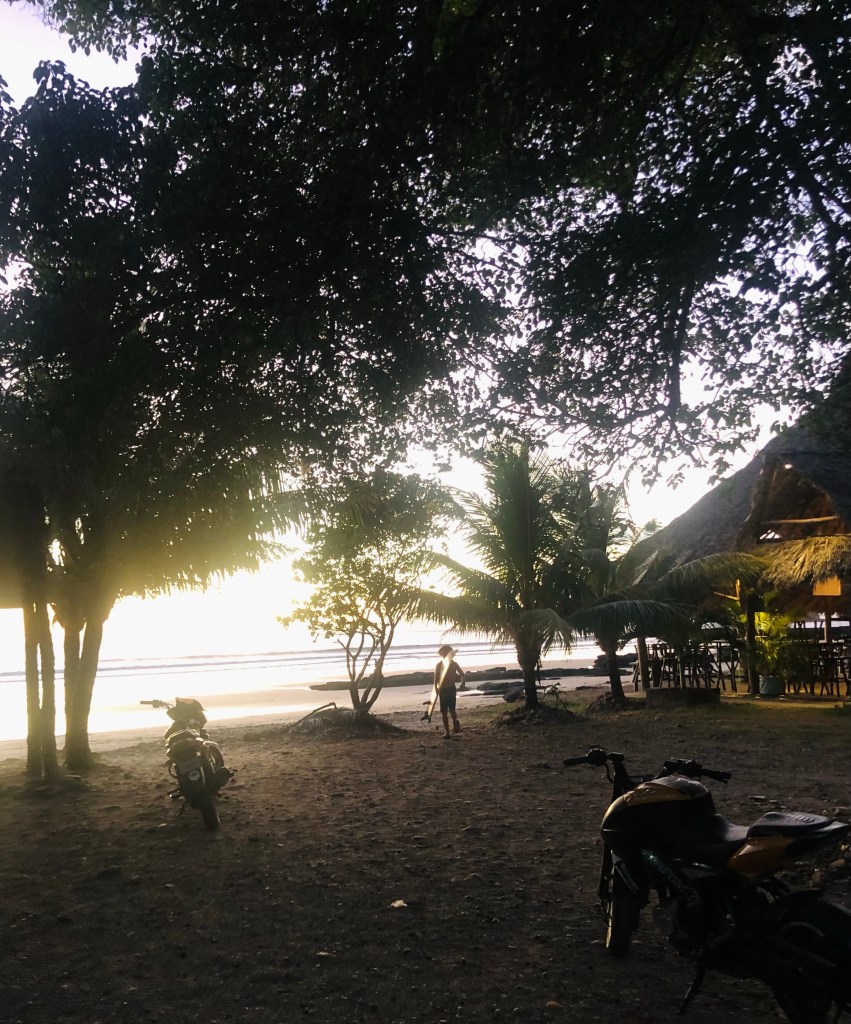
We are staying in a hostel near San Juan del Sur, a beach town on the southern Pacific coast. It is a basic place and there is a certain simple harmony between its construction and the natural backdrop: open-sided wood structures, winding pebble paths, leafy vegetation, palm-frond thatching, wigwams, trees, the sea. A ring of surrounding hills funnel cool wind through the site. Loud marimba music plays at all hours of the day.
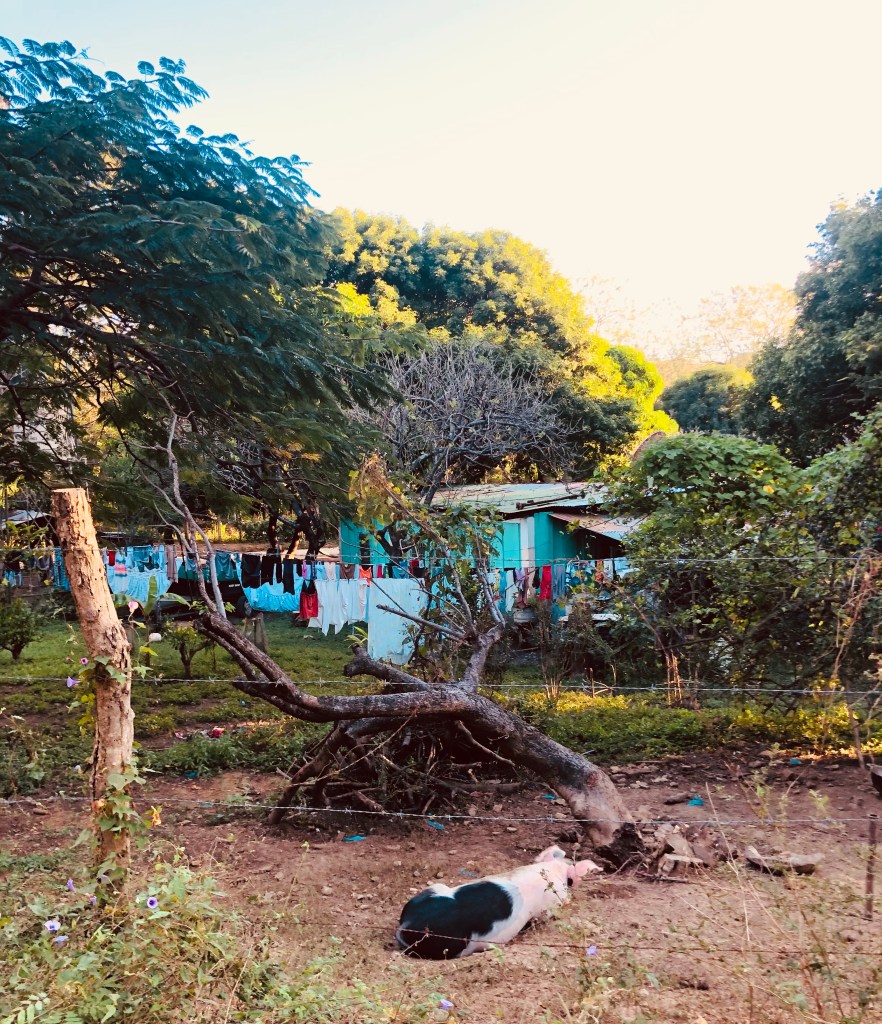
It is a semi-rural area in which we find ourselves, somewhere that is neither village nor countryside. Outside the hostel gates, there is a series of corrugated iron and wood cabins strung out along a muddy road, smallholdings mainly, where chickens and pigs scratch away at the bare earth. Eagles circle overhead and small ragged children peer out from the shadows.

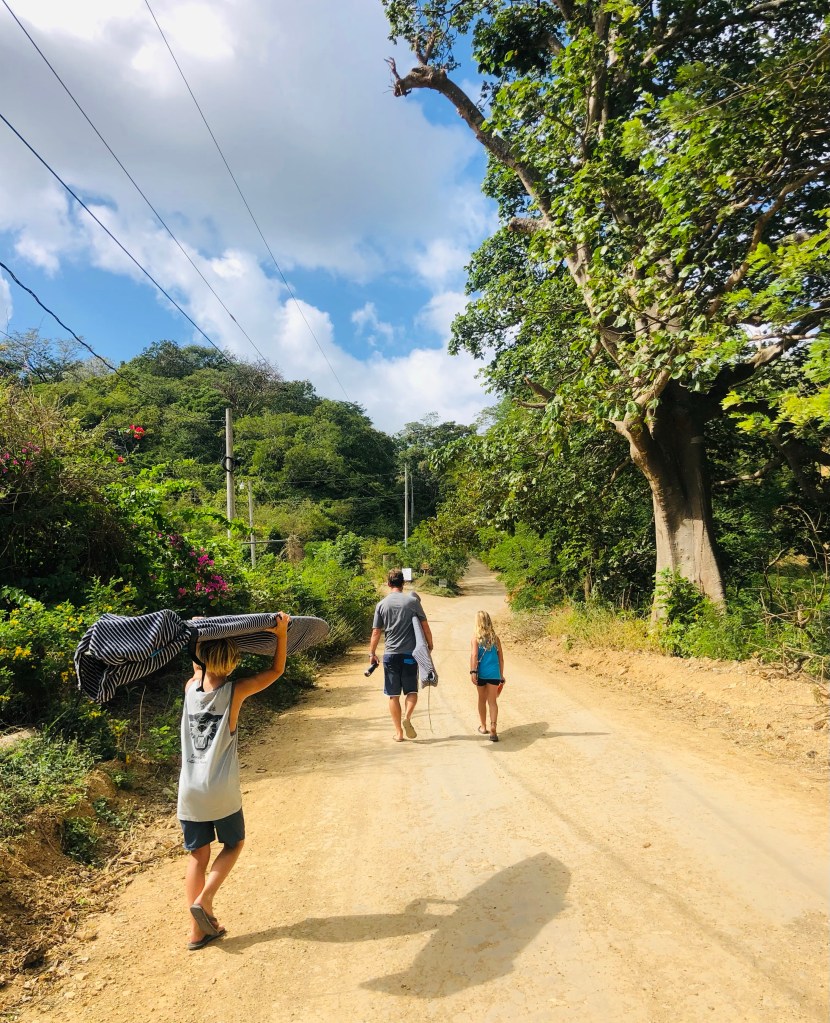
We plan to stay here for two weeks and we are not going to rent a car, so our world shrinks down to the limits of where we can walk to (or rather, where Matilda will walk to), a few kilometres of road leading to Maderas beach in one direction and the Machete Bar in the other.
Improbably we have a buddy here. Manu is a cosmopolitan Chilean who runs a couple of surf camps under the Dreamsea franchise. We stayed at his camp in Cantabria, northern Spain, a lifetime ago (last July) and I went surfing with him on a memorable occasion. He is now out here in his Nicaraguan camp only a klick or two up the road from us. We go to see him a few days into our stay.

Manu take us on a tour around his elegant – and empty – surf boutique. We peek into tents on teak wood platforms, where Balinese carvings gather dust on antique chests. We admire the huge central palm-thatch tower, walk up the spiral staircase to the surf theory classroom and stare out from the lookout platform over the jungle canopy to the far off sea. Arthur enviously eyes up the gleaming racks of surfboards.

We can envisage this place in its heyday: warm nights with mojitos, Soul Wax beats and candlelight, laughter at the poolside, beautiful people floating around in swimwear – basically a Vogue advert. But now the pool is covered in old leaves, the bar is untended, the bongos are unbeaten.

“We have only been open for two years” says Manu, “One good summer, then we got hit by the political crisis and all our bookings cancelled. Then it seemed like things were getting better, but… Covid! After that Hurricane Eta hit us pretty hard. Lots of roofs off! Then came Hurricane Iota…” He smiles and gestures in an inshallah kind of way. “We managed to find a corporate booking for new year – so at least I was able to pay the staff a Christmas bonus.” Another grin, “But not so many came in the end, so we lost out on the bar. Though now I have a lot of tequila!” We are doing dry January, I explain hastily, a midday tequila doesn’t appeal.

Although the worst is over now, Nicaragua’s reputation remains sketchy and this keeps people away. “This country is totally safe” Manu insists, “You don’t see real crime here, only opportunistic stuff. You go to Costa Rica and you get proper planned crime, especially in the surf resorts. Theft, mugging, kidnap. All the gangs and cartels are there. Here in Nicaragua there is only one cartel in town, and that’s Ortega and his government. And he doesn’t want to fuck with the tourists!”

He has a theory too about the competition for tourism, a narrative strand that will get repeated throughout our stay. “The Costa Ricans have been watching Nicaraguan tourism grow, and they don’t like it. It’s like how they were during the boom years, but now they’re flatlining and Nicaragua is taking more market share. So they’ve used the excuse of Covid to shut the border. San Jose is the international hub, all the flights from US and Europe land there. Then the tourists travel overland up to Nicaragua and back. Now of course they can’t get back again, so they don’t come…”

After an hour or two of chatting we leave Manu in his camp and head out into the bright daylight for lunch. He is a bright and vivacious guy, full of traveller stories, but even he cannot shrug off an air of gloom about the current situation. We leave him tapping away at his MacBook in the shadows of his empty bar, writing business plans, building projects for when the guests come back.
We make more friends here over time: we meet Tim and Melissa on the beach and have dinner at their place, they introduce us to various other members of the Canadian diaspora. We talk to a Dutch family who have lived here a decade already. Our long-suffering friends Josh and Meg cross the border to come and join us. Again and again in conversation, we hear the same narrative of stunted growth and sinister powers, of Nicaragua’s great potential nipped in the bud.

Over the next week Arthur and I surf with Manu a couple of times. One Sunday he picks us up early and takes us off on a jolting ride across the countryside, down jungle tracks, to Yankees – a legendary remote break. There we watch Manu drop into barrel after barrel while Arthur, Josh and I misjudge our takeoffs and get pounded by the fast heavy wave.

It is a place that encapsulates all the glory of Nicaragua – a world class hollow wave, white sand beach stretching out to the horizon, lush jungle backdrop and not a soul for miles around. It is named after a covert CIA landing spot during the Contra War, so there is a bona fide revolutionary connection too. It is what the Canadians call legit.

I understand why everyone is desperate for the tourism to return, but myself, I quite like it like this.
A Session to Die For

On the last day of our stay at Dreamsea I was invited to come along for a surf session with the instructors. There was a serious swell forecasted and a bunch of them were getting up early before work to go and catch some big waves at a Gerra, a distant beach which is ‘much more pumping!’ than Oyambre where we normally surf. I wonder if I am ready for this, but it is too good an offer to turn down.

Despite my good intentions, I ended up staying up late the night before. I can never turn down a pub quiz. I got a few hours of restless sleep but was already awake when my alarm went at 5:45am, visualising alternate scenarios where either I totally amazed everyone with epic surfing – of the kind that I had certainly not shown in any of the sessions so far – or where I drowned. I quietly eased out of the tent and dressed outside in the darkness, where I had a small pile of clothes waiting. “Don’t die” said Menna sleepily and rolled over.

There was mist below the pines and a morning chill. It was either that or I was shivering from nerves (how big exactly is ‘big swell’?). I was the first one at the rendezvous and struck a nonchalant pose by the gatepost: surfboard under my arm, wetsuit over one shoulder, wishing for insouciant cigarette to hang off my bottom lip. Gradually the others appeared in ones and twos and a minibus roared up to the gate. We loaded the surf boards onto the roof. We were six all together, I was the only camp guest and I felt a little like I’d gatecrashed a private party.
“You coming too?” I am asked, surprised, by Matteo from the kitchen. Even though the camp is very relaxed, there is the inevitable division between staff and guest, no matter how much ping pong you all play together. Is my presence restrictive? Are the team unable to relax properly and enjoy their session? Do they feel they need to look after me? I was offered a banana and ate it in silence.

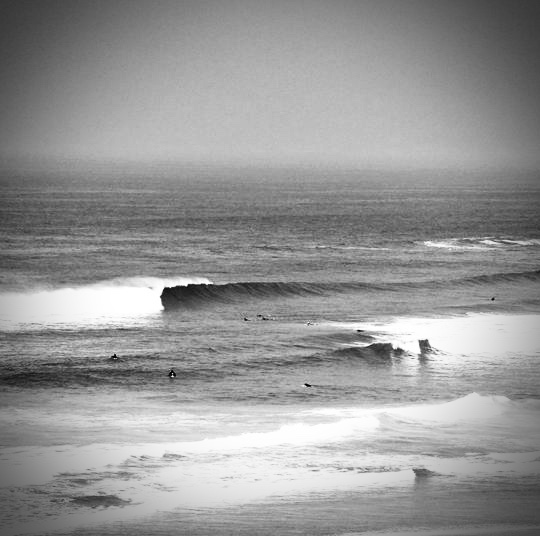
We drove along the high coast road and already the waves looked big. We parked on the cliffs and the waves looked bigger. We climbed down to the beach and the waves look bigger still. Glacial green mountains rolling ponderously inwards then smashing down with percussive impact, throwing spray high into the air. The white water is foaming and heaving and sucking. The paddle out looks long and dangerous.

“My God! We gonna surf today!” Says Gigi, good-looking Italian receptionist.
“Those waves look like Bali when it gets big on the reef” says playboy Manu, camp owner.
“Hombre! Last session like this I broke my board” says Victor, our surf coach, though it is understood that he is not on duty now. I am on my own here.

They’re smiling and joking and doing complicated warm up routines. Getting pumped. No one notices that I’ve gone silent and am contemplating quietly hitching a ride back to camp.

But you can’t right? All the bravado; all of the tales of Costa Rica; kids looking up at me with little disappointed eyes, ‘But Daddy, you said you could surf anything…’ (‘That was a frickin joke Arthur! Go back to bed damnit!”). Some things are worse than death by drowning.

So of course I paddled in after them and it turned out just as you would imagine. I quickly lost the others; saw them find the outbound channels; make quick progress out in the gap between sets; paddle up and over those vertical rushing walls that would soon come crashing down on me. Then we were separated by angry mountains of salt water.

I spent a long time in the impact zone on that paddle out. I had some bitter moments of self realisation there. I made the line-up fifteen minutes later, tired and breathless, salt water in my belly, but that arrival felt like a triumph in itself. Friends! Safety! Of a sort. We were bobbing on our boards in a loosely strung-out line, pulled around by rips and currents, floating up over the rollers. I triangulated myself against various reference points on the faraway land. I mustn’t go too far out (too long to paddle in again) mustn’t go too far in (get caught by the big sets) mustn’t drift too far right (rocks). And eventually I found a kind of peace there, in the perfect antithesis of surfing, trying my hardest to go precisely nowhere on a board. Occasionally I would give a thumbs up or shout “nice wave” at one of the others, as they caught another epic ride. It felt good to be part of the pack.

“Go Weeliam, go! Go! Paddle now!” Victor shouted at me, totally breaking my zen. Startled, obedient, I turned and paddled. I was in just the right position and for a moment I felt the wave loom up behind me and saw the line I would take inscribed on it. I felt then that I might do something amazing on that wave. It was so big and steep though that I just screamed my way down the face for some eternal frozen moments, then totally failed to make the turn at the bottom, got caught up in the break and tumbled underneath for a long time. As I rolled in the darkness, twisted and massaged by mighty underwater forces, I reflected on just how amazingly that wave might have gone. And that was pretty much the highlight of the session. There was another time when I drifted out of position and got badly caught inside by a set of five big waves, but I don’t count that.

After the last hold-down I decided that I’d proved my mettle enough for one day and paddled alone back to shore. I had been out for less than an hour.

I sat cross legged on the beach and thought I might meditate for a while while the others finished, but I was far too adrenalised. Instead I watched the white walls and red tiles of far-off San Vicente light up in the morning sun and I congratulated myself on a heroic session.

Did I catch any good waves? No!
Did I have fun? Not really!
But did I survive? Yes!

So let’s take that as a win shall we? A war story: I was out there in the big Gerra swell of 2020. I couldn’t wait to tell the kids how big it was!

Dreamsea

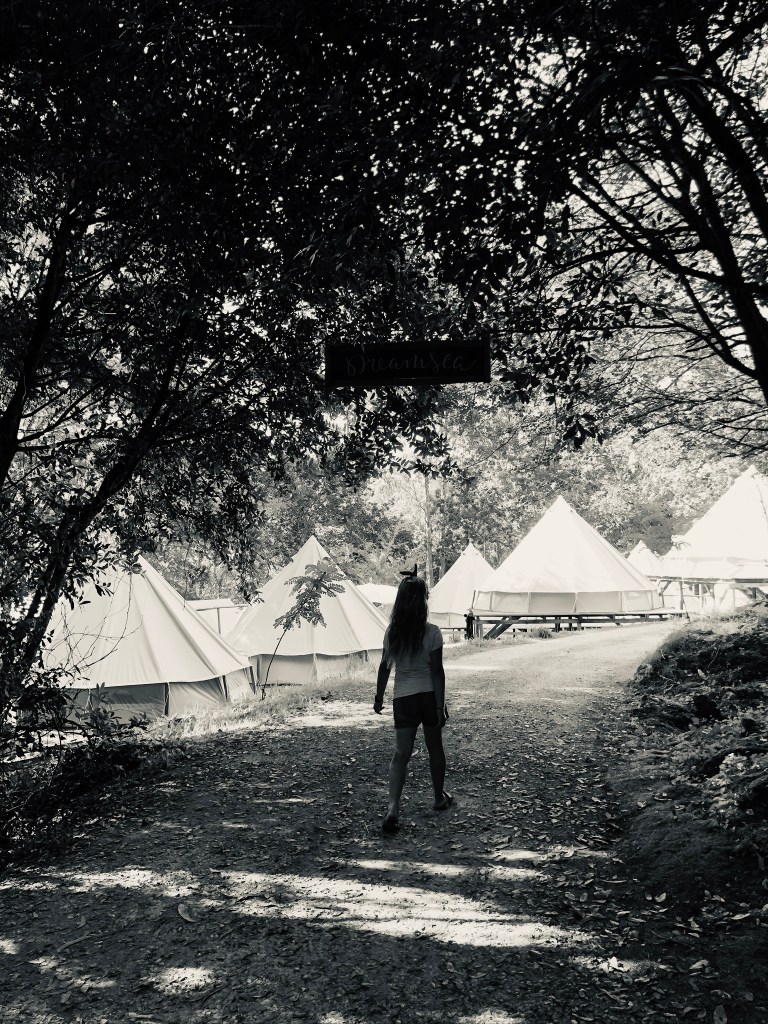
In the foothills of the Cantabrian Cordillera, somewhere between Santander and the baroque palaces of Comillas, we found Camping Huelguero, a neat little spot, fringed with flags and pine trees. As we drove through the site, wondering if those regimented rows really captured the true spirit of camping, we found a smaller hill right at its centre, deeply wooded with oak and eucalyptus, where a steep winding access road was marked out in chalk. We took this track upwards and there, nestled in clearings between the trees, were the tents and rolling walkways of Dreamsea Surf Camp.

It was perched there like a crusader encampment above enemy lines; all bamboo structures, white bell tents emerging from the vegetation, fluttering banners and downtempo beats.

We arrived in this serene oasis and promptly vomited the contents of our car out onto the decking, under the bemused gaze of a handful of surf-bums drinking daiquris at the bar. Bikes, surfboards, skateboards and yoga mats are piled up, wetsuits, backpacks, bags overflowing with laundry (we only left Plymouth two days ago – how is this possible?), electrical wires, a box of school books, half a bottle of Llaphroaig, a badminton set.

We were urged to chill. Just let the luggage sit there, someone will probably deal with it.  Come and take a tour…

There was a central living area with a canteen, bar, chill-out zone and some kind of Swiss Family Robinson bamboo shower block. A teak yoga platform juts out over a gorge, then down a twisted path is an elemental dance floor, sunken in a hidden glade where tree roots tangled with lighting cables and lizards danced in the sunbeams. There was a skateboard ramp and a rack full of bikes and longboards and surfboards for you to help yourself to.

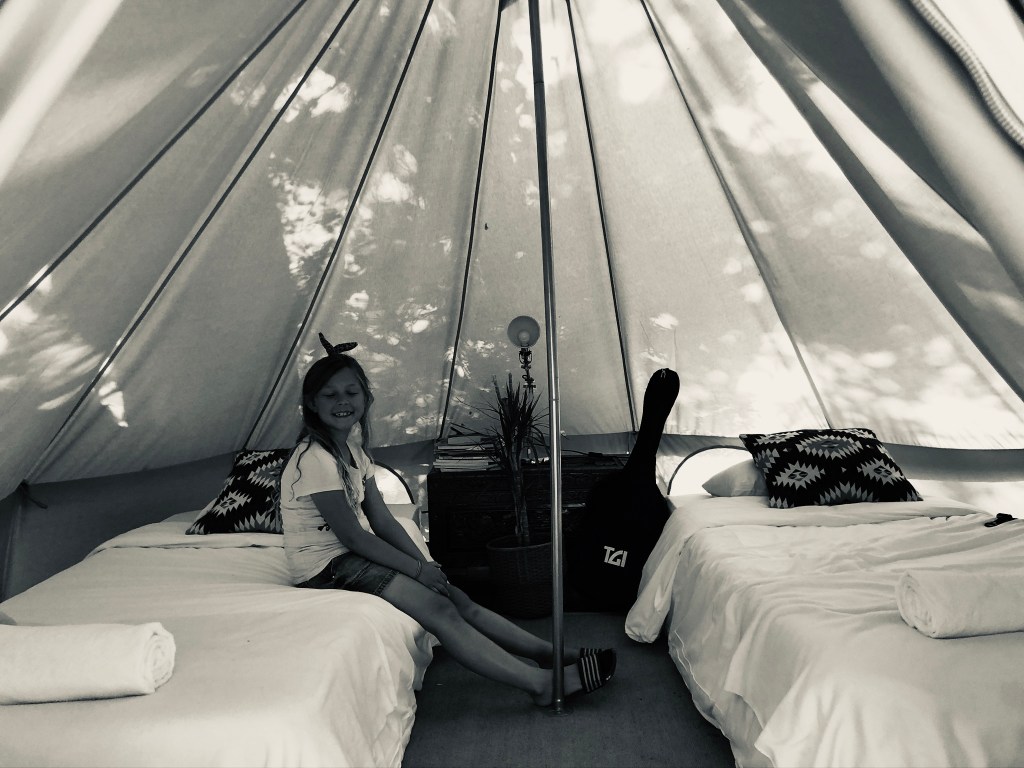
Our bell tents sat on a raised wood decking and they had carpets, beds made of authentic looking coffee pallets with proper linen and there was some kind of antique chest there under the yucca plant. For pampered city folk easing into a life under canvas, this seems like a pretty good start.

There was an ethno-organic-Bali-soulsurf kind of vibe that permeated Dreamsea.  It was super chilled and a consequently a little chaotic.  The showers didn’t have hot water; someone was going to get around to it but they’re probably off surfing right now.  You wandered to the bar to order your sunset mojito to find that bartender, manager, and pretty much everyone really, had downed tools for an impromptu group session on the skate ramp and they’re really into it, and pulling some pretty gnarly moves, and it was probably better not to disturb them.  

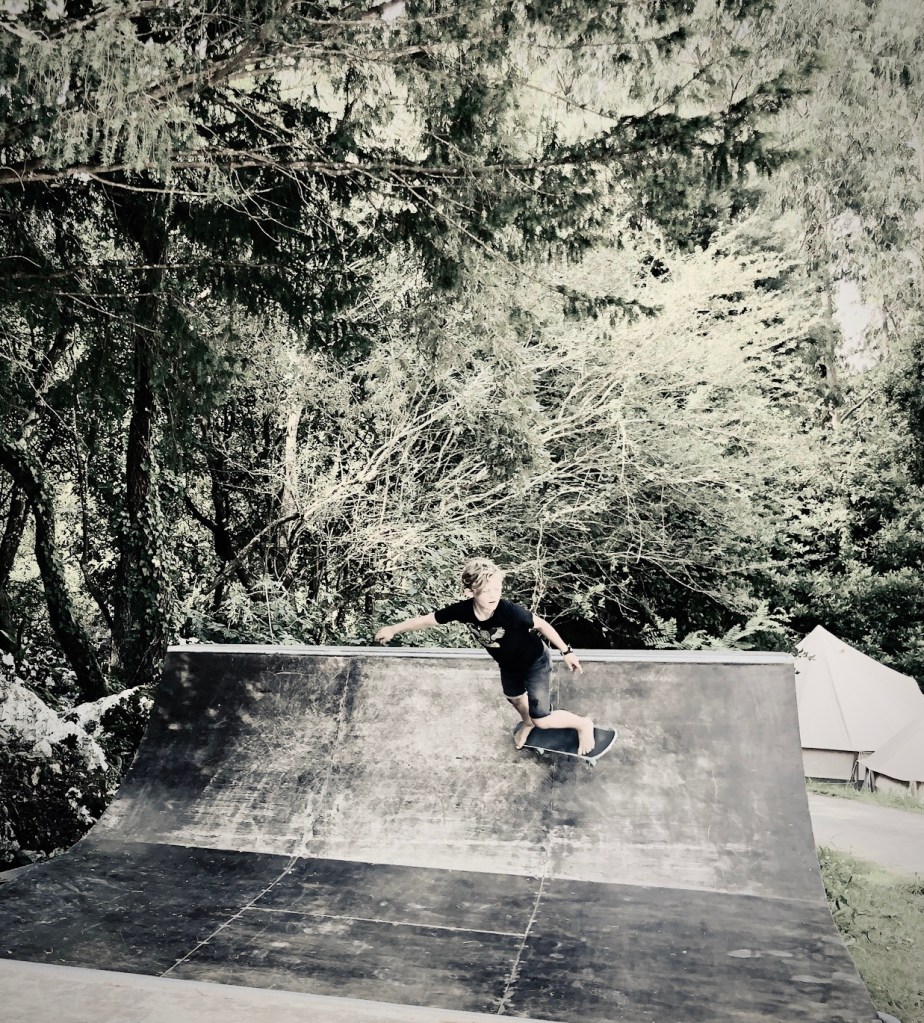
The camp was staffed by a tribe of young beautiful people with floppy hair and great tattoos, usually with a beer in hand. They loved to chat. It seemed to be a mandatory requirement that all personnel not only surf, but skate as well, and they were keen to prove their credentials on the ramp that is conveniently right by the bar. Arthur, with his new birthday skateboard barely out of his wrapper, was in total awe. Within three days he had been fully assimilated into the crew and was taking his turns on the ramp and being earnestly coached on how to throw a healside turn. Despite being a longboarder myself (read middle-aged sedate cruiser), this scene was seductive enough that I wanted in. I gave it a few goes and predictably I wiped out hard each time, and soon had cuts all over my feet and elbows. Everyone was so encouraging though, I wanted to nail a big move just to please them.

These were the Lost Boys and Wild Gals of Surf. Chasing the next big wave and some impossible dream, unable or unwilling to put down roots, talking animatedly about what adventures they might find next season (I have a friend in California! I hear the surf in Bali is going off! Head for Sri Lanka dude!). Always looking for something around the next corner: girls, boys, waves, enlightenment, but never having quite found it yet. I liked them a lot. Come and have a mojito! Let’s go and have a dance! Hey Steve, get the BMX onto the skate ramp! They inhabit a celebratory live-for-the-moment kind of world. I think that’s what we’re looking for too.

It became apparent there is a bit of a cult thing about Dreamsea. The Cantabrian location isn’t a one-off, there is a list of sites that reads like a roll call of the surfer heartlands – Bali, Sri Lanka, Nicaragua, Portugal. The staff drift between them, and the more avid guests challenge you for prior visits, before listing the four or five that they’ve stayed at, with their relative merits. We wondered if we were in a subtle indoctrination program. Perhaps we would wake up hungover one day in Bali with Dreamsea hoodies, a collection of tattoos and a rinsed-out bank account.

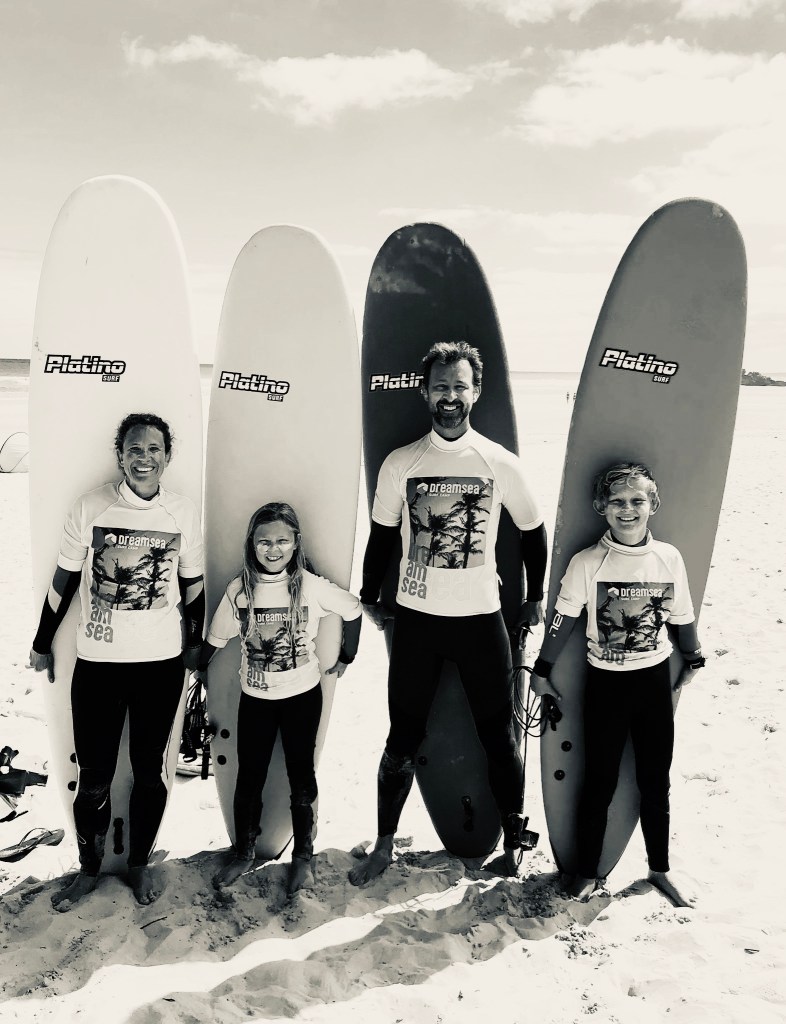
Victor, our surf instructor was from the Canary Islands. He had a moustache, zinc warpaint and melancholy eyes. His passion for surfing was huge and the kids absolutely loved him. We got a family coaching session on day one: drills and technical instruction on the beach then out together into the breakers where Victor pushed the kids into the smaller shore waves while shouting instructions at me and Menna as we surfed further out at the back.

“No Weeliam, in the bottom turn you must look for your line, then lead with the hands. Shoulder and hips will follow… It’s like salsa! You dance salsa right” Wrong Victor, I dance a kind of jerky techno.

“No Manna, two step pop-up only! Why your knees?”

Our days quickly settle into a pattern that looked something like this: wake, sunrise yoga session, breakfast. Arthur and Matilda do some reluctant school work in the central living area. Morning surf coaching. Picnic lunch on the beach. Afternoon surf coaching. Beach chill, visit local town, eat ice creams. Menna tries to make us all go for a run and sometimes we give in. Skate ramp. Ping pong. Cocktails. Dinner in the dining area. Party / salsa dancing / quiz / concert. Bed. Repeat.

It’s exhausting, but we all made good progress at surfing. The waves were big but mellow. I had my pop up totally re-engineered. The kids are very enthused and would do anything that Victor says. All of us feel our shoulder strength building: we can paddle for longer, catch bigger waves. Arthur is getting the parallels between surfing and skating, it is not long before he starts to put together some fairly slick looking turns on the skate ramp.

We talk to Victor about his tattoos and he weaves a life story around them.

“This one has the lion waving the Rasta flag. People all say it looks like the gay flag but it is not. And ok, so what, I still like it. It was done on a beach in Thailand. This one is the mermaid firstly because of the sea but also because of what she symbolises about love, you know, it never works out and it’s all like an illusion really. You think you’ve found the one but then something always goes wrong. It disappears.” Shrug. “These ones on my shins are High Tide, Low Tide, very common. This one here, ‘Be Everything You Can Be’, was from an advert, a big sign outside the house when I was staying all alone in Canada. It gave me big motivation…” He stops and sighs, something of that lonely Canadian winter flickers across his eyes. “So anyway, the tattoos are my history. Now let’s go surf!”

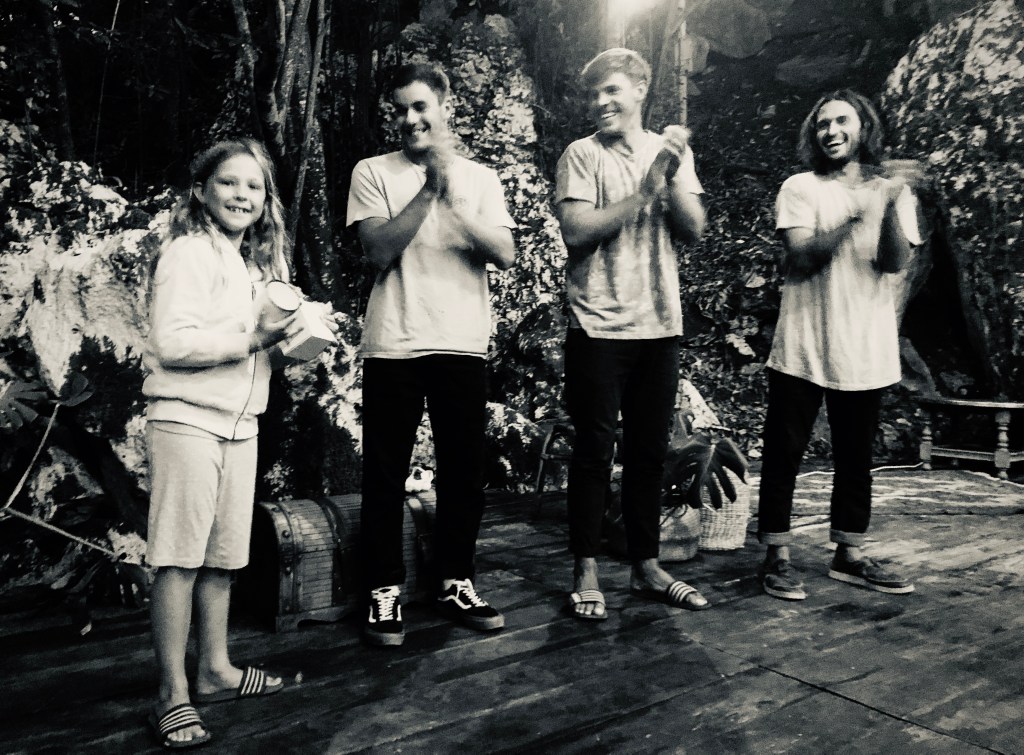
Matilda won Wave of the Week in a campwide prize ceremony. There was some confusion when she wasn’t there to receive it and we had to drag her out of bed at 11pm in her pyjamas. She was all sleepy and confused but very proud. So were we. So was Victor.