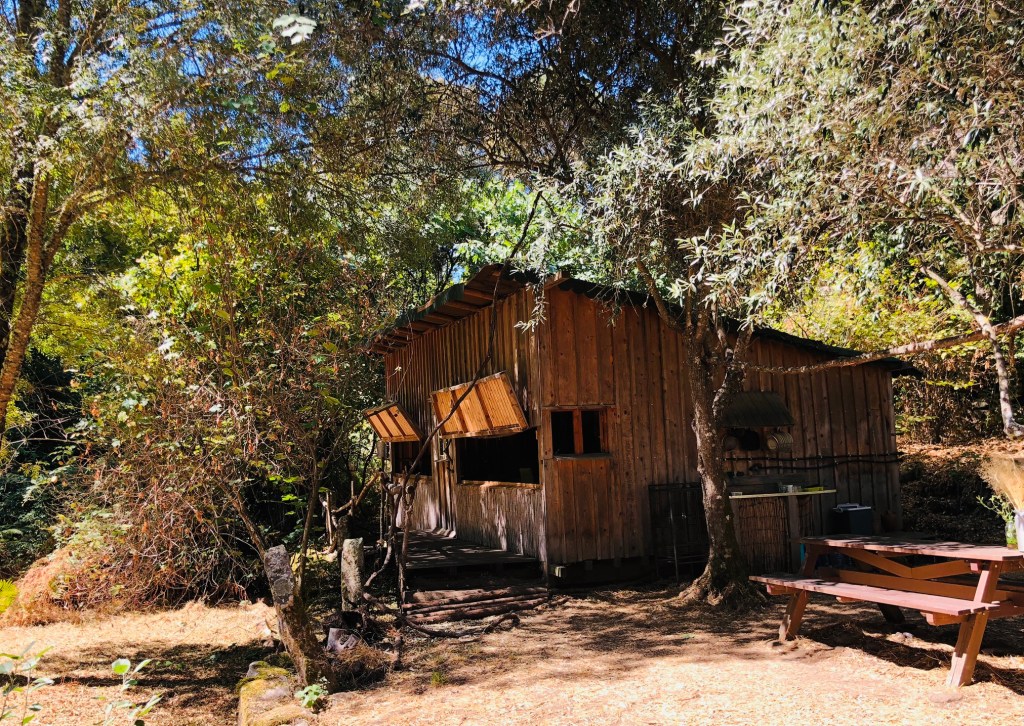
We spend several days exploring Terra Sangha and the mountains around. We climb up ancient terraces that are carved into the hillsides and buttressed with lichen-covered stonework. Further walls criss-cross the land like a maze and the ghostly outlines of old, old buildings can be seen in certain clearings. From the hills above we can clearly trace the foundations of the Roman and then Moorish settlements that must have dominated this landscape for miles around. This was once the heart of a thriving civilisation, but nothing beside remains, only a stone farm with a few outbuildings, some olive groves and a couple of wooden hunting lodges that now house occasional travellers like us. Poking around under the ground we find pottery and iron fragments that we think might once have been arrow heads.
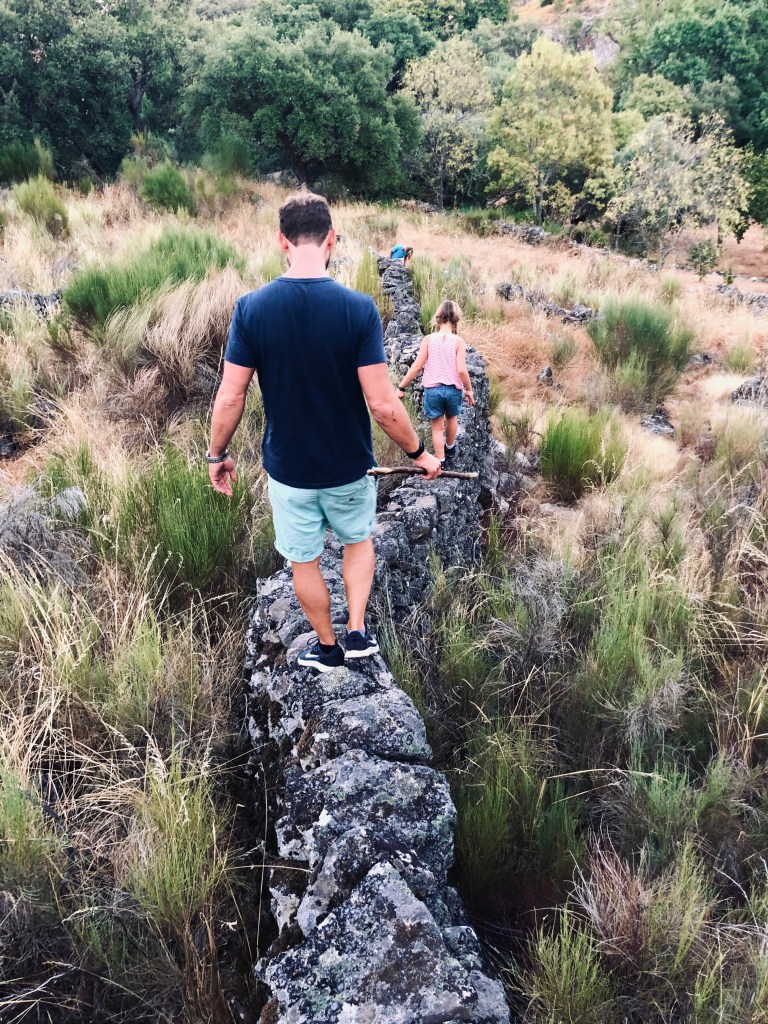
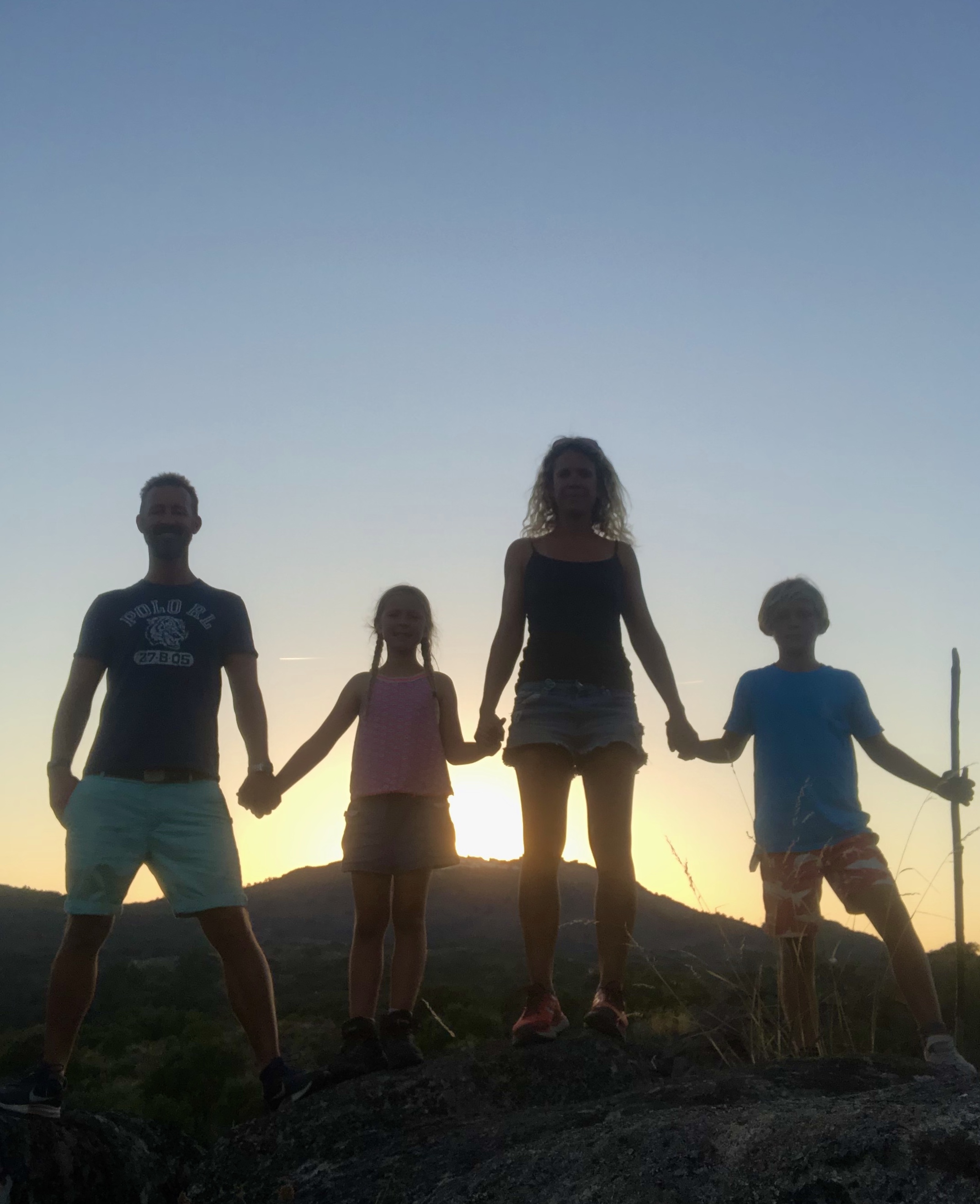
When one evening we climb the mountain behind us to watch the sunset, rather than risking snakes in the the bracken, we balance our way upwards on top of one of these creaking ancient walls. It is a simple thing of dry balanced stones with no cement, and clearly hasn’t been touched in centuries, but is so carefully fitted that four of us in succession pass up safely with barely a stone moving.
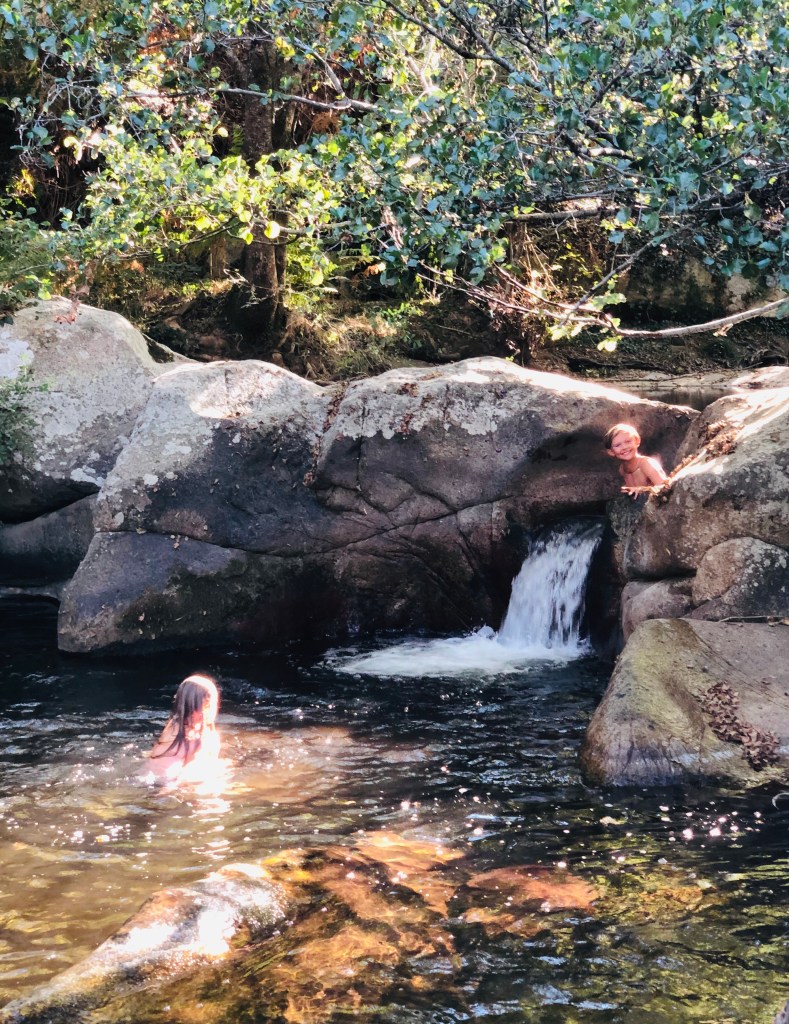
In this dry land we become obsessive about water, and from our cabin, the chatter of the river is a siren call. We find shade down at the river, we swim there to cool off, we use it to chill our milk and beers, we make complicated dams and stone towers. Arthur is in his element here and irrepressible as a water rat. He splashes, hangs from trees, throws stones, catches lizards and chases dragonflies, carves a bow, whittles arrows, makes elaborate snares in the bushes, diverts water into a series of fish catching pools. Matilda meanwhile sits on a sunny rock and sings to herself.
Our cabin has an outside tap with water that is pumped directly from the river.
“Don’t worry. The water is filtered,” Said Ben when we arrived “and the pressure is pretty good right now because I’ve just changed the filter.” He turned the faucet with a flourish. It hesitated, shuddered, coughed out a spray and then subsided to a dribble.
“So we can drink it then?”
He thought a while. “No-o. I wouldn’t advise you to drink it. It can be drunk. But I don’t think your insides are ready for it.” Looking at our worried little faces. “Don’t worry though. We’ve got a spring on the site. You can fill up bottles from there. It’s very pure.”
“Oh right. A mineral spring. Like your own Evian?”
“Um yeah. Like Evian.”
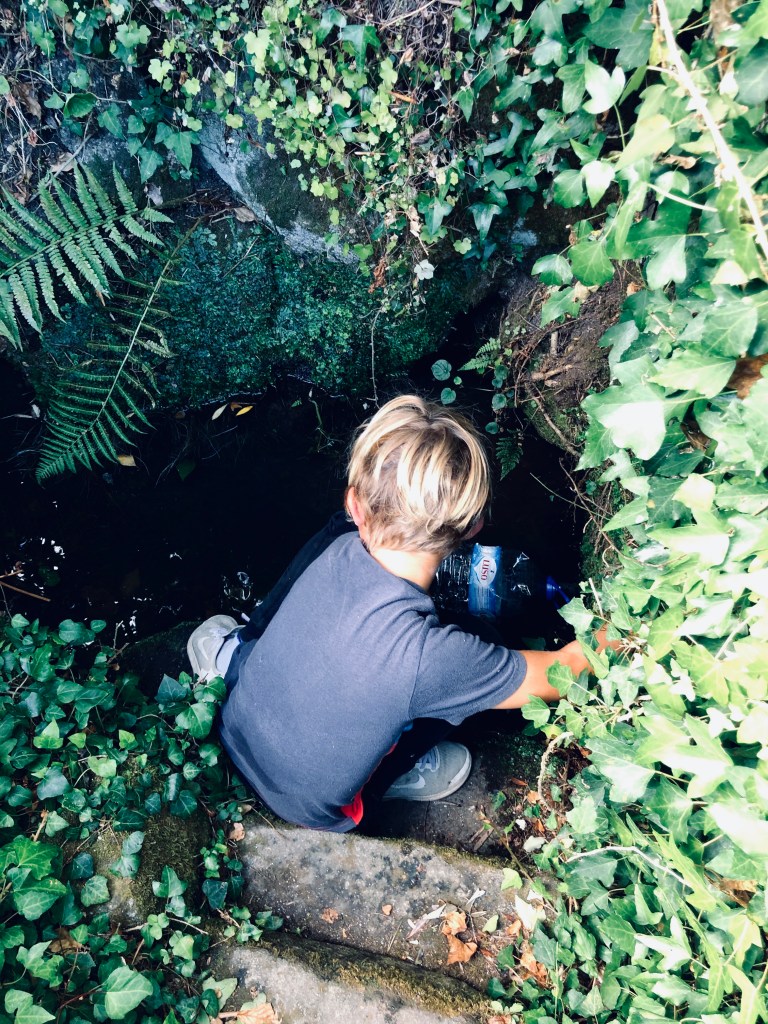
We don’t want to use our car unless we have to, it seems against the subsistence ethos of this place, and who can argue with a natural mountain spring? Arthur is dispatched cross country to fill our water bottles every day. He doesn’t complain, but when I go with him to fill up at the spring one evening in the half light, I find it teeming with worrying wildlife and full of over-rich organic smells. You must descend down some steps to a dank pool that is full of frogs and mosquito larvae, thick spider webs and who knows what else. The ancient donkeys of Terra Sangha come to water here and the air is pungent with the smell of their piss. The precious spring water trickles out of a mossy pipe inches above this dark pool. Your water bottle must be slotted onto the pipe with some dexterity to avoid contamination with the stagnant water beneath, and then you must push downwards and submerge it in the slime to find an angle so the bottle will fill. You squat there for several long minutes, hunched in the darkness, waiting for the water to trickle in while sly reeds pretend to be spiders on your neck, frogs splash around and small biting creatures drone in your ears.
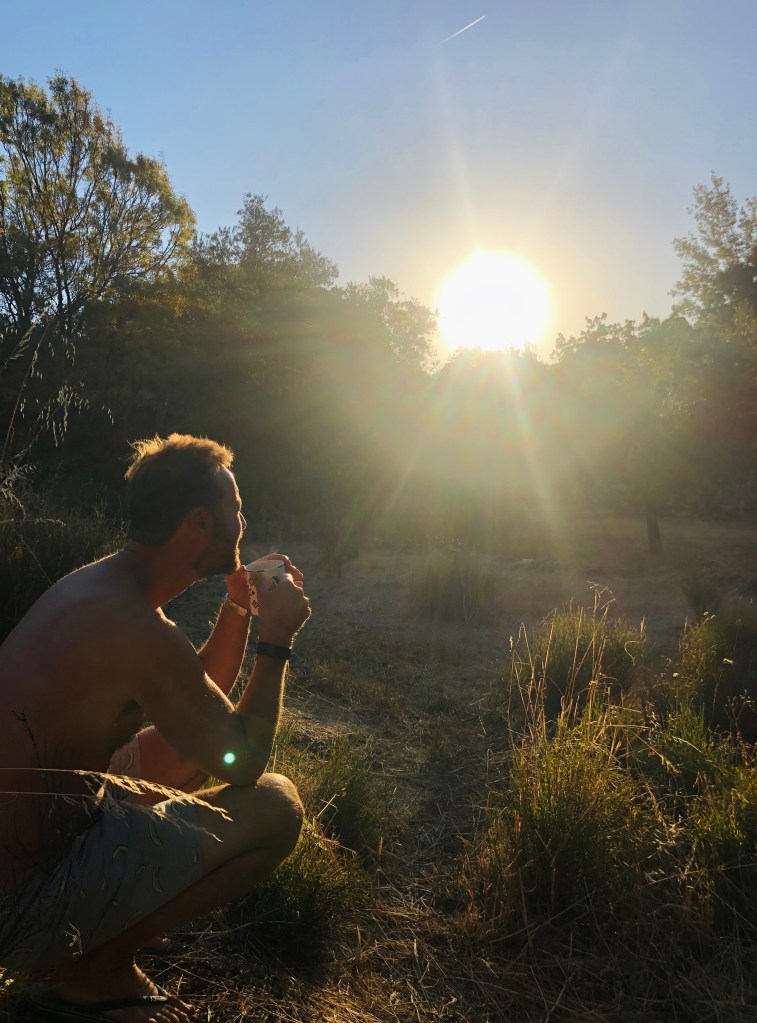
A few days into our stay I have a wild and feverish night, roaming and tossing in the darkness, creatures running over me in strange smothering dreams. For some hours I battle my demons until at 5am I give up and leave the cabin to wait for dawn. I wrap myself in the Indian rug that I call my bearskin and take myself down to the river. Crossing the stepping stones to the far side I wedge myself between two tree roots that trail over the water and settle in for sunrise, hoping to see kingfishers. I have a strange hallucinatory time there in the half light, immersed in the sound of the river. I find myself slipping beneath the surface to slither through pebbles and submerge myself in the silt. Reborn slippery and grey in the ancient coiled roots under the river bed I take on many forms. The kingfishers don’t come.
When Menna finds me some hours later I feel very cold and have a sickness deep in my stomach.
I face down the illness. I am determined that I will not lose a day with my family in this special place. It is just some food poisoning from the chicken kebabs I barbecued last night (they did taste mushy in the darkness) or perhaps a small stomach upset from swimming in the river, a germ from dirty hands. It will pass.
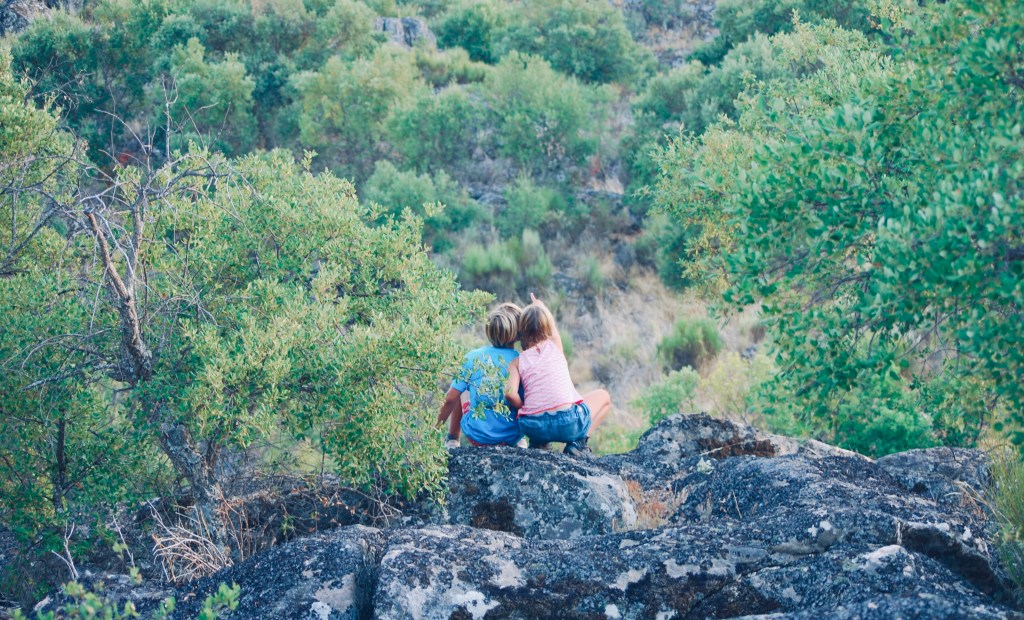
We go out walking in the late morning climbing up to the eastern peaks that face down onto the property. We have been told about a high viewpoint from which you can admire the topography of the São Mamede plateau. I lag behind on the ascent and sweat a lot. We make it up to a high point and see an undulating landscape of yellows, browns and deep greens. The trees bring life to this dusty world: sage colours of olives, walnuts and twisted corks up on the higher mountain faces, the deeper greens of oaks, limes, poplar, birch and hazel amassed around the hidden river below.
We try to make a homeward circuit and get totally lost up there in the hills in the midday heat. Our landmarks for safe return are strange rocks and twisted trees, a sunken path, a certain hilltop ringed with white stones. These milestones shift and change from different perspectives; similar features trick us and take us clambering up false paths. We end up following circular goat tracks that end in impenetrable thickets, always convinced we can hear the river close by and will somehow overcome the banks of thorn and brushwood to find it; that one true path home. We have no water and the whole thing is slightly nightmarish though I am determined not to indulge in further dream cycles of death and rebirth. One mustn’t panic in front of the kids.
We are on the mountain for a couple of hours until we find a path that leads to the river and finally we see the Roman bridge that means safety and I nearly cry. We make it home, bruised and scratched. It is 3pm and kids are hungry for lunch while I collapse into the hammock and pass out for hours. The kids take secret pictures of me asleep. It is a horrible sight.
Two days later Menna looks at our water bottle as it is illuminated in a shaft of light. There, in the ‘Evian’ spring water we have been drinking all week, are tiny nematodes, long as a finger nail, furiously alive and hungry. They coil and twist like malevolent worms. I feel mixed emotions: a resurgent nausea, vindication at a bona fide parasite to blame, slightly bitter that I was the only one to fall sick. Am I now the weak member of the herd?
We don’t drink any more water from the spring and when we leave at the end of the week, Menna doses us all with her most potent antiparasitic medicine.
 Mutant Skies