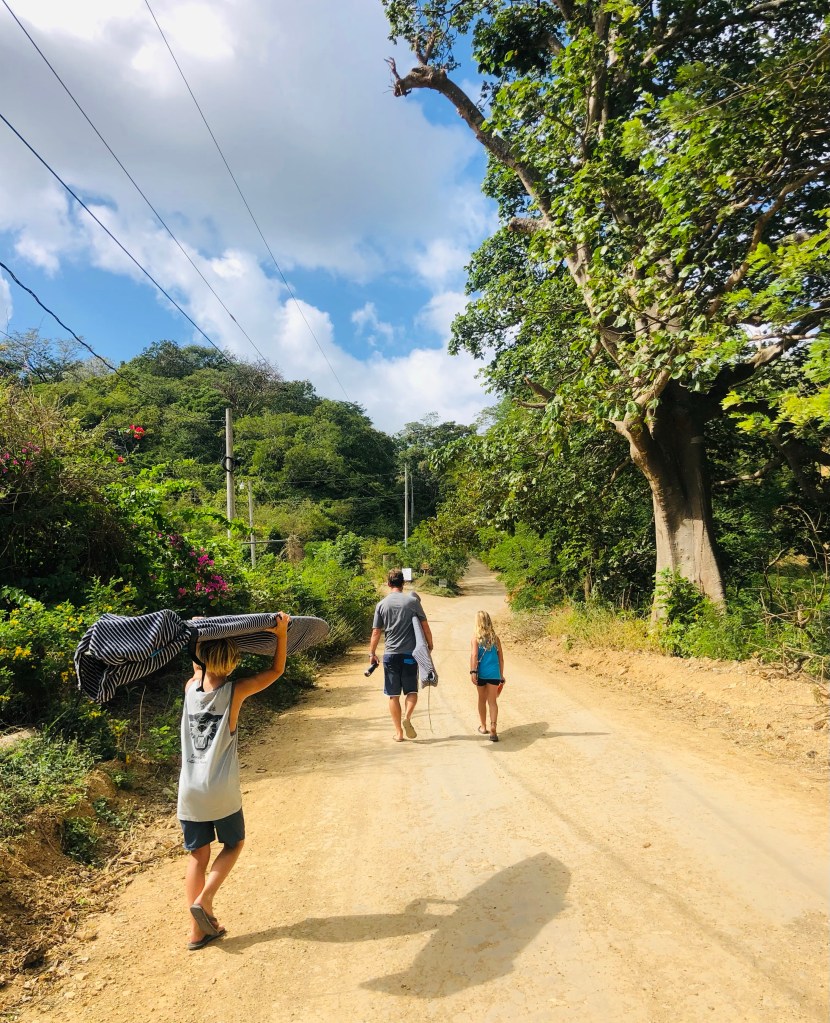
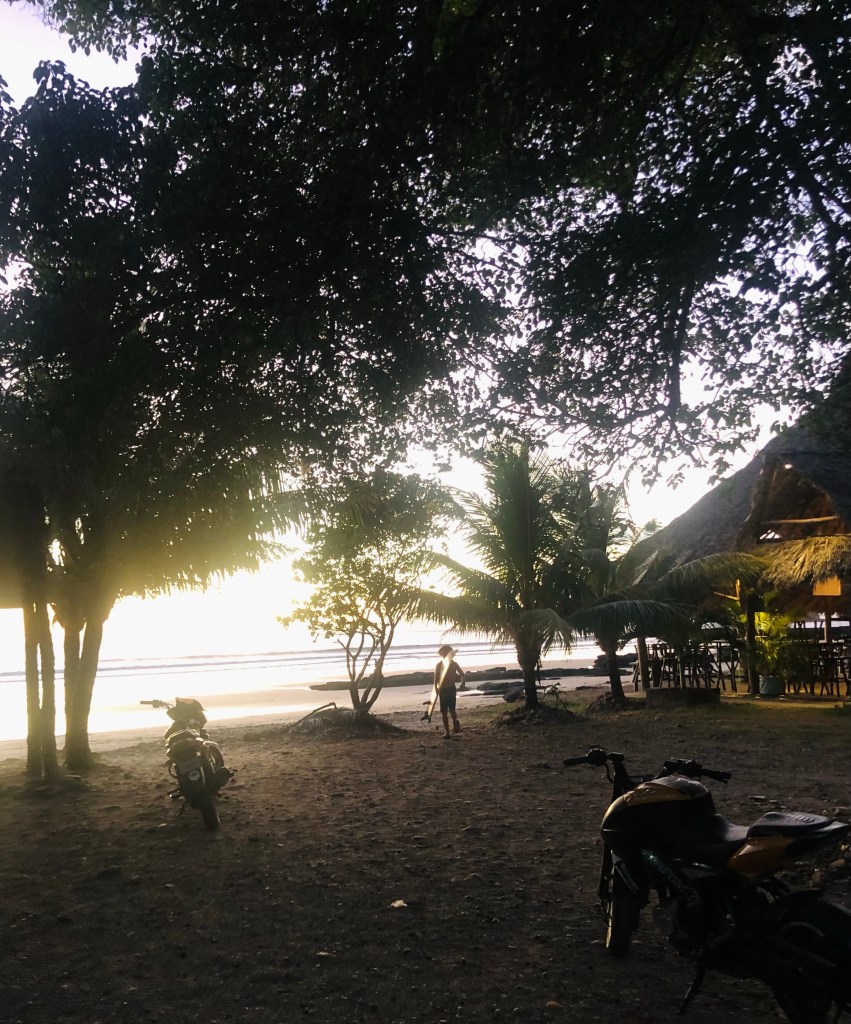
Sting Ray

Humankind has depleted the oceans and destroyed coral reefs. We have hunted, fished, polluted, driven many marine species to extinction. But sometimes the fish fight back.

Today was such a day.

The normal way of things has been inverted: a human has been hooked by a fish. More specifically a small girl has been pierced by the barb of a sting ray.

I am listening to a podcast on the beach, not quite asleep, not quite awake, digesting my lunch in the sunshine. Menna, Matilda and Arthur are somewhere out in the waves. Then somewhere in my half-dream, screams of pain intrude, jarring with the mellifluous but self-righteous tones of Sam Harris.
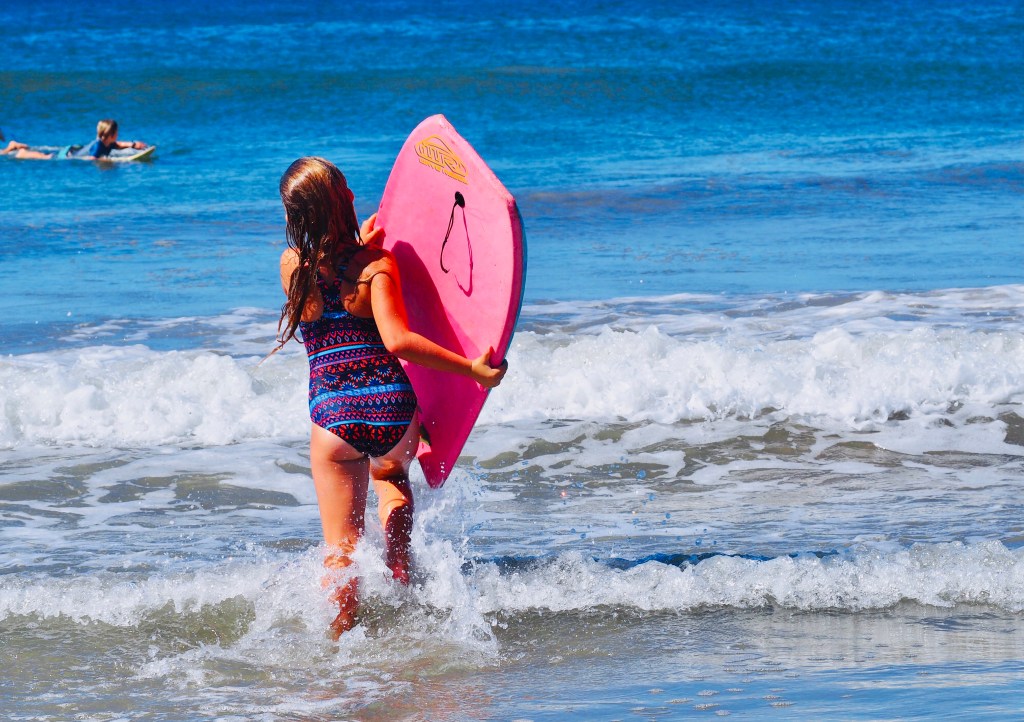
And now I am awake, up and running towards the sound. Menna is first on the scene and gathers Matilda up out of the waves. As I approach I can see her left leg stuck out rigidly, the thick trickle of blood glistening on her heel. I awkwardly receive her from Menna and carry her back up the beach. She screams and sobs and a crowd gathers. Everyone wants to give advice and practice their English or just be part of this exciting event.

“What happened?”
”¿Qué pasó con la muchacha?
“Was it a barracuda?”
“A sting ray no?”
“¿Una raia dices?”
“You have to take her to Emergencias right now.” says a lady with diamanté earrings and a no-nonsense voice. “I’ve seen this before.”

This is not a great option for us. We are a couple of hours from the nearest hospital, which will probably be riddled with Covid, and we don’t have a car. This doesn’t feel like the kind of injury that justifies an ambulance. “No problem guys. Is fine. My husband can drive you.” She cranes her neck and looks around, but husband has slipped off.
“Our buddy Josh got hit by a sting ray in Costa Rica” I said. “He was ok after a short while. I think he peed on it or something.” I’m aware that it sounds like I don’t care much about my daughter’s wellbeing, like I’m just trying to avoid the hassle. I catch Menna’s eye and am relieved to see she is thinking the same.

‘You must put her foot in hot water’ says another woman in a yellow swimming costume, a wealthy Managuan lady down for the weekend I think. “Like real hot. It’s going to hurt, sure, but you gotta stop the acid. Is it hurting now honey?”. Matilda howls and nods.
“That’s it. Hot water! No pee needed. That’s what we’ll do,” I’m liking this scenario more and I give a thumbs up and an encouraging smile to Yellow Costume.
There are three or four kids watching the scene, chattering away in Spanish, laughing. A huge muscled American surfer with a tiny head wanders over.
“Hey man, was that a sting ray? Nooo! I got stung by like five of them last year. That shit hurts so bad! You got to dig out the spine. Hey, look at this” hopping in a circle to show us all a scar on his sole. “Got one went right through my foot here.”
“Take her up to the bar, they’ll have hot water,” says Yellow Costume waving a well manicured finger. We all troop up to the beach bar.

“The barb snapped off inside me so they had to dig it right out with a knife. I was just sitting there, like crying and hollering and drinking rum. Man! So bad!” says Muscles.
“It’s early for sting rays. They only come when the water is colder.” Diamanté is seeing her authority diminish. “Was there blood? Perhaps it’s a scorpion fish, or a jellyfish. How do we know? She should go to a doctor. Don’t you worry sweetie, my husband’s gonna to take you. It’s gonna be ok. Where is he now?” More urgent head swivels but husband is still lying low. “Was there blood?” she repeats.
“I don’t think it’s too early for rays,” says Muscles. “the hurricanes messed up all the currents so it’s running colder than usual. You should go down to Marbella beach, there’s always loads of sting rays there. They like to, you know…”, he mentally tests out options, “…breed, in the bay.”
We assure Diamanté that there was indeed blood. She looks a little sour like we’ve conspired against her. “She still should go to a doctor in case there’s an allergic reaction. No se sabe! We gotta truck, it’s big. My husband gonna fit you all in.”
We are English, we specialise in polite but firm. “It’s alright thanks, my wife is a doctor. Maybe if we just sit her down for a bit.”
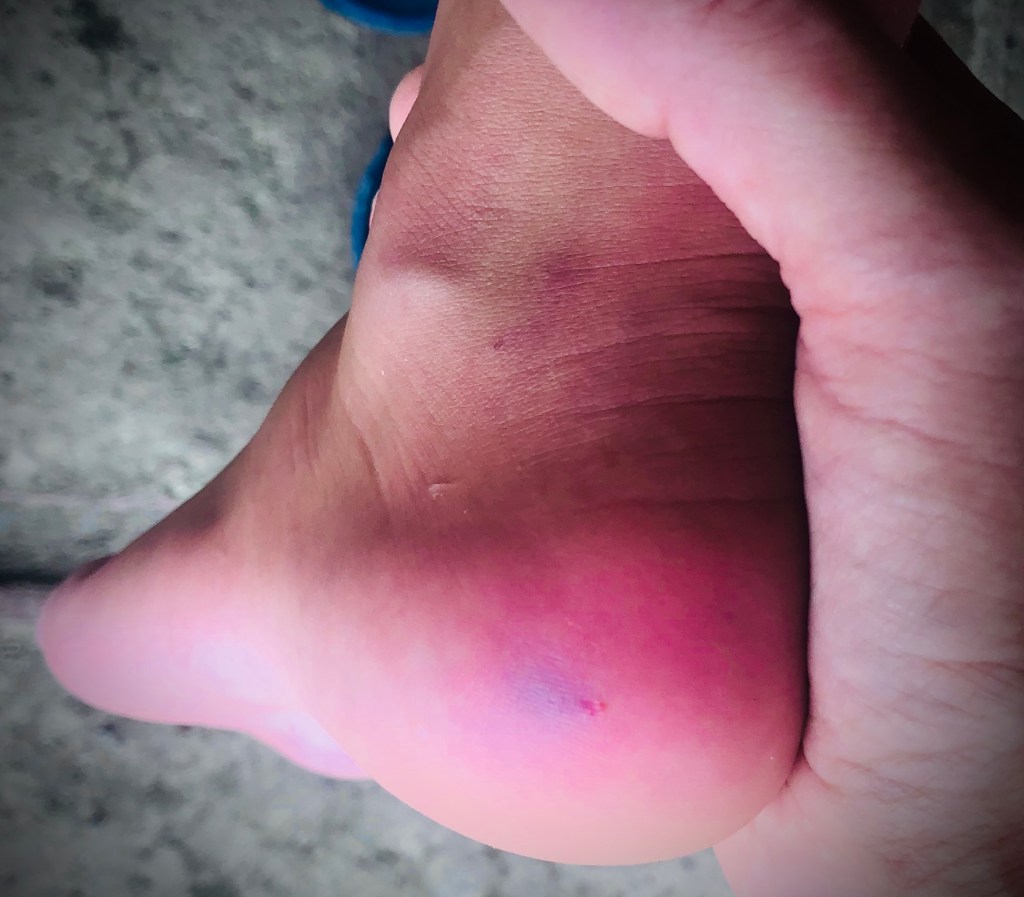
We put Matilda down on a sun lounger at the beach bar. She sobs, hides her face away behind the crook of the elbow, embarrassed about the attention. Menna inspects the wound for snapped-off barbs but Matilda is jerking her leg around wildly.
“There was another time I landed on this piece of coral,” says Muscles. “Sliced open my calf through here, under the tattoo. You know that coral can grow inside you? I saw it happen once to this guy. He was like a human cactus! I didn’t know if I was gonna wake up one day with like stalactites growing out my skin.”

The waitress from the bar come up with a bowl of hot water. She’s seen this drama play out before. We put Matilda’s heal into the water and she screams and jerks it out. The waitress gives a little smile, like ‘they always do this…’
Yellow Costume is in the ascendency. Diamanté has faded back to the second ring of onlookers.
“It’s got to be as hot as she can bear,” she says, “that’s the only way to neutralise the acid”. She makes the waitress add further boiling water to the pot.
“Or are they stalagmites? Which ones are the ones that go upwards? Though I guess they would have grown straight outwards really, so could be either. Like a dinosaur!” says Muscles enigmatically.

Matilda will not submerge her heel in the water and is converting her pain into rage. She howls and spits like a little wildcat, tenses her leg upwards, kicks out. I test the water temperature, it is really very hot. But probably bearable I think. She can do this.
“Come on sweetheart,” I say, “let’s just give this a go. The hot water will take the venom away. It’s hurting right?”
“Go away!” Matilda screams at me, “You’re hurting me!”
“I’m not touching you darling but you do need to put your foot in that water. Otherwise we’re going to have to take you all the way to Granada to a hospital there,” I say, really working on my calm tone.

Morwenna does her doctor thing.
“Let me explain from a medical point of view why we need to do this Missy,” she says in a soothing but matter-of-fact voice, “you’ve been injected with a venom that is irritating your skin and working it’s way up through your blood.” Matilda screams again. “We need to flush out the venom with hot water. It will take away the sting and reduce the risk of infection.” Menna gently pushes Matilda’s foot into the water.
“I don’t care! I don’t care about venom in my skin.I’m not putting my foot in that water,” says Matilda kicking her leg high into the air.
“You see your nervous system is getting agitated by the toxins,” Menna continues.
”And we’re getting agitated by your screaming,” I add. “It can’t hurt that much surely.”
“It gotta to be real hot honey or it don’t work,” cuts in Muscles, “they actually poured water from the kettle onto my foot when I got stung. I got blisters all over afterwards, but hell, even the burns were better than the stinging.”
“I bet it won’t hurt anyway. I’ve checked the water and it’s fine. Look! I’m putting my finger in now. Hardly hurts. This is a great chance for you to practice being brave!” I say with a smile. I try to hold her hand.
“Shut UP Daddy! You’re making it worse! You don’t know what it is like!” screams Matilda through clenched teeth, snatching her hand away. “You’ve never even been stung by a sting ray.”
“No you’re making it worse.” I snap, calm voice lost, “You’re making such a fuss. And we’re all going to have to drive all the way to Granada and hang out at a bloody hospital if you don’t put your foot in that water. We’ve all spent enough time in hospitals already. Come on!”

Yellow can see that I’ve lost control of this situation. She squats down next to Matilda and grabs her hand.
“Look at me girl. Your foot needs to go in that water to get rid of the stinging. It’s gotta happen. I don’t care if you shout. Shouting’s fine. You shout at me all you like, but you get your foot in there at the same time. This is for your own good.”
Matilda has never experienced a complete stranger ordering her around in a tough-but-warm-hearted American-Nicaraguan accent and is unsure how to respond. She’s taken aback and stops screaming for a second.
“That’s right girl. Now put that foot in the water. You look at me. You look into my eyes. You’ve got this honey.”

“Yeah. That’s what I said. Good stuff!” I murmur, feeling kind of displaced. Matilda lowers her foot into the now-cooler water. She jerks it out again theatrically, and then allows Yellow Costume to gently push it back down again. She writhes and makes some extraordinary grimaces but keeps it in there.
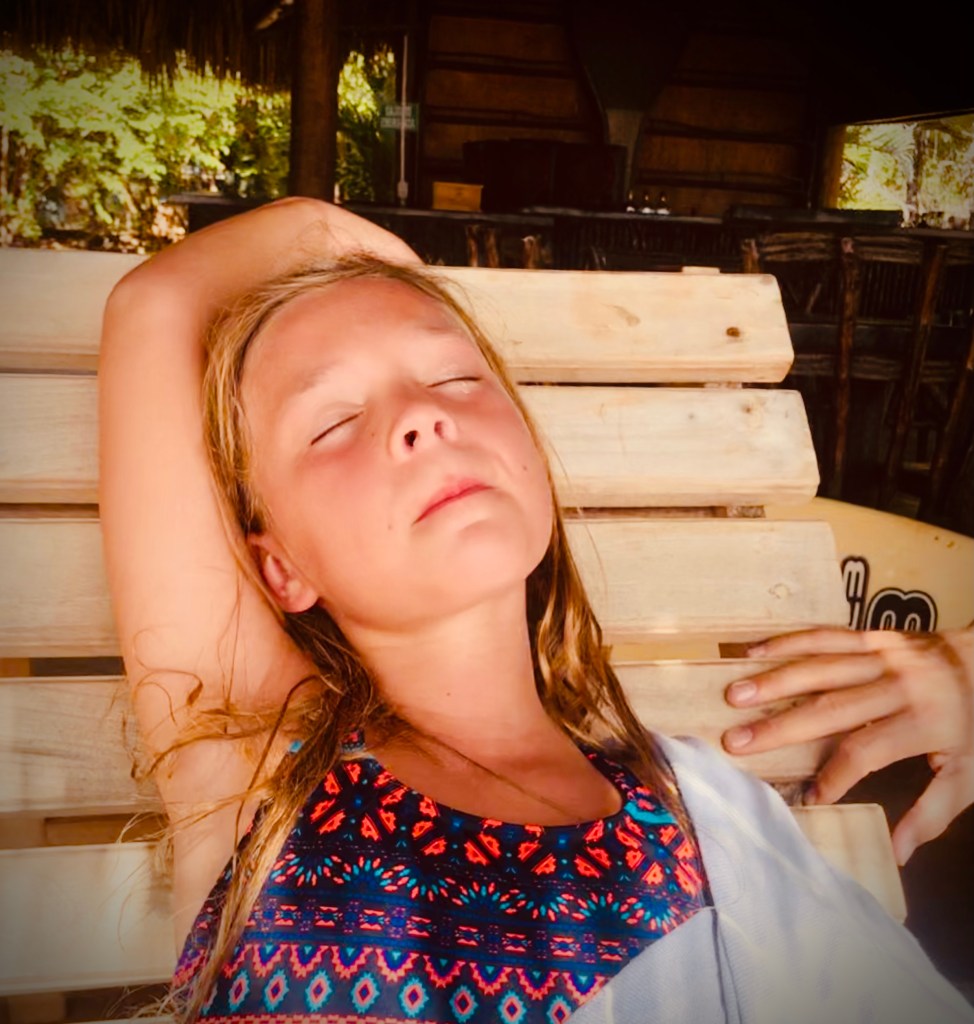
Yellow costume has prevailed. She owns this situation now.
“You gotta watch out for an allergic reaction, like if she gets bumps or something,” says Diamanté quietly. It is a last gesture, she knows she is defeated. “Come on honey, we got to go find Daddy.” A shape detaches itself from behind her and we see she has a girl with her, about Matilda’s age, who has been literally hovering in her shadow. “Hope you get better now,” she says to Matilda and they walk off down the beach.
“I broke my leg one time,” I say to Muscles, “snapped the femur clean in half!”
“What, surfing?” he says.
“Nah, on a scooter. Crashed into a lorry.”
“No way!” he says.

We huddle around the invalid for the next twenty minutes. Some people drift off . The amused Nicaraguan waitress periodically tops up the tub with hot water, Matilda groans and writhes, puts a weak hand upon her brow. We bring her fries and ketchup and horrifically sweet cherryade. People put damp towels on her head and shield her from the sun. Yellow Costume talks to her the whole time in a low monotone, murmuring encouragement and words of wisdom. Menna hugs Matilda tight and whispers in her ear. At some point Arthur wanders up with his surfboard under his arm to see what all the fuss is about. He’s impressed with the injury but he’s made a friend in the waves and after a minute or so he runs off to play with him.

After a while I see that my presence isn’t required and I go back and finish off my podcast.
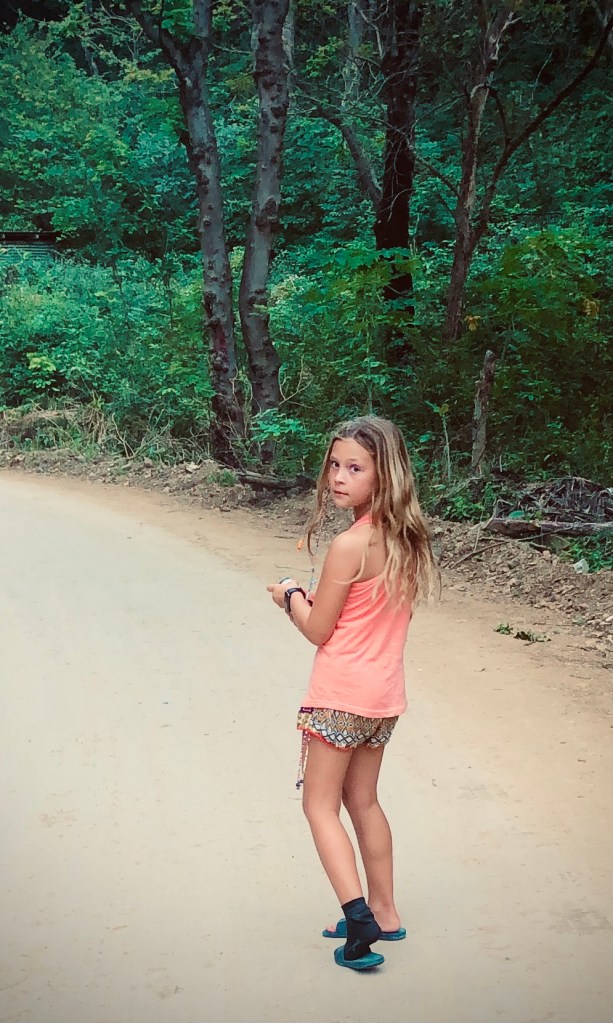
Limping home.

Hog Tide

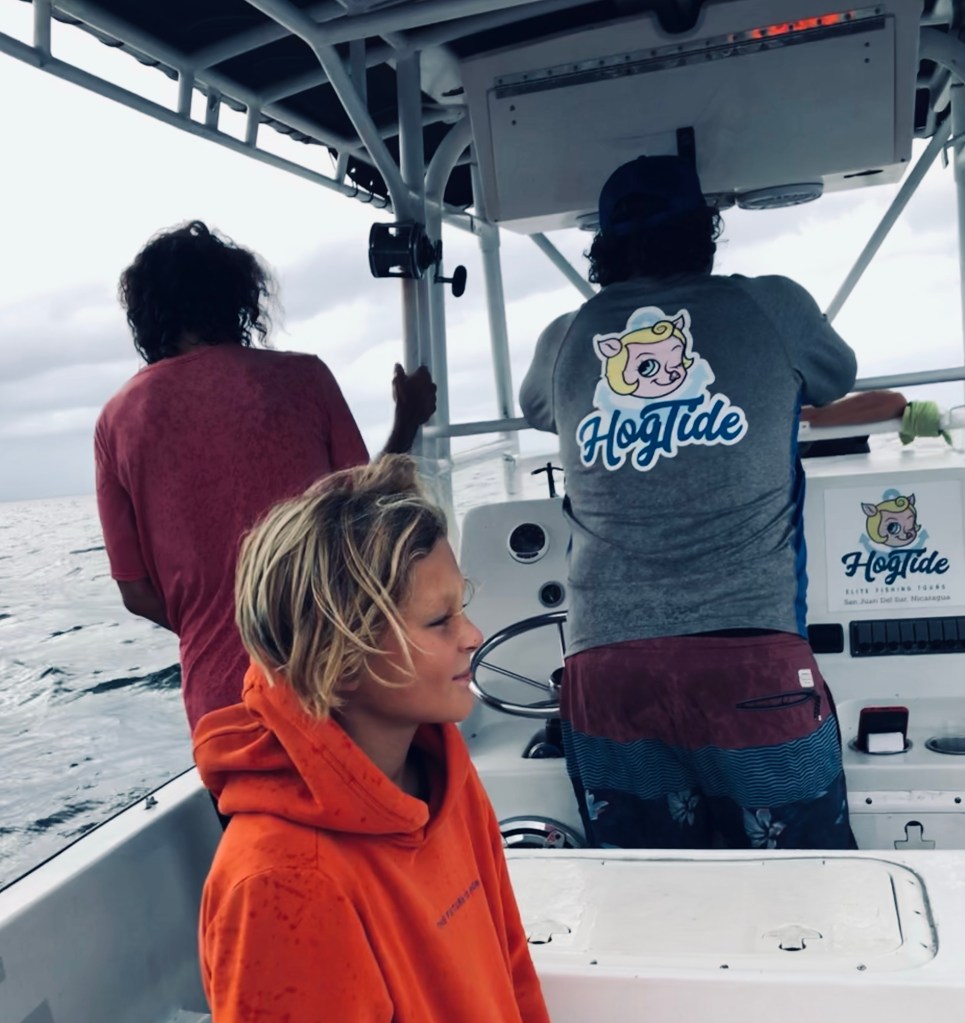
Arthur and I are going fishing today with our buddy Josh. All the charter fishing companies in San Juan del Sur have terrible reviews – but they are cheap! – so we have chosen one that seems a little less terrible than the others, or perhaps a little cheaper. It is called Hog-Tide Fishing. The logo features a pig in eye-liner winking.

We have a 5am rendezvous in town, which means an early taxi for Arthur and I. It’s one of those annoying meetings where everyone is late and then you do a lot of aimless hanging around anyway, grumpily calculating how many extra minutes after your 4:30am alarm you could actually have got up.  Arthur does not say a single word for two hours, which I suppose is a kind of silver lining.  

The three of us are joined on this expedition by Jason the boat owner, a scrawny surfer called Simon with lots of facial hair, and Candy who is together with one of the two guys, though I’m not sure which. It looks like Josh and I are bankrolling this expedition and the others are on a freebie. Lastly there is Capitán – real name not given, definite article not required. A silent, competent local who is there to do the work.

The owner Jason has been described in many of the Trip Advisor reviews – sometimes admiringly, more often not – as a real ‘character’. He is certainly larger than life, with a lumbering swagger, a range of eye-opening opinions and a good southern drawl. He has a beloved pet pig back home in the States it turns out, hence the shop name. I think about the bondage reference, the sexy pig logo, and various questions bubble up – but it is too early in the morning.

Jason hits us up for the payment straight away – cash only please – and we have to fumble across a large pile of notes. He then asks for another $50 as a tip for Capitán, his paw thrust out insistently. He’ll make sure Capitán gets it later, he assures us. I would prefer to give him a tip directly, but Jason is very firm on this point. The fifty dollar bill disappears into his pocket.

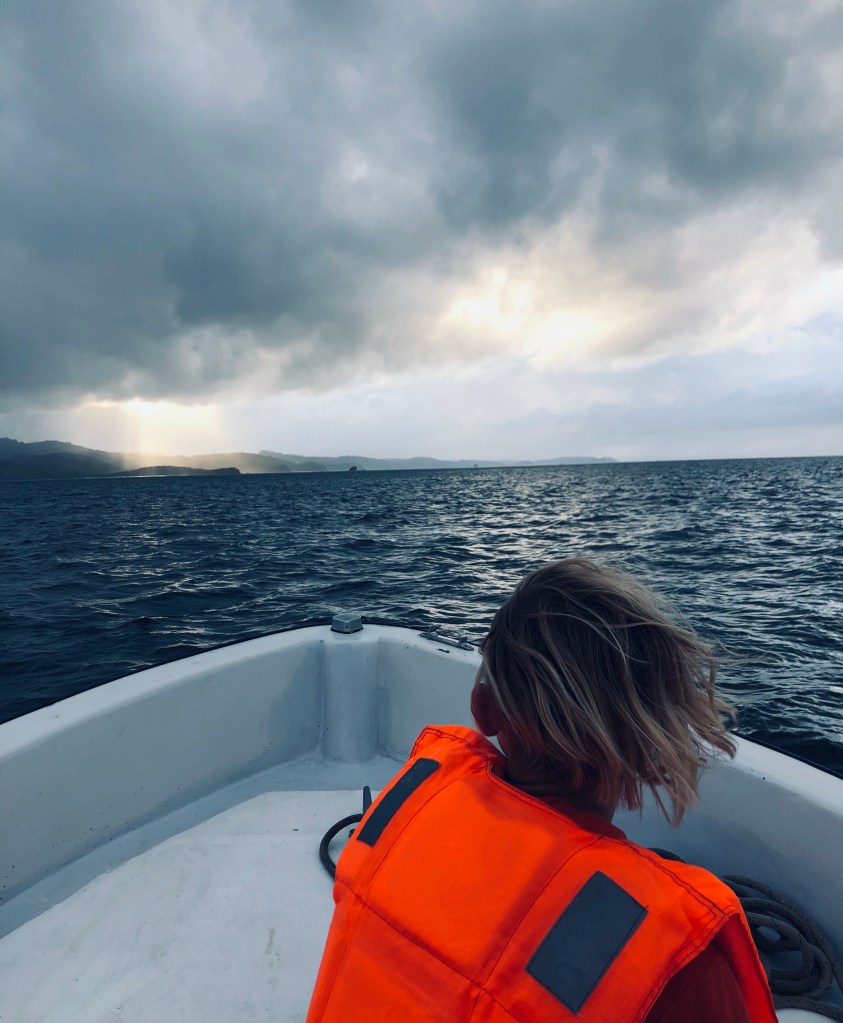
As we finally set off to sea, there is dark line stretched across the horizon. Arthur and I have barely seen a cloud since we’ve been in Nicaragua, but now we watch the front advancing towards us with a sense of inevitability. The rain is cold and insistent when it hits and instantly brings a nostalgic memory of wet days mackerel fishing on Plymouth Sounds. I have only brought a t-shirt and I’m soon soaked through, so for warmth I pull Arthur into a bear hug and refuse to release him.

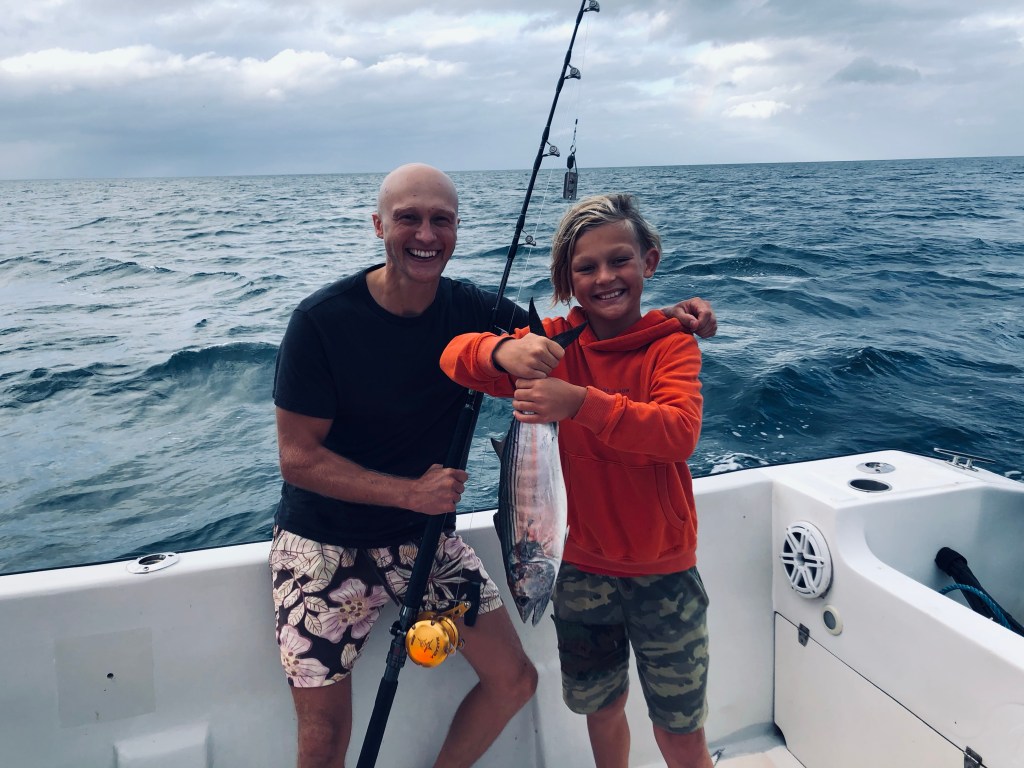
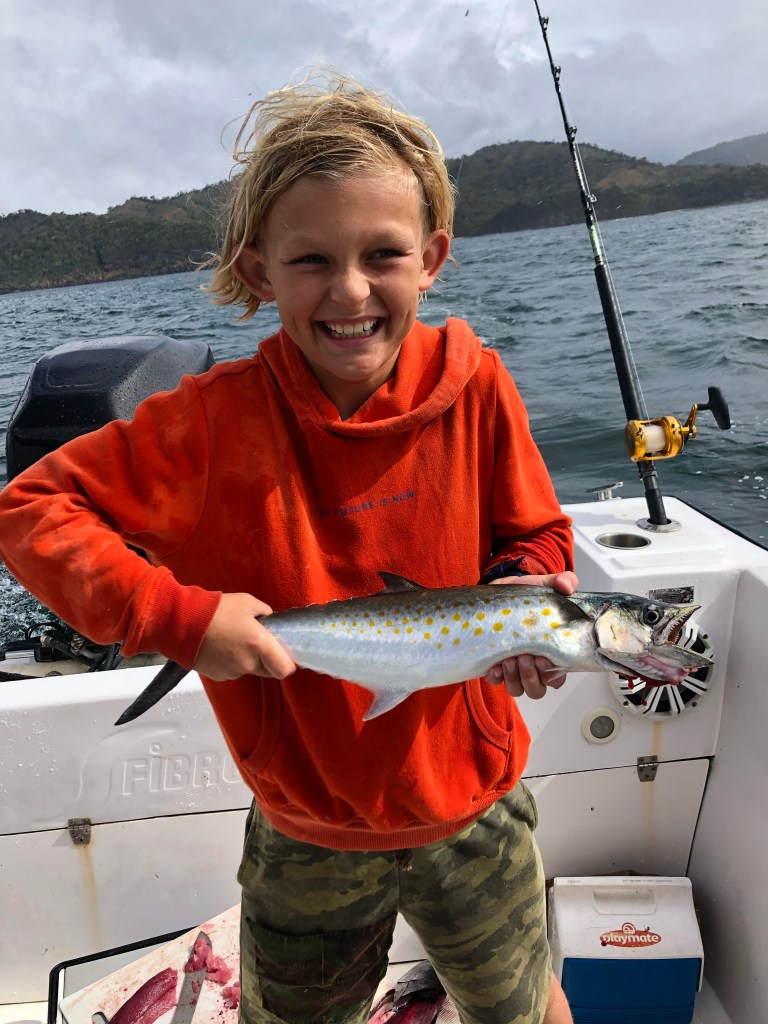
This has been billed as a day of sport fishing and surfing. We will catch big fish then catch big waves, anchoring at hidden reef breaks that are only accessible by boat. It soon turns out though that we are not going big game fishing in the true sense, more coastal trawling. We potter backwards and forwards along the shoreline in our stubby little vessel, a couple of lures strung out behind us, eventually hooking a bonito which Josh pulls in. We all pose for pictures with it.

We nose up to a couple of beaches and reefs up and down the coast but the surf is flat and blown out and our boards stay in their bags. Jason suggests a swim, but none of us wants to get in the water. We stay on the boat, sliding around on deck, telling stories to warm ourselves up.

Simon is a real character. He alternates between moments of stillness and sudden uncoiling position shifts. To chat with him you must be light on your feet, spinning and twisting to follow his moves.
“I fast every Sunday, it makes you feel great. Complete digestive flush.” he tells us from a lotus position on a locker, “but Monday, it’s like Disneyland” – squatting on the cabin roof – “I’ll eat just about anything! Ice cream, burgers, shrimp you name it.” Big hoot of laughter as he twists around a stanchion. “For the rest of the week I’m vegan.” The scion of a rich Armenian family, he has bought land in Ecuador and built a yoga and surf retreat that is also a cultural collective, a local community centre and various other things. He has a ski lodge in Colorado, he is negotiating a land deal up the coast here in Nicaragua. Soon he is talking about potential investments we might consider together.

At one point we stop the boat and drop handheld lines. It’s like crabbing off the pier. Jason catches a baby grouper which he conscientiously throws back in, only to see it flap weakly for a while on the surface before being snatched up by a gull, which is in turn attacked by other gulls, so the rescued fish is literally pulled apart in mid-air above us. Scales and fins rain down onto the deck.

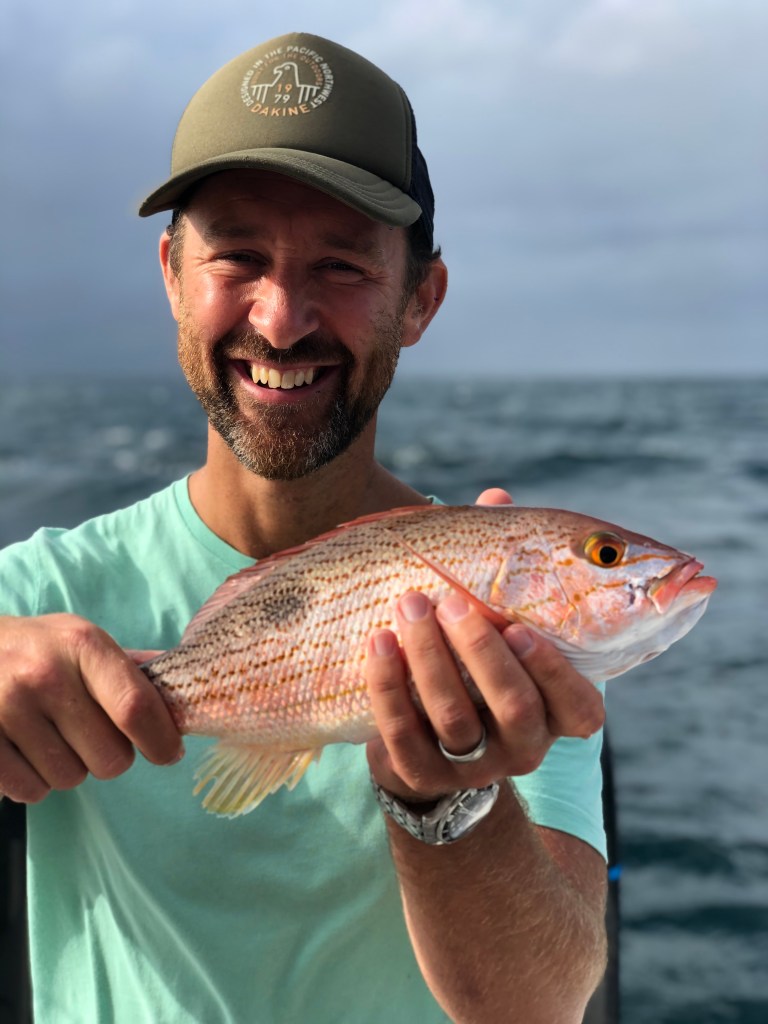
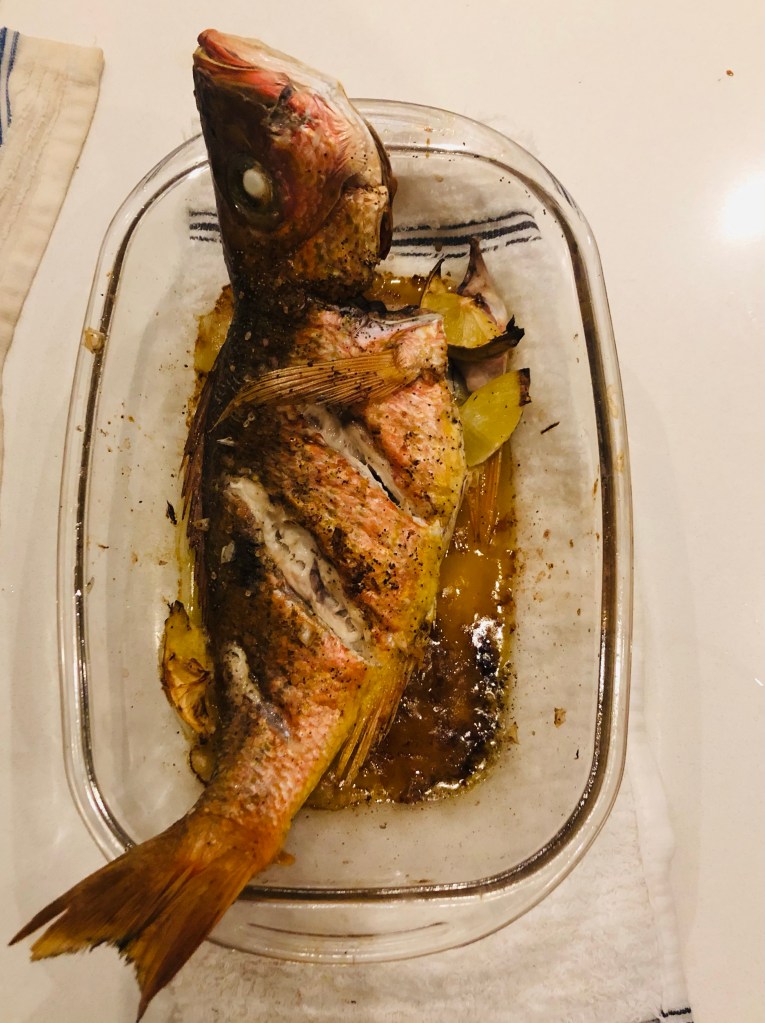
I haul in a red snapper. “That’s a nice catch” Says Jason, “That’s one of the best fish you can find round here.”

There is a lull when none of us catches anything for half an hour and Jason suggests cutting up the Bonito. He makes some rudimentary gestures at Capitan, who silently guts the fish, cleans and filets it with precise knife-work, then adds soy, lime and chilli. We crowd around and eat it with our fingers, directly out of a plastic tub, stuffing spicy raw fish into our mouths. It is eight in the morning and it tastes fantastic. We look like savages, huddled around in sodden clothes, chomping away silently with soy stained mouths.

Jason comes to life after the first couple of fistfuls of bonito sashimi.
“I first came down here for a bachelor party – that was some event I can tell you. You met the girls here?” He gives us a leer and a wink that for a moment replicates uncannily the winking pig logo he’s got embroidered on his chest. “It was so good I went home and sold up. Hauled my ass back down here and got me a boat. And since then… Good times!” He indicates the ocean expansively.

Arthur catches a large grouper with his handheld line, pulling it in himself. His grin is enormous and the sun comes out at the same time. The mood on the boat improves.

“It must have been hard getting a business up and running in this environment,” I say to Jason.
“Oh yeah. No shit. No tourists means no trips. It’s been drier than a bone in a box round here last couple of years. I had to sell my car!” He says. “But you know, you can live pretty cheap round these parts.’ I guess it hasn’t all been good times then.

Jason is off and running. He outlines various contentious views about the government here, the females, the intelligence of the locals. “Don’t worry about him” he indicates Captain, “he don’t understand a damn lick of English. Most of em don’t. Me n him, we got our own sign language we use.”
“He does speak English,” Arthur whispers to me. “He was teaching me how to gut the fish earlier.” Jason offers us a beer.

Capitan reels in a macarela.
“That’s the jackpot that is.” says Jason. “Tastiest fish in the sea. You guys got lucky!” We all pose for pictures with it.

After a three hours on the boat we have caught five fish and we are ready to go home. “You guys can keep all the fish.” Jason tells us “And hey listen, y’all should drop around to the shop some night, I do fish fry-ups in the evenings sometime. Bring along some beer and join in the fun. I do like free fishing trips too, just for my friends. You’d just have to pay the gas. And a tip for Capitán. It would be pretty cool!” I think Jason is lonely.

Back on shore I ask Arthur how it was. I feel the trip hasn’t lived up to expectations, that it wasn’t the sun-soaked marlin chase in deep seas that I had described. Arthur looks up at me, soggy and tangle-haired, splashes of soy sauce on his cheeks.
“It was brilliant Dad! We’ve got to hang out with Jason more. Can we go out with him again?” I think back on the other fishing trips we’ve been on – rainy mackerel hunts in Plymouth, casting lines from various jetties in Spain, trawling from a boat in Greece, crabbing in Norfolk. We’ve never actually caught anything before. Well, nothing we could eat anyway.

The bag of grouper and snapper feels heavy in my hand. We will go back, throw it down on the table. Arthur will gut it. The girls will cook. There will be a feast.

We set out for the high seas at dawn like real men, and now we are returning home, wet and salty, laden with our catch.

I hope Capitán got my tip.

Tarantula

He is sitting on our doorstep, waiting.

We have been tucking up the kids and Menna slips outside first. She immediately bounces back into the room, all twitchy and wide-eyed, jerking her head like a marionette. She’s got some kind of palsy, I think.

As I step out I immediately see him on our doorstep, waiting. There’s something primal that grips me then. A pattern recognition that fires up some ancestral protocol deep in the medulla and my leg muscles spasm before I even know what it is I’ve seen. I leap high. Then I land and the prefrontal cortex takes over: I laugh nervously; act nonchalant.

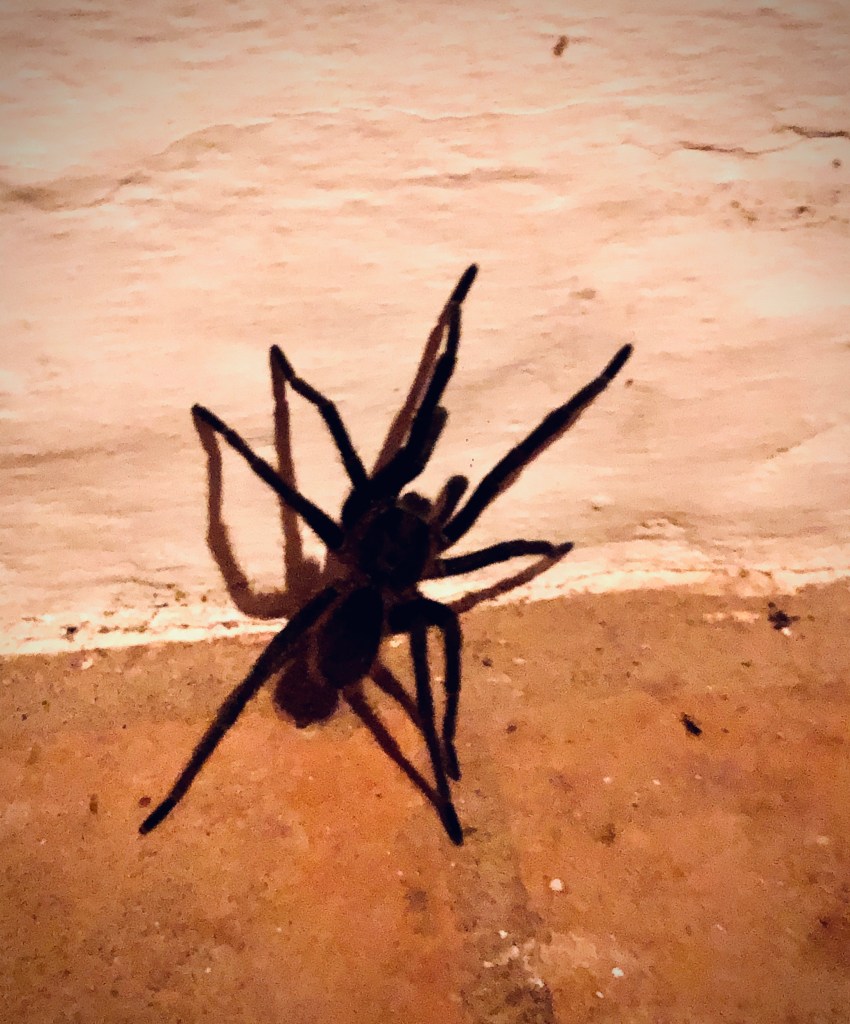
It’s the biggest fucking tarantula I’ve ever seen, there on our doorstep, waiting.  

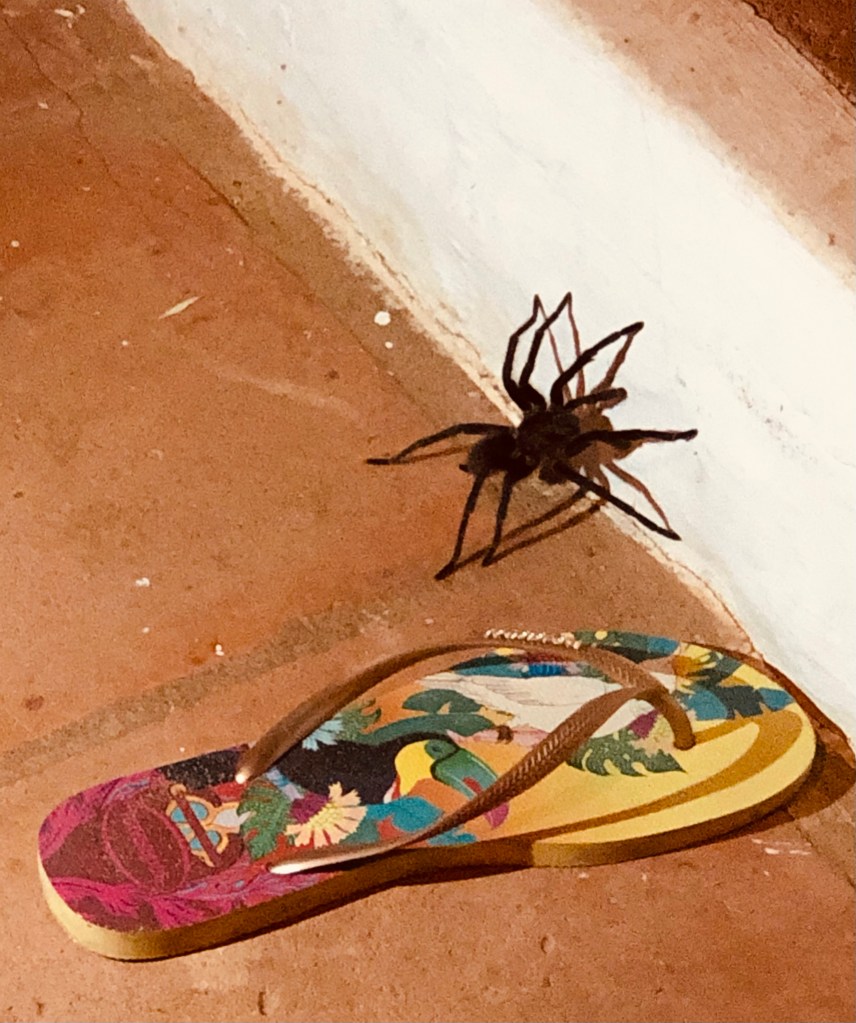
It is not one of those short-legged stripy tarantulas with the hairy abdomen that they call pica-caballo here. No, this is a much larger, better-proportioned arachnid with long muscular-looking legs. He is entirely black and sits motionless, coiled like some clockwork contraption that has been wound-up tight and is now ready to explode. Lit up by a single overhead light, each of his legs casts a stark shadow so it seems that there are sixteen of them.

Menna and I regroup a few meters away for a whispered conference. Through one of the two doors in front of us, our children are drifting off to sleep. Matilda is a committed arachnophobe, and to even suspect the existence of such a spider as this would catapult her to hitherto unseen levels of hysteria. She must never know of this nighttime visitor who sits on our doorstep, waiting.

What to do? I have a lifelong rule never to kill animals unnecessarily, except for flies and mosquitos (and occasionally fish which I intend to eat later). Furthermore this tarantula is – despite that visceral first reaction – a truly majestic specimen. He has mesmerised us and now we can’t take our eyes off him. He crouches there with a malevolent calm, an ancient predator from an older time: ageless, impassive, alert. We are in his thrall. His legs are long and elegant, his low centre of gravity speaks of power and agility. He holds some legs flexed on the floor while others rest on the perpendicular stone in front to provide torque as he leaps. My vertical frame feels ungainly as I sway in front of him. I am too slow and clumsy on my single pair of legs.

To kill such a creature would be petty and mean-spirited. I could shoo him away of course, but I have heard that tarantulas are territorial. He would come back again later, and next time we might not see him there on the doorstep, waiting. Matilda might step on him with her little bare foot as she comes wandering through to our room to talk about some vivid dream at three a.m.

In the end I go down to reception to ask for help. There is no one there but I manage to find Silvio, the old cook, who we have befriended. He is a solid chap, sparing with words, face lined with unknown worries. A dependable choice for this task, I think. He doesn’t quite roll his eyes when I tell him that there I have a spider problem, and he manages not to snort derisively when I tell him that my preference is not to have this spider killed, merely removed to a good safe distance.

Silvio has clearly had a long day but nonetheless he will come and help. He wearily picks up a tub and a broom. We head back over to our cabin and find Menna still transfixed, eyes locked on the tarantula who stares back at her from our doorstep, waiting.

“Pero sí ¡Es grande!” Says Silvio and I feel vindicated.

Then we get to see how a local Nicaraguan deals with an oversize spider. Silvio bends down and in one gesture he sweeps the tarantula smoothly up into the ice cream tub that he is holding. Job done! He stands up and smiles at me. Young soft European lad, his eyes say, you still have much to learn.

I cannot help feeling that Silvio has committed a fairly basic oversight here, but I am not sure how to articulate it. Before I can say anything though, the tarantula simply runs out of the open ice cream tub and up his arm.

Silvio does a kind of reflex jump that is not so different from the one that I myself performed ten minutes earlier. When he returns to land the tarantula is no longer on his arm but is on his leg instead, all eight limbs locked tightly into the fuzz of his well-muscled calf. Silvio slaps at his leg and knocks the tarantula to the floor. Menna and I both leap back in perfect synchronicity. The tarantula runs. Silvio sweeps wildly with his broom. On his second or third attempt he catches the skittering creature and sends it scudding across our porch and into a bush.

We all take a couple of breaths and wait for our hearts to slow down. Silvio rubs a hand over his bald head and makes a kind of shrugging gesture. We thank him profusely and he potters off into the night. It feels to me that both he and the tarantula have been somehow robbed of their dignity in the exchange. Silvio’s native competence has been called into question. A lord of the ancient world has been humiliated.

I worry too that we haven’t really dealt with the problem. Somewhere in that dark bush an angry tarantula sits, biding its time, right by our doorstep, waiting.

The Nicaraguan Problem

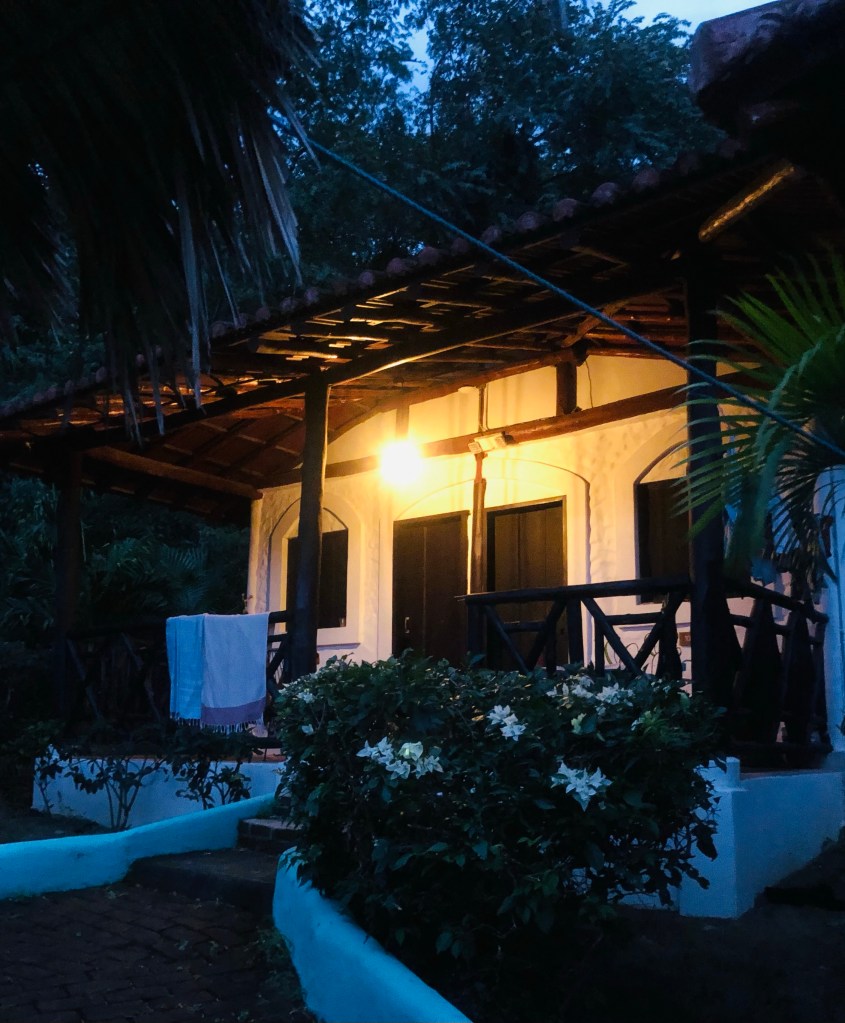
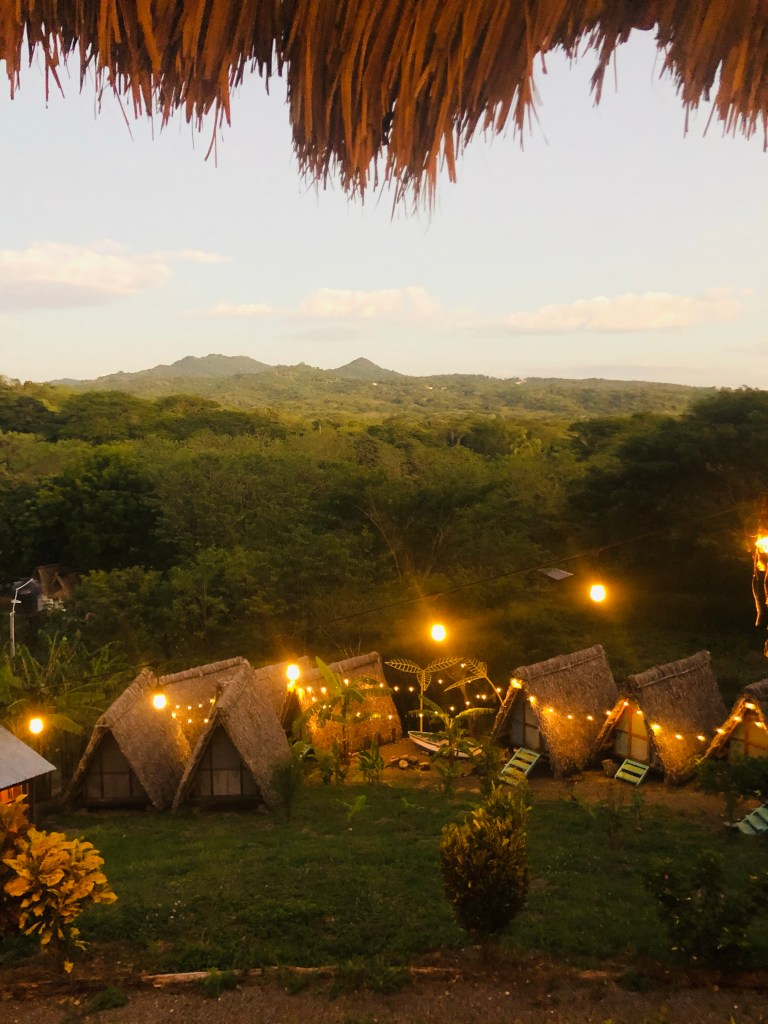
We are staying in a hostel near San Juan del Sur, a beach town on the southern Pacific coast. It is a basic place and there is a certain simple harmony between its construction and the natural backdrop: open-sided wood structures, winding pebble paths, leafy vegetation, palm-frond thatching, wigwams, trees, the sea. A ring of surrounding hills funnel cool wind through the site. Loud marimba music plays at all hours of the day.

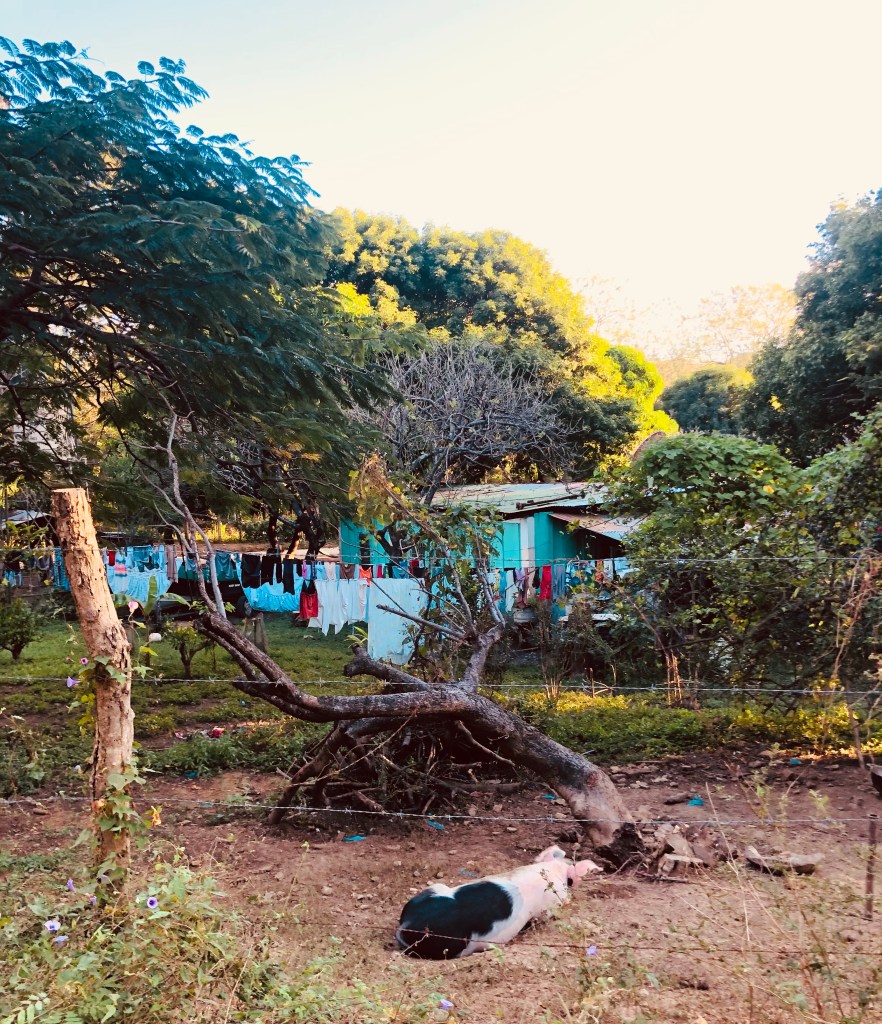
It is a semi-rural area in which we find ourselves, somewhere that is neither village nor countryside. Outside the hostel gates, there is a series of corrugated iron and wood cabins strung out along a muddy road, smallholdings mainly, where chickens and pigs scratch away at the bare earth. Eagles circle overhead and small ragged children peer out from the shadows.

We plan to stay here for two weeks and we are not going to rent a car, so our world shrinks down to the limits of where we can walk to (or rather, where Matilda will walk to), a few kilometres of road leading to Maderas beach in one direction and the Machete Bar in the other.

Improbably we have a buddy here. Manu is a cosmopolitan Chilean who runs a couple of surf camps under the Dreamsea franchise. We stayed at his camp in Cantabria, northern Spain, a lifetime ago (last July) and I went surfing with him on a memorable occasion. He is now out here in his Nicaraguan camp only a klick or two up the road from us. We go to see him a few days into our stay.

Manu take us on a tour around his elegant – and empty – surf boutique. We peek into tents on teak wood platforms, where Balinese carvings gather dust on antique chests. We admire the huge central palm-thatch tower, walk up the spiral staircase to the surf theory classroom and stare out from the lookout platform over the jungle canopy to the far off sea. Arthur enviously eyes up the gleaming racks of surfboards.

We can envisage this place in its heyday: warm nights with mojitos, Soul Wax beats and candlelight, laughter at the poolside, beautiful people floating around in swimwear – basically a Vogue advert. But now the pool is covered in old leaves, the bar is untended, the bongos are unbeaten.

“We have only been open for two years” says Manu, “One good summer, then we got hit by the political crisis and all our bookings cancelled. Then it seemed like things were getting better, but… Covid! After that Hurricane Eta hit us pretty hard. Lots of roofs off! Then came Hurricane Iota…” He smiles and gestures in an inshallah kind of way. “We managed to find a corporate booking for new year – so at least I was able to pay the staff a Christmas bonus.” Another grin, “But not so many came in the end, so we lost out on the bar. Though now I have a lot of tequila!” We are doing dry January, I explain hastily, a midday tequila doesn’t appeal.

Although the worst is over now, Nicaragua’s reputation remains sketchy and this keeps people away. “This country is totally safe” Manu insists, “You don’t see real crime here, only opportunistic stuff. You go to Costa Rica and you get proper planned crime, especially in the surf resorts. Theft, mugging, kidnap. All the gangs and cartels are there. Here in Nicaragua there is only one cartel in town, and that’s Ortega and his government. And he doesn’t want to fuck with the tourists!”

He has a theory too about the competition for tourism, a narrative strand that will get repeated throughout our stay. “The Costa Ricans have been watching Nicaraguan tourism grow, and they don’t like it. It’s like how they were during the boom years, but now they’re flatlining and Nicaragua is taking more market share. So they’ve used the excuse of Covid to shut the border. San Jose is the international hub, all the flights from US and Europe land there. Then the tourists travel overland up to Nicaragua and back. Now of course they can’t get back again, so they don’t come…”

After an hour or two of chatting we leave Manu in his camp and head out into the bright daylight for lunch. He is a bright and vivacious guy, full of traveller stories, but even he cannot shrug off an air of gloom about the current situation. We leave him tapping away at his MacBook in the shadows of his empty bar, writing business plans, building projects for when the guests come back.

We make more friends here over time: we meet Tim and Melissa on the beach and have dinner at their place, they introduce us to various other members of the Canadian diaspora. We talk to a Dutch family who have lived here a decade already. Our long-suffering friends Josh and Meg cross the border to come and join us. Again and again in conversation, we hear the same narrative of stunted growth and sinister powers, of Nicaragua’s great potential nipped in the bud.

Over the next week Arthur and I surf with Manu a couple of times. One Sunday he picks us up early and takes us off on a jolting ride across the countryside, down jungle tracks, to Yankees – a legendary remote break. There we watch Manu drop into barrel after barrel while Arthur, Josh and I misjudge our takeoffs and get pounded by the fast heavy wave.

It is a place that encapsulates all the glory of Nicaragua – a world class hollow wave, white sand beach stretching out to the horizon, lush jungle backdrop and not a soul for miles around. It is named after a covert CIA landing spot during the Contra War, so there is a bona fide revolutionary connection too. It is what the Canadians call legit.

I understand why everyone is desperate for the tourism to return, but myself, I quite like it like this.